Department of Dermatology and Venereology, Pomeranian Medical University in Szczecin, Police, ul. Siedlecka 2, 70-010 Police, Poland.
Department of Aesthetic Dermatology, Pomeranian Medical University in Szczecin, ul Powstańców Wielkopolskich 72, 70-111 Szczecin, Poland.
Nutrients. 2022 Aug 25;14(17):3498. doi: 10.3390/nu14173498.
Abdominal obesity, together with atherogenic dyslipidemia, increased blood pressure and impaired glucose tolerance, was included in the components of metabolic syndrome identifying patients at high risk of cardiovascular diseases. Subcutaneous adipose tissue is a buffer for dietary fatty acids (FAs). It was reported that the fatty acid composition of adipose tissue reflects the dietary intake of FAs in the previous 6 to 9 months. Therefore, we decided to evaluate the early and long-term metabolic effects of lipocavitation and/or thermolipolysis on abdominal fat reduction.
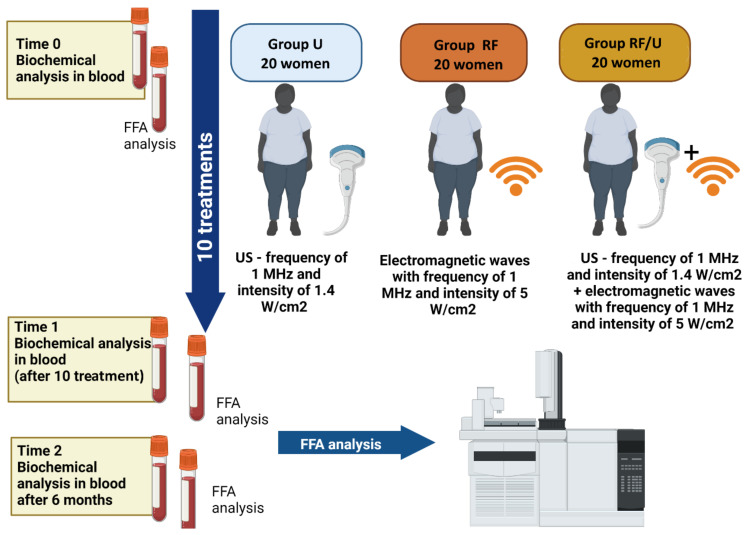
The study population comprised 60 women. Subjects were randomly allocated into one of three subgroups, 20 women per subgroup, and each subgroup received 10 treatments with ultrasound (U group), radiofrequency (RF group), or combined radiofrequency and ultrasound (RF/U group) for the abdominal region. Treatments were provided three times a week using the multifunctional device (Professional Beauty Equipment, HEBE, Warsaw, Poland). Each treatment to reduce adipose tissue, regardless of the method used, involved 20 min of massage with the dedicated applicator head on a rectangular 20 cm × 10 cm area of the abdominal region. Fatty acid composition and biochemical and anthropometric parameters were measured before the first, after 10 treatments and 6 months after the last treatment.
The series of 10 treatments to reduce abdominal adipose tissue using ultrasound, radiofrequency or both methods resulted in a cosmetic effect which was reflected in weight loss and BMI reduction. Reduced waist circumference was also found in patients who received radiofrequency or two types of intervention (RF + U) but not ultrasound treatments. The long-term cosmetic effect (lasting for at least 6 months) was achieved only with RF treatment and was reflected in reduced body weight, BMI and waist circumference. None of the treatments had a direct, short or long-term effect on the lipid profile, insulin resistance markers, inflammation markers, or blood pressure. Consequently, did not modify the risk of cardiovascular diseases.
腹部肥胖,以及致动脉粥样硬化的血脂异常、血压升高和糖耐量受损,被纳入代谢综合征的组成部分,以确定心血管疾病高危患者。皮下脂肪组织是膳食脂肪酸(FAs)的缓冲剂。据报道,脂肪组织的脂肪酸组成反映了过去 6 至 9 个月内 FA 的膳食摄入量。因此,我们决定评估脂质空化和/或热解脂对腹部脂肪减少的早期和长期代谢影响。
研究人群包括 60 名女性。受试者被随机分配到三个亚组中的一个,每个亚组 20 名女性,每个亚组接受 10 次腹部超声(U 组)、射频(RF 组)或联合射频和超声(RF/U 组)治疗。每周三次使用多功能设备(波兰华沙 Professional Beauty Equipment,HEBE)进行治疗。无论使用何种方法减少脂肪组织,每次治疗都包括在腹部 20cm×10cm 的矩形区域内使用专用治疗头进行 20 分钟的按摩。在第一次治疗前、治疗 10 次后和最后一次治疗后 6 个月测量脂肪酸组成和生化及人体测量参数。
使用超声、射频或两种方法进行的一系列 10 次腹部脂肪减少治疗产生了美容效果,表现为体重减轻和 BMI 降低。接受射频或两种干预(RF+U)的患者也发现腰围减小,但仅接受超声治疗的患者没有。长期美容效果(至少持续 6 个月)仅在接受射频治疗时实现,表现为体重、BMI 和腰围降低。没有一种治疗方法对血脂谱、胰岛素抵抗标志物、炎症标志物或血压有直接、短期或长期影响。因此,并未改变心血管疾病的风险。