Department of Health Sciences, College of Health and Rehabilitation Sciences, Princess Nourah Bint Abdulrahman University, P.O. Box 84428, Riyadh 11671, Saudi Arabia.
Division of Nutritional Sciences, School of Biosciences, The University of Nottingham, Nottingham NG7 2TU, UK.
Nutrients. 2022 Aug 31;14(17):3586. doi: 10.3390/nu14173586.
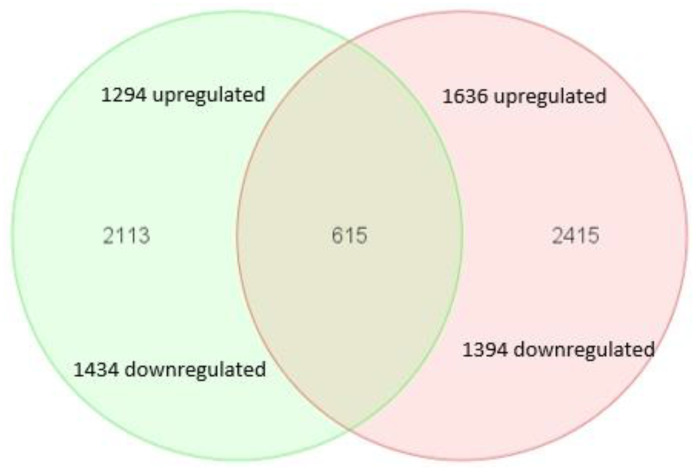
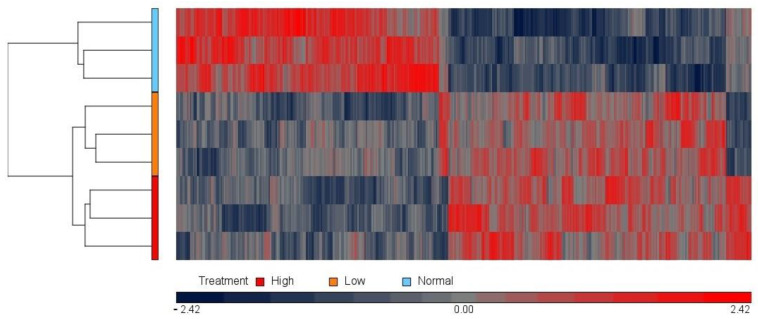
Vascular endothelial cells have a critical role in the maintenance of cardiovascular function. Evidence suggests that endothelial function may be compromised under conditions of magnesium deficiency, which increases vulnerability to inflammation. Whole genome transcription analysis was used to explore the acute (24 h) effects of magnesium on human umbilical vascular endothelial cells (HUVEC) cultured in low (0.1 mM) or high (5 mM) concentrations. With low magnesium 2728 transcripts were differentially expressed compared to the 1 mM control cultures and 3030 were differentially expressed with high magnesium. 615 transcripts were differentially expressed under both conditions, of which only 34 showed a concentration-dependent response. Analysis indicated that cellular organisation and biogenesis and key cellular processes such as apoptosis were impacted by both low and high conditions. High magnesium also influenced protein binding functions, intracellular signal transduction, metabolic and catalytic processes. Both conditions impacted on stress-related processes, in particular the inflammatory response. Key mediators of calcium-dependent regulation of gene expression were responsive to both high and low magnesium conditions. The HUVEC transcriptome is highly sensitive to acute changes in the concentration of magnesium in culture medium. The findings of this study support the view that whilst inflammation is an important process that is responsive to magnesium, the function of the endothelium may be impacted by other magnesium-induced changes including maintenance of cellular integrity, receptor expression and metabolic functions. The high proportion of transcripts that did not show a concentration-dependent response suggests variation in magnesium may elicit indirect changes, possibly mediated by other ions.
血管内皮细胞在维持心血管功能方面起着至关重要的作用。有证据表明,在镁缺乏的情况下,内皮功能可能会受损,从而使炎症变得更加脆弱。全基因组转录分析被用于探索镁对在低(0.1 mM)或高(5 mM)浓度下培养的人脐静脉内皮细胞(HUVEC)的急性(24 小时)影响。与 1 mM 对照培养相比,低镁条件下有 2728 个转录本差异表达,高镁条件下有 3030 个转录本差异表达。在这两种条件下有 615 个转录本差异表达,其中只有 34 个显示出浓度依赖性反应。分析表明,细胞组织和生物发生以及细胞凋亡等关键细胞过程受到低镁和高镁的影响。高镁还影响蛋白质结合功能、细胞内信号转导、代谢和催化过程。这两种条件都影响与应激相关的过程,特别是炎症反应。钙依赖性基因表达调控的关键介质对高镁和低镁条件均有反应。HUVEC 转录组对培养基中镁浓度的急性变化高度敏感。本研究的结果支持这样一种观点,即尽管炎症是一种对镁有反应的重要过程,但内皮细胞的功能可能会受到其他镁诱导变化的影响,包括细胞完整性、受体表达和代谢功能的维持。没有表现出浓度依赖性反应的转录本比例较高表明,镁的变化可能会引起间接变化,可能由其他离子介导。