Institute of Physics, Federal University of Mato Grosso do Sul, Campo Grande 79070-900, Brazil.
São Carlos Institute of Physics, University of São Paulo, São Carlos 13566-590, Brazil.
Molecules. 2022 Sep 4;27(17):5699. doi: 10.3390/molecules27175699.
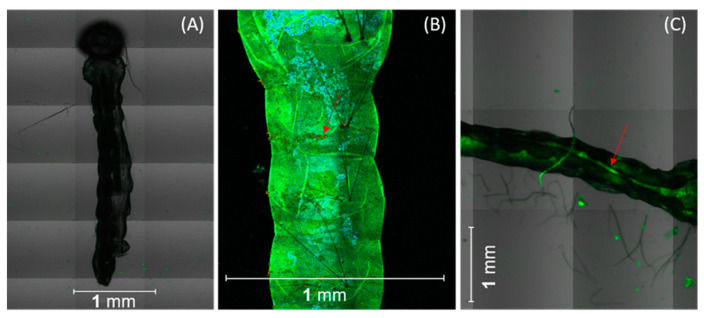
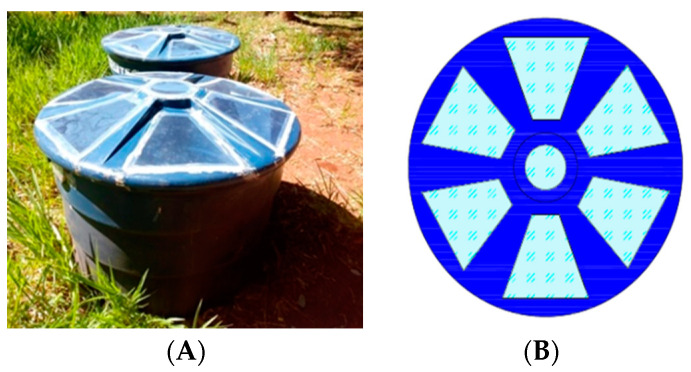
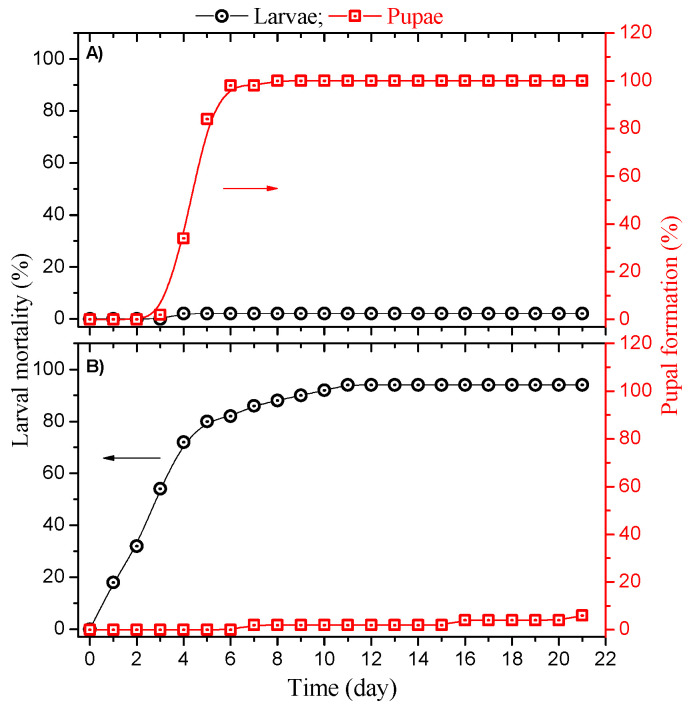
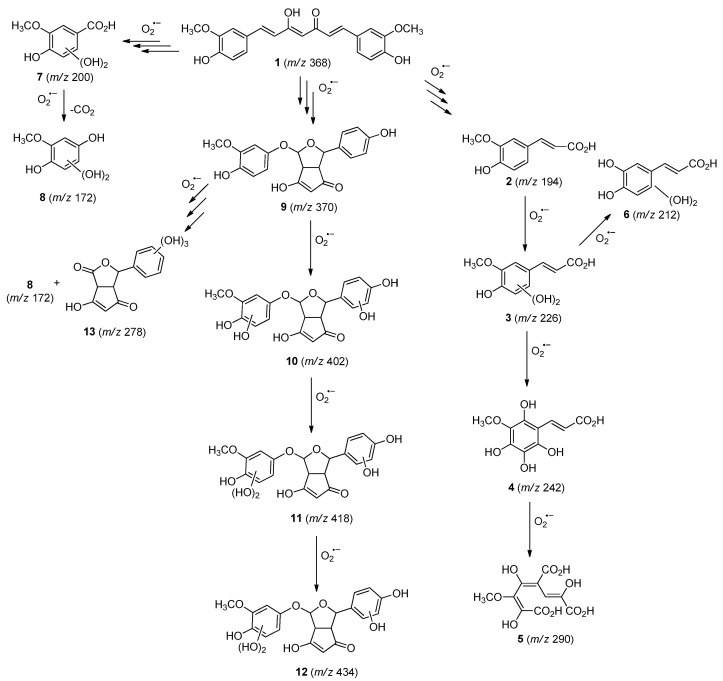
This study reports curcumin as an efficient photolarvicide against larvae under natural light illumination. Larval mortality and pupal formation were monitored daily for 21 days under simulated field conditions. In a sucrose-containing formulation, a lethal time 50 (LT50) of 3 days was found using curcumin at 4.6 mg L. This formulation promoted no larval toxicity in the absence of illumination, and sucrose alone did not induce larval phototoxicity. The photodegradation byproducts (intermediates) of curcumin were determined and the photodegradation mechanisms proposed. Intermediates with 194, 278, and 370 were found and characterized using LC-MS. The ecotoxicity of the byproducts on non-target organisms (, fish, and green algae) indicates that the intermediates do not exhibit any destructive potential for aquatic organisms. The results of photodegradation and ecotoxicity suggest that curcumin is environmentally safe for non-target organisms and, therefore, can be considered for population control of . .
本研究报告姜黄素作为一种有效的自然光照射下的光杀虫剂,可有效防治幼虫。在模拟野外条件下,每天监测幼虫死亡率和蛹形成情况,持续 21 天。在含有蔗糖的配方中,使用 4.6mg/L 的姜黄素时,致死时间 50(LT50)为 3 天。该配方在无光照的情况下不会引起幼虫毒性,而单独的蔗糖不会诱导幼虫光毒性。确定了姜黄素的光降解副产物(中间体),并提出了光降解机制。使用 LC-MS 发现并表征了中间体 194、278 和 370。副产物对非靶标生物(鱼类和绿藻)的生态毒性表明,这些中间体对水生生物没有任何破坏潜力。光降解和生态毒性的结果表明,姜黄素对非靶标生物环境安全,因此可考虑用于控制 的种群。