Marcato Adrian J, Black Andrew J, Walker Camelia R, Morris Dylan, Meagher Niamh, Price David J, McVernon Jodie
Department of Infectious Diseases, The University of Melbourne, at the Peter Doherty Institute for Infection and Immunity, Melbourne, Australia.
School of Mathematical Sciences, The University of Adelaide, Adelaide, Australia.
Lancet Reg Health West Pac. 2022 Nov;28:100573. doi: 10.1016/j.lanwpc.2022.100573. Epub 2022 Sep 5.
First Few "X" (FFX) studies provide a platform to collect the required epidemiological, clinical and virological data to help address emerging information needs about the COVID-19 pandemic.
We adapted the WHO FFX protocol for COVID-19 to understand severity and household transmission dynamics in the early stages of the pandemic in Australia. Implementation strategies were developed for participating sites; all household members were followed for 14 days from case identification. Household contacts completed symptom diaries and had multiple respiratory swabs taken irrespective of symptoms. We modelled the spread of COVID-19 within households using a susceptible-exposed-infectious-recovered-type model, and calculated the household secondary attack rate and key epidemiological parameters.
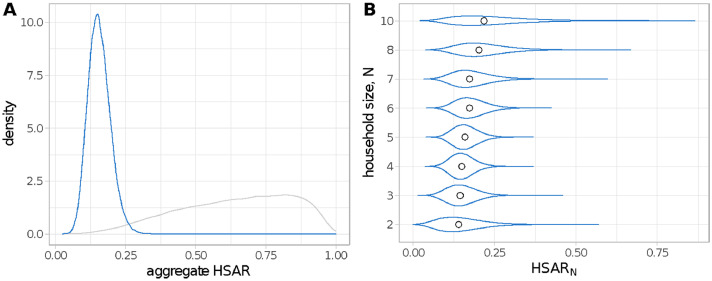
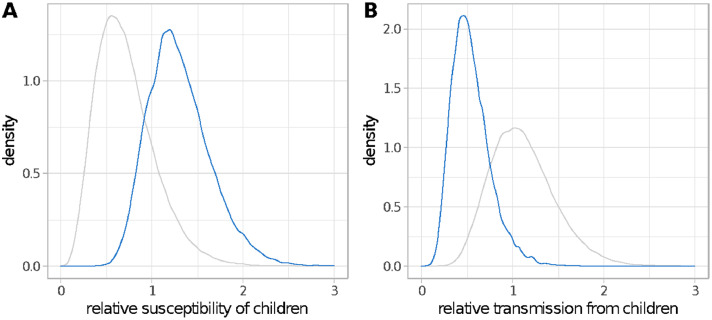
96 households with 101 cases and 286 household contacts were recruited into the study between April-October 2020. Forty household contacts tested positive for SARS-CoV-2 in the study follow-up period. Our model estimated the household secondary attack rate to be 15% (95% CI 8-25%), which scaled up with increasing household size. Our findings suggest children were less infectious than their adult counterparts but were also more susceptible to infection.
Our study provides important baseline data characterising the transmission of early SARS-CoV-2 strains from children and adults in Australia, against which properties of variants of concern can be benchmarked. We encountered many challenges with respect to logistics, ethics, governance and data management. Continued efforts to invest in preparedness research will help to test, refine and further develop Australian FFX study protocols in advance of future outbreaks.
Australian Government Department of Health.
“最初几个X”(FFX)研究提供了一个平台,用于收集所需的流行病学、临床和病毒学数据,以帮助满足有关COVID-19大流行的新出现的信息需求。
我们采用了世界卫生组织针对COVID-19的FFX方案,以了解澳大利亚大流行早期的严重程度和家庭传播动态。为参与站点制定了实施策略;从病例识别开始,对所有家庭成员进行了14天的跟踪。家庭接触者填写症状日记,无论有无症状,都多次采集呼吸道拭子。我们使用易感-暴露-感染-康复型模型对COVID-19在家庭中的传播进行建模,并计算家庭二代发病率和关键流行病学参数。
2020年4月至10月期间,96户家庭中的101例病例和286名家庭接触者被纳入研究。在研究随访期间,40名家庭接触者的SARS-CoV-2检测呈阳性。我们的模型估计家庭二代发病率为15%(95%置信区间8-25%),并随着家庭规模的增加而上升。我们的研究结果表明,儿童传染性低于成人,但也更容易感染。
我们的研究提供了重要的基线数据,描述了澳大利亚早期SARS-CoV-2毒株在儿童和成人中的传播情况,可据此对关注变异株的特性进行基准测试。我们在后勤、伦理、治理和数据管理方面遇到了许多挑战。继续投入准备性研究将有助于在未来疫情爆发前测试、完善和进一步开发澳大利亚的FFX研究方案。
澳大利亚政府卫生部。