Li Xiuting, Moothanchery Mohesh, Kwa Cheng Yi, Tan Wan Ling, Yew Yik Weng, Thng Steven Tien Guan, Dinish U S, Attia Amalina Binte Ebrahim, Olivo Malini
Translational Biophotonics Laboratory, Institute of Bioengineering and Bioimaging (IBB), Agency for Science, Technology and Research (A⁎STAR), Singapore.
National Skin Centre, Singapore.
Photoacoustics. 2022 Aug 27;28:100399. doi: 10.1016/j.pacs.2022.100399. eCollection 2022 Dec.
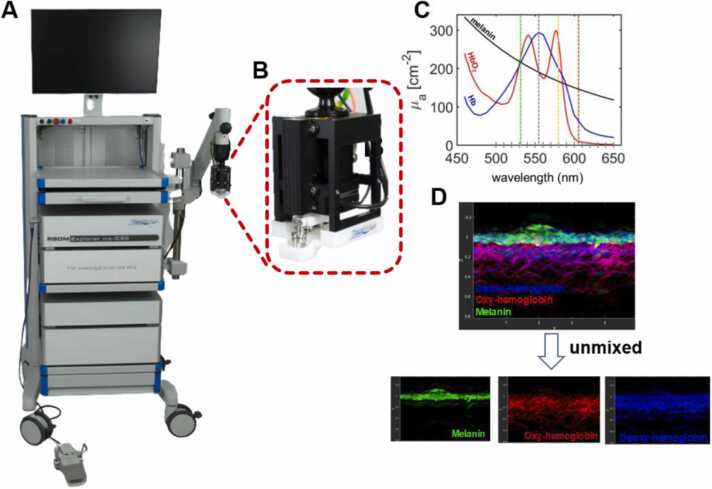
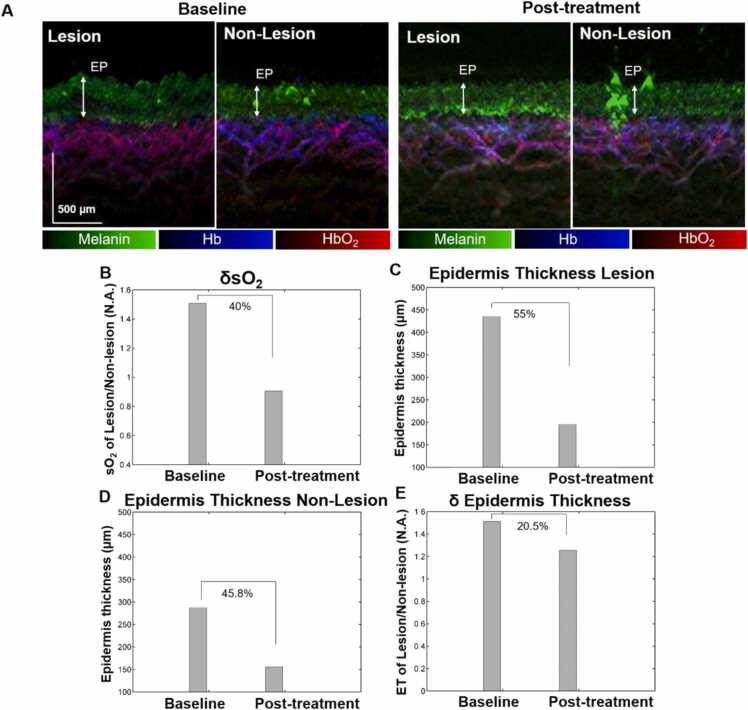
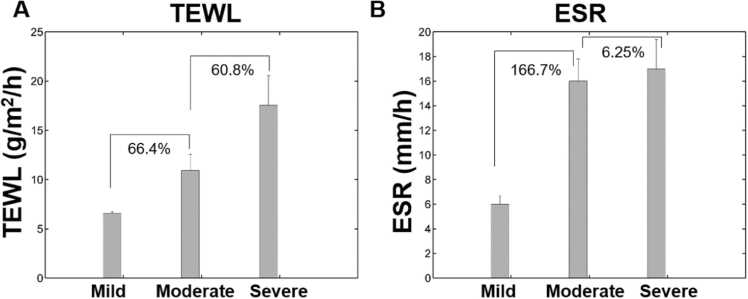
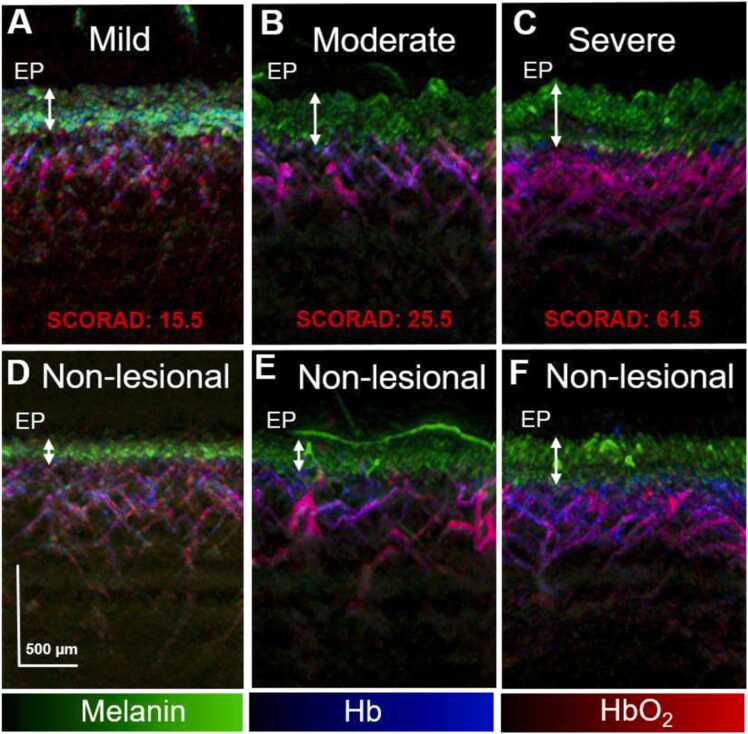
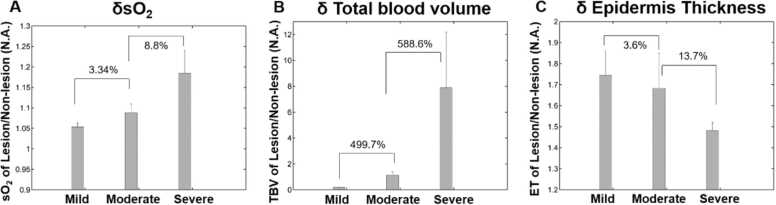
Atopic dermatitis (AD) is a chronic and pruritic skin inflammatory disease causing a significant burden to health care management and patient's quality of life. Seemingly healthy skin or non-lesional sites on AD patients still presents skin barrier defects and immune response, which can develop to AD at a later stage. To investigate further the balance between the epidermal barrier impairment and intrinsic immune dysregulation in AD, we exploited multispectral Raster-Scanning Optoacoustic Mesoscopy (ms-RSOM) to image lesional and non-lesional skin areas on AD patients of different severities non-invasively to elucidate their structural features and functional information. Herein, we demonstrate the objective assessment of AD severity using relative changes in oxygen saturation (δsO) levels in microvasculature along with other structural parameters such as relative changes in epidermis thickness (δET) and total blood volume (δTBV) between the lesional and non-lesional areas of the skin. We could observe an increasing trend for δsO and δTBV, which correlated well with the subjective clinical Scoring Atopic Dermatitis (SCORAD) for evaluating the severity. Notably, δET showed a decreasing trend with AD severity, indicating that the difference in epidermal thickness between lesional and non-lesional area of the skin decreases with AD severity. Our results also correlated well with conventional metrics such as trans-epidermal water loss (TEWL) and erythrosine sedimentation rate (ESR). We quantified the δsO and δET changes to objectively evaluate the treatment response before and four months after treatment using topical steroids and cyclosporine in one severe AD patient. We observed reduced δsO and δET post treatment. We envision that in future, functional and structural imaging metrics derived from ms-RSOM can be translated as objective markers to assess and stratify the severity of AD and understand the function of skin barrier dysfunctions and immune dysregulation. It could also be employed to monitor the treatment response of AD in regular clinical settings.
特应性皮炎(AD)是一种慢性瘙痒性皮肤炎症性疾病,给医疗管理和患者生活质量带来了沉重负担。AD患者看似健康的皮肤或非皮损部位仍存在皮肤屏障缺陷和免疫反应,这些情况在后期可能发展为AD。为了进一步研究AD中表皮屏障损伤与内在免疫失调之间的平衡,我们利用多光谱光栅扫描光声显微镜(ms-RSOM)对不同严重程度的AD患者的皮损和非皮损皮肤区域进行无创成像,以阐明其结构特征和功能信息。在此,我们通过微血管中氧饱和度(δsO)水平的相对变化以及其他结构参数,如皮肤皮损和非皮损区域之间表皮厚度(δET)和总血容量(δTBV)的相对变化,来展示对AD严重程度的客观评估。我们可以观察到δsO和δTBV呈上升趋势,这与用于评估严重程度的主观临床特应性皮炎评分(SCORAD)密切相关。值得注意的是,δET随着AD严重程度呈下降趋势,表明皮肤皮损和非皮损区域之间的表皮厚度差异随AD严重程度而减小。我们的结果也与传统指标如经表皮水分流失(TEWL)和红细胞沉降率(ESR)密切相关。我们对一名重度AD患者在使用外用类固醇和环孢素治疗前及治疗四个月后,对δsO和δET变化进行了量化,以客观评估治疗反应。我们观察到治疗后δsO和δET降低。我们设想,未来源自ms-RSOM的功能和结构成像指标可转化为客观标志物,用于评估和分层AD的严重程度,并了解皮肤屏障功能障碍和免疫失调的功能。它还可用于在常规临床环境中监测AD的治疗反应。