Luo Zonghong, Ni Ke, Zhou Yuancheng, Chang Guanhong, Yu Jiangtao, Zhang Chunling, Yin Wenqi, Chen Dishi, Li Shuwei, Kuang Shengyao, Zhang Peng, Li Kui, Bai Junqing, Wang Xin
College of Food Science and Engineering, Northwest A&F University, Yangling, Shaanxi, 712100, China.
Livestock and Poultry Biological Products Key Laboratory of Sichuan Province, Sichuan Animal Science Academy, Chengdu, 610066, China.
Food Control. 2023 Feb;144:109340. doi: 10.1016/j.foodcont.2022.109340. Epub 2022 Sep 6.
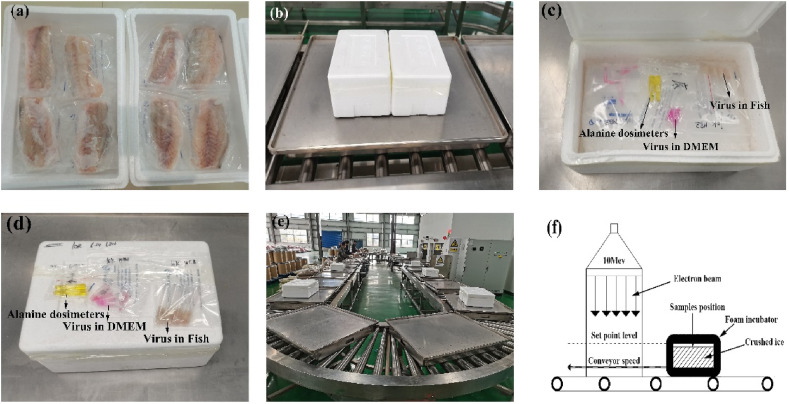
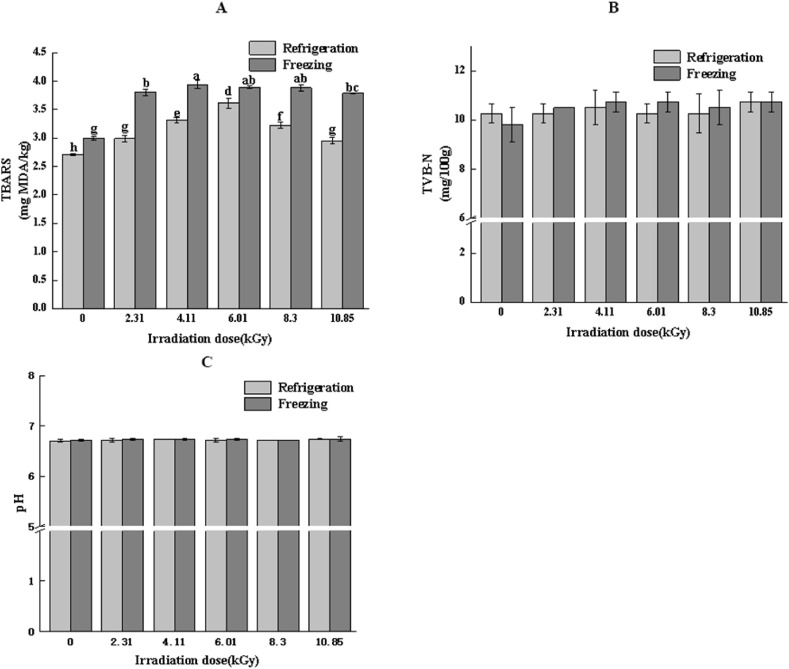
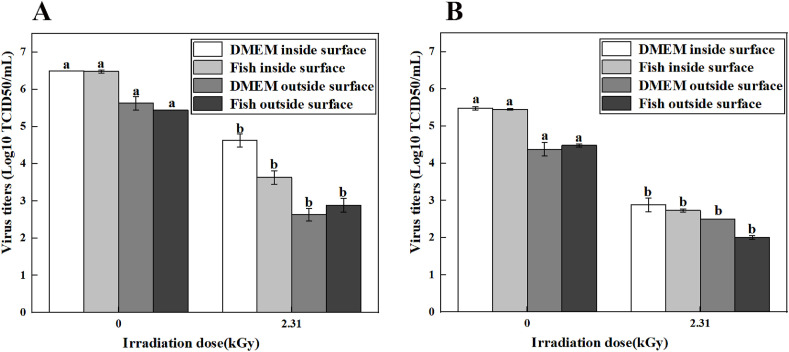
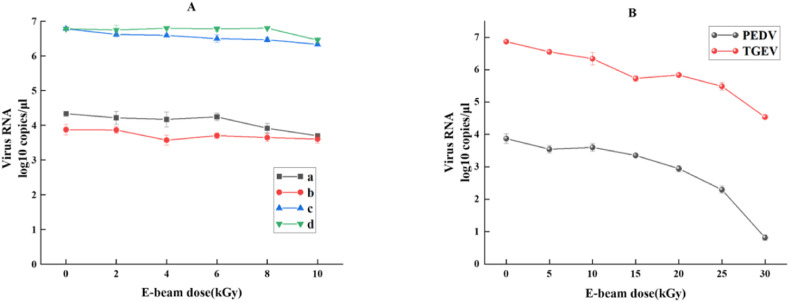
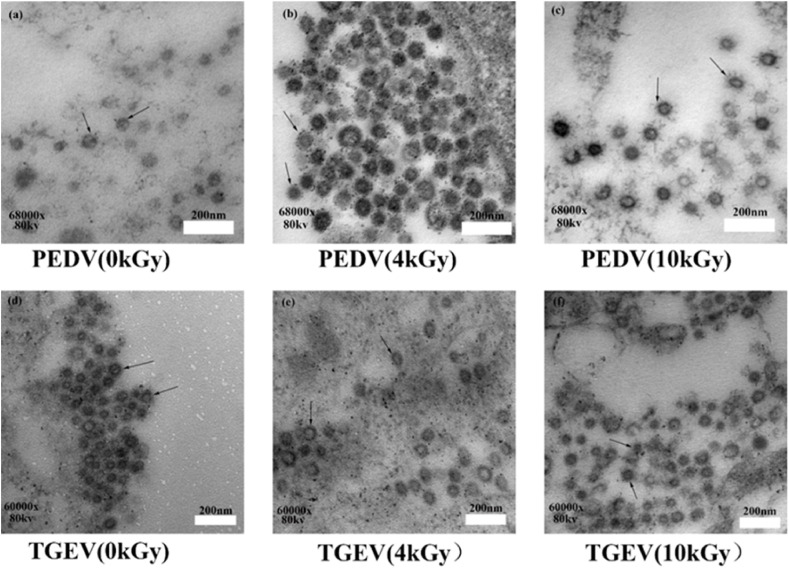
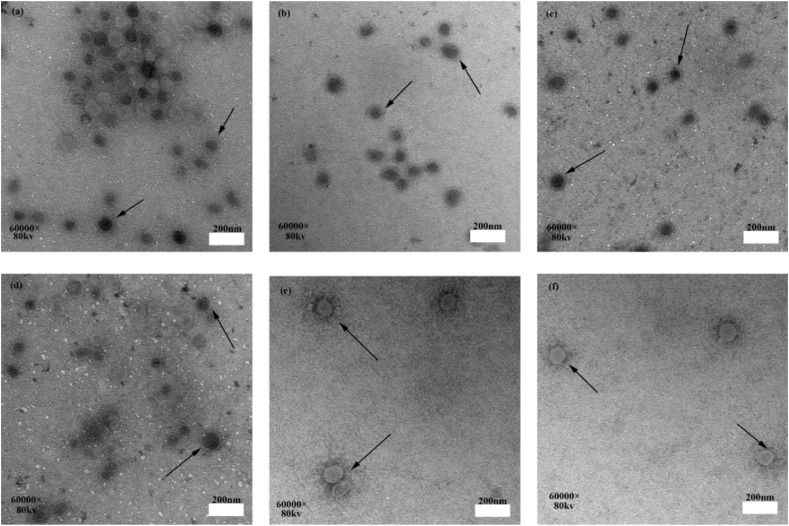
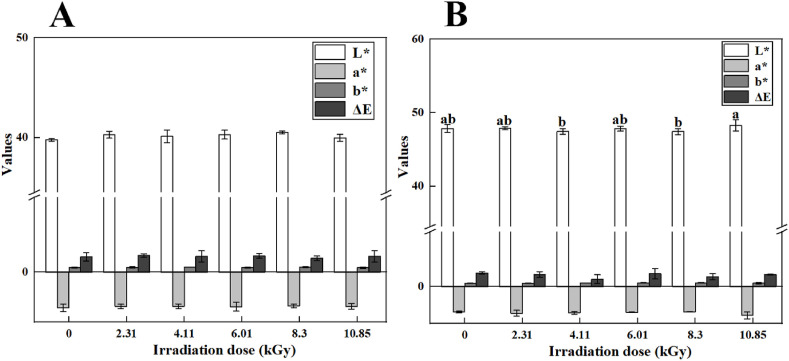
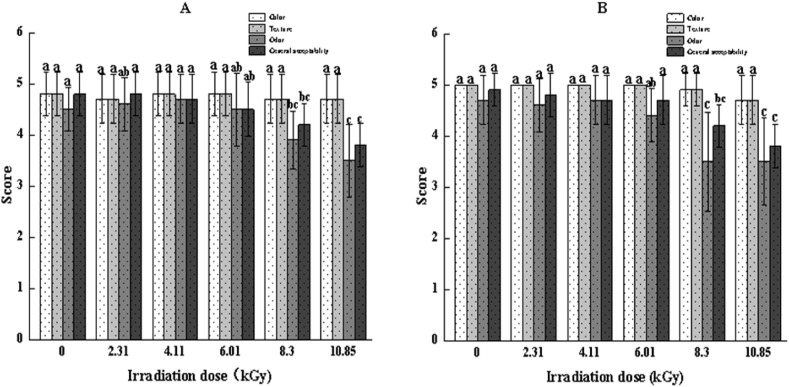
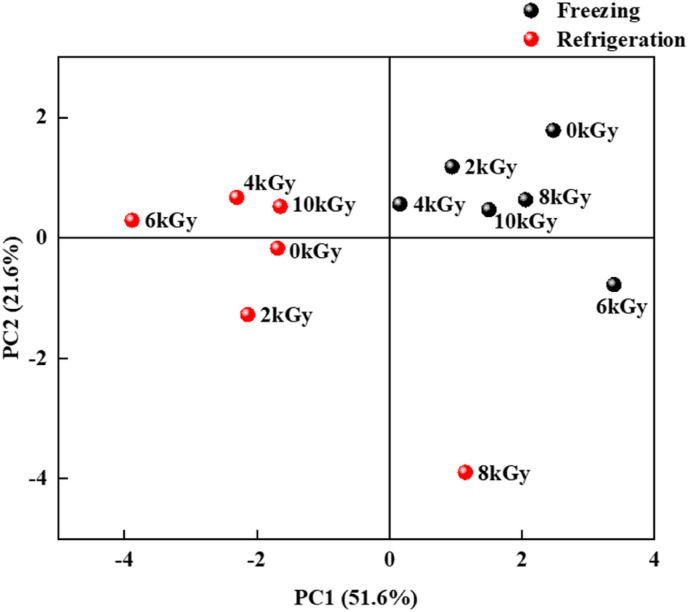
The detection of infectious SARS-CoV-2 in food and food packaging associated with the cold chain has raised concerns about the possible transmission pathway of severe acute respiratory syndrome coronavirus 2 (SARS-CoV-2) in foods transported through cold-chain logistics and the need for novel decontamination strategies. In this study, the effect of electron beam (E-beam) irradiation on the inactivation of two SARS-CoV-2surrogate, viruses porcine epidemic diarrhea virus (PEDV) and porcine transmissible gastroenteritis virus (TGEV), in culture medium and food substrate, and on food substrate were investigated. The causes of virus inactivation were also investigated by transmission electron microscopy (TEM) and Quantitative Real-time PCR (QRT-PCR). Samples packed inside and outside, including virus-inoculated large yellow croaker and virus suspensions, were irradiated with E-beam irradiation (2, 4, 6, 8, 10 kGy) under refrigerated (0 °C)and frozen (-18 °C) conditions. The titers of both viruses in suspension and fish decreased significantly ( < 0.05) with increasing doses of E-beam irradiation. The maximum D value of both viruses in suspension and fish was 1.24 kGy. E-beam irradiation at doses below 10 kGy was found to destroy the spike proteins of both SARS-CoV-2 surrogate viruses by transmission electron microscopy (TEM) and negative staining of thin-sectioned specimens, rendering them uninfectious. E-beam irradiation at doses greater than 10 kGy was also found to degrade viral genomic RNA by qRT-PCR. There were no significant differences in color, pH, TVB-N, TBARS, and sensory properties of irradiated fish samples at doses below 10 kGy. These findings suggested that E-beam irradiation has the potential to be developed as an efficient non-thermal treatment to reduce SARS-CoV-2 contamination in foods transported through cold chain foods to reduce the risk of SARS-CoV-2 infection in humans through the cold chain.
在与冷链相关的食品和食品包装中检测到传染性严重急性呼吸综合征冠状病毒2(SARS-CoV-2),引发了人们对严重急性呼吸综合征冠状病毒2(SARS-CoV-2)在通过冷链物流运输的食品中的可能传播途径以及新型去污策略需求的担忧。在本研究中,研究了电子束(E-beam)辐照对两种SARS-CoV-2替代病毒,即猪流行性腹泻病毒(PEDV)和猪传染性胃肠炎病毒(TGEV)在培养基和食品基质中以及在食品基质上的灭活效果。还通过透射电子显微镜(TEM)和定量实时聚合酶链反应(QRT-PCR)研究了病毒灭活的原因。将包装内外的样品,包括接种病毒的大黄鱼和病毒悬液,在冷藏(0°C)和冷冻(-18°C)条件下用电子束辐照(2、4、6、8、10 kGy)。随着电子束辐照剂量的增加,悬液和鱼中两种病毒的滴度均显著降低(<0.05)。悬液和鱼中两种病毒的最大D值均为1.24 kGy。通过透射电子显微镜(TEM)和薄切片标本的负染色发现,剂量低于10 kGy的电子束辐照会破坏两种SARS-CoV-2替代病毒的刺突蛋白,使其失去感染性。通过qRT-PCR还发现,剂量大于10 kGy的电子束辐照会降解病毒基因组RNA。剂量低于10 kGy的辐照鱼样品在颜色、pH值、挥发性盐基氮(TVB-N)、硫代巴比妥酸反应物(TBARS)和感官特性方面没有显著差异。这些研究结果表明,电子束辐照有潜力被开发成为一种有效的非热处理方法,以减少通过冷链食品运输的食品中的SARS-CoV-2污染,从而降低人类通过冷链感染SARS-CoV-2的风险。