Wang Kexin, Liu Huan, Liu Jingjing, Han Liyuan, Kang Zheng, Liang Libo, Jiang Shengchao, Meng Nan, Chen Peiwen, Xu Qiao, Wu Qunhong, Hao Yanhua
Department of Health Policy, School of Health Management, Harbin Medical University, Harbin, Heilongjiang, China.
Department of Social Medicine, School of Public Health, Harbin Medical University, Harbin, Heilongjiang, China.
Front Pharmacol. 2022 Aug 26;13:905564. doi: 10.3389/fphar.2022.905564. eCollection 2022.
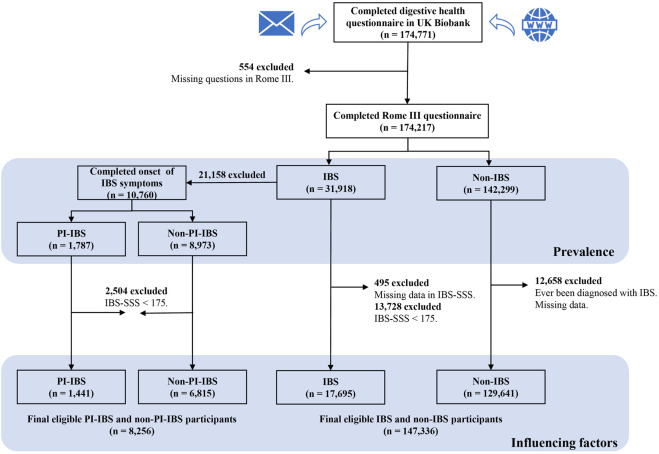
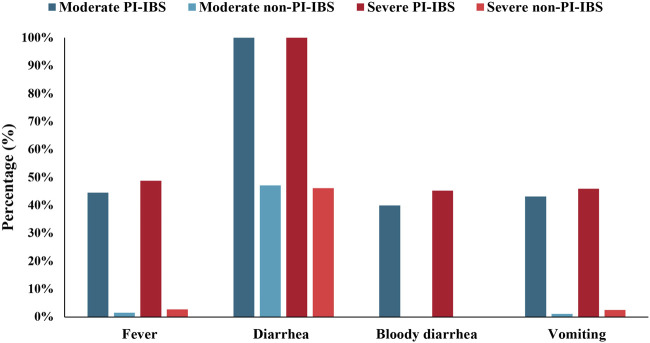
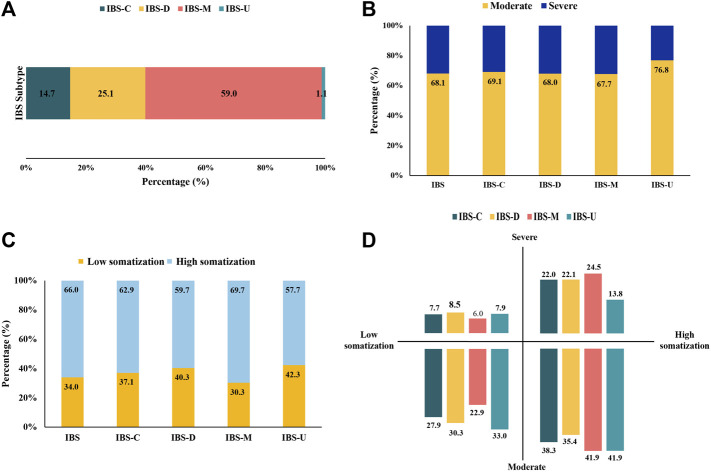
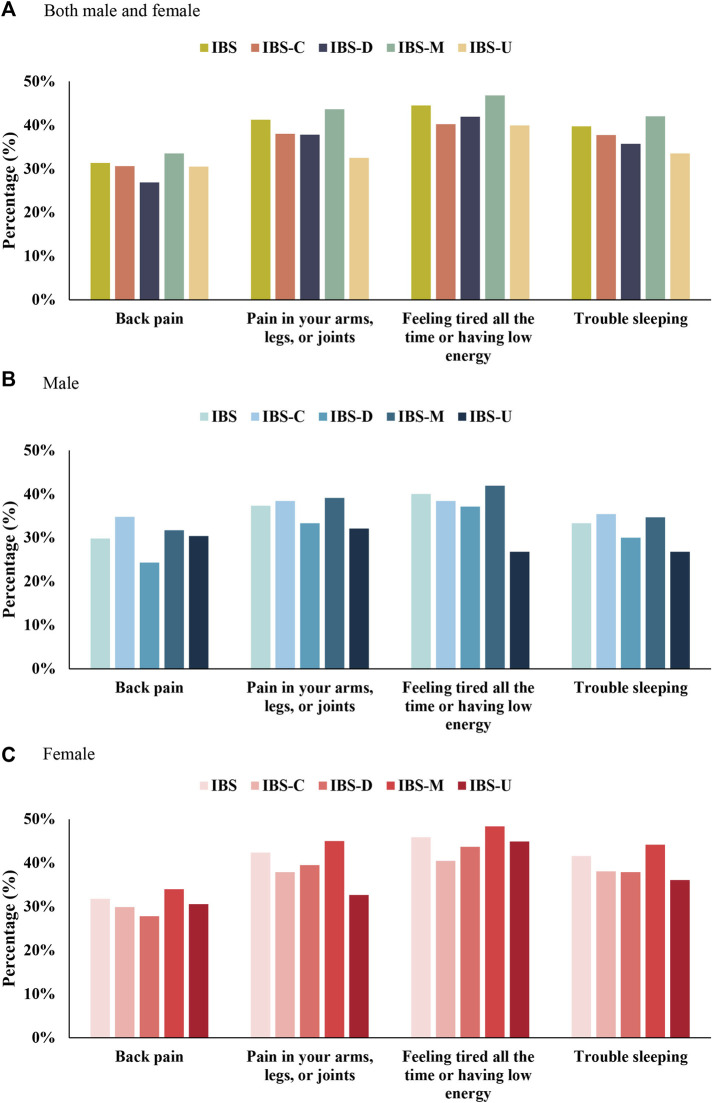
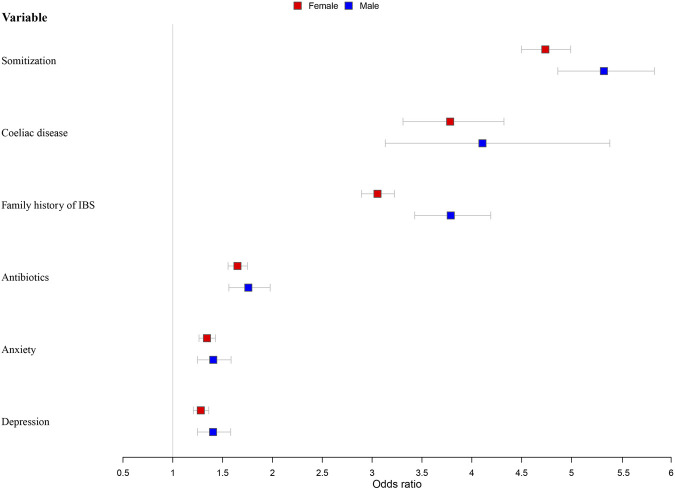
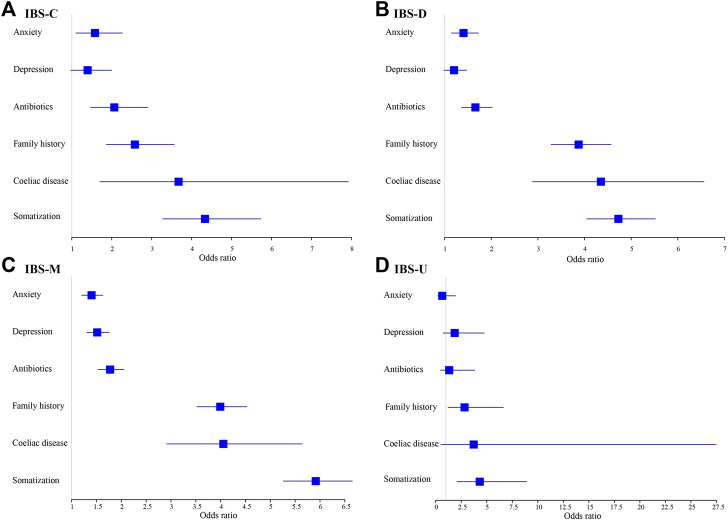
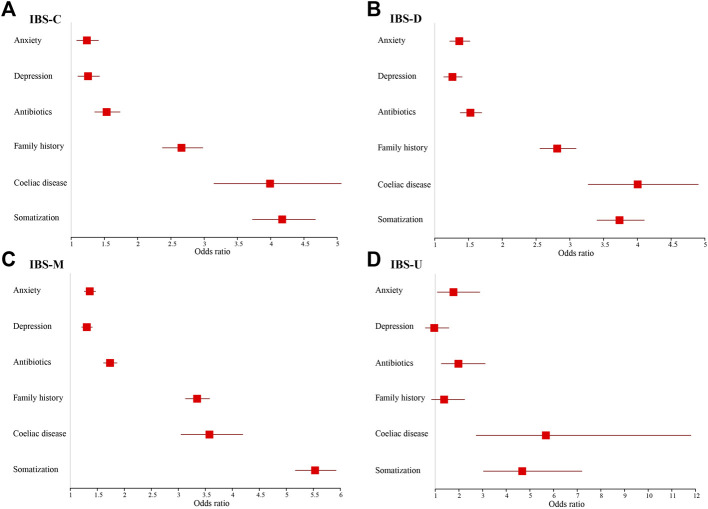
Irritable bowel syndrome (IBS) reduces patients' quality of life and causes great burdens due to its unclear pathogenesis and criteria for diagnosis. This study aimed to explore the differences in prevalence and the influencing factors for IBS and its subtypes. The UK Biobank surveyed 174,771 adult participants who completed the Digestive Health Questionnaire (DHQ) through emails and websites. DHQ included the Rome III criteria, IBS symptom severity score, and Patient Health Questionnaire 12 Somatic Symptom score. The UK Biobank also asked regarding previous IBS diagnosis, diagnosis for post-infectious IBS (PI-IBS), and environmental exposures and associated conditions (including anxiety or depression, based on treatment sought or offered). Pearson's Chi-squared test or Wilcoxon's rank-sum test was used for potential associations. Binary logic regression based on sex stratification was used to examine associations between selected factors and IBS and its subtypes. This study included 31,918 participants who met the Rome III criteria for IBS. The pooled prevalence of IBS in the UK Biobank was 18.3%, with mixed IBS as the predominant subtype (59.0%), followed by diarrhea-predominant IBS (25.1%), constipation-predominant IBS (14.7%), and untyped IBS (1.1%). IBS was significantly associated with somatization (male: OR = 5.326, 95% CI = 4.863-5.832; female: OR = 4.738, 95% CI = 4.498-4.992) and coeliac disease (male: OR = 4.107, 95% CI = 3.132-5.385; female: OR = 3.783, 95% CI = 3.310-4.323). Differences in antibiotics and mental status were presented among subtypes and sex. Furthermore, 1,787 individuals were diagnosed with PI-IBS in the group of patients with IBS. The prevalence of PI-IBS in IBS was 16.6% in the UK Biobank, and it was characterized by diarrhea, fever, bloody diarrhea, and vomiting. Somatization and coeliac disease are primary risk factors for IBS. Distinguishing differential risk factors is critical for the precise diagnosis and treatment of IBS subtypes, particularly sex-specific differences in mental health status. General practitioners should focus on the treatment according to IBS subtypes.
肠易激综合征(IBS)因其发病机制和诊断标准不明确,降低了患者的生活质量并造成了巨大负担。本研究旨在探讨IBS及其亚型在患病率和影响因素方面的差异。英国生物银行对174771名成年参与者进行了调查,这些参与者通过电子邮件和网站完成了消化健康问卷(DHQ)。DHQ包括罗马Ⅲ标准、IBS症状严重程度评分和患者健康问卷12躯体症状评分。英国生物银行还询问了既往IBS诊断情况、感染后肠易激综合征(PI-IBS)诊断情况以及环境暴露和相关疾病(包括根据寻求或接受的治疗判断的焦虑或抑郁)。使用Pearson卡方检验或Wilcoxon秩和检验来分析潜在关联。基于性别分层的二元逻辑回归用于检验所选因素与IBS及其亚型之间的关联。本研究纳入了31918名符合IBS罗马Ⅲ标准的参与者。英国生物银行中IBS的合并患病率为18.3%,其中混合型IBS为主要亚型(59.0%),其次是腹泻型IBS(25.1%)、便秘型IBS(14.7%)和未分型IBS(1.1%)。IBS与躯体化显著相关(男性:OR = 5.326,95%CI = 4.863 - 5.832;女性:OR = 4.738,95%CI = 4.498 - 4.992)以及与乳糜泻显著相关(男性:OR = 4.107,95%CI = 3.132 - 5.385;女性:OR = 3.783,95%CI = 3.310 - 4.323)。抗生素使用和精神状态在亚型和性别之间存在差异。此外,在IBS患者组中有1787人被诊断为PI-IBS。英国生物银行中IBS患者中PI-IBS的患病率为16.6%,其特征为腹泻、发热、血性腹泻和呕吐。躯体化和乳糜泻是IBS的主要危险因素。区分不同的危险因素对于IBS亚型的精准诊断和治疗至关重要,尤其是心理健康状况方面的性别差异。全科医生应根据IBS亚型重点进行治疗。