Department of Infectious Diseases, The First Affiliated Hospital of Zhengzhou University, Zhengzhou, China.
Presion Medicine Cencter Gene Hospital of Henan Province, Zhengzhou, China.
Front Endocrinol (Lausanne). 2022 Aug 25;13:918869. doi: 10.3389/fendo.2022.918869. eCollection 2022.
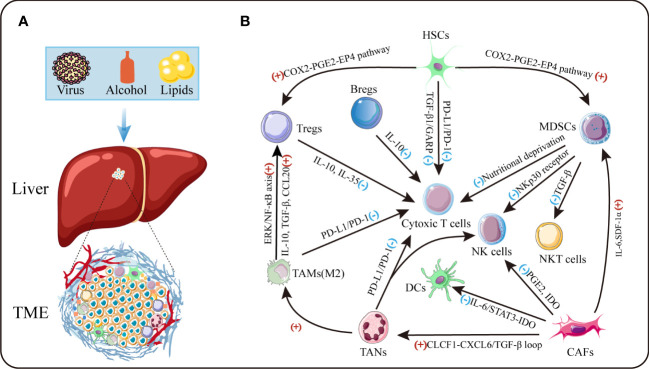
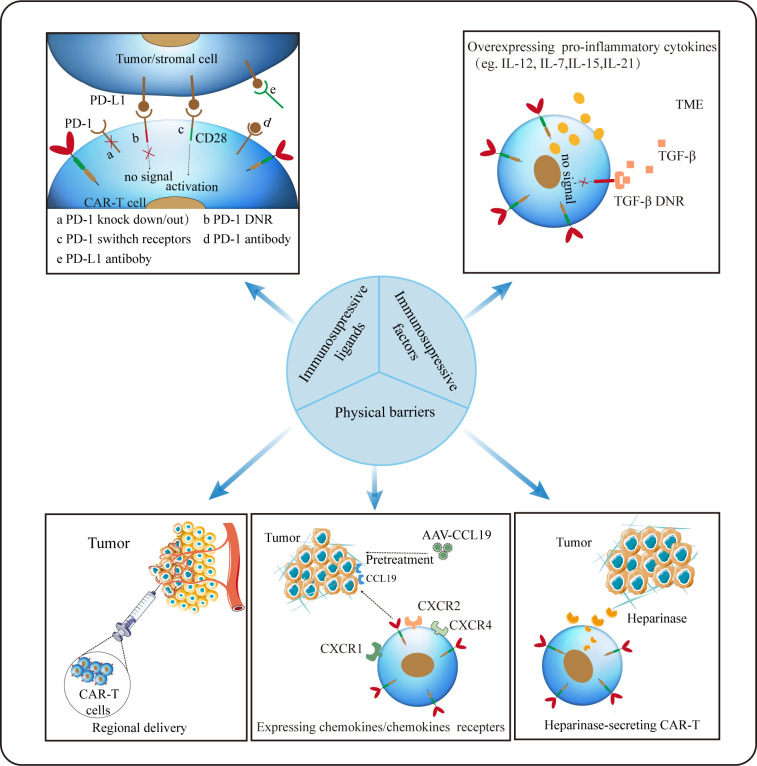
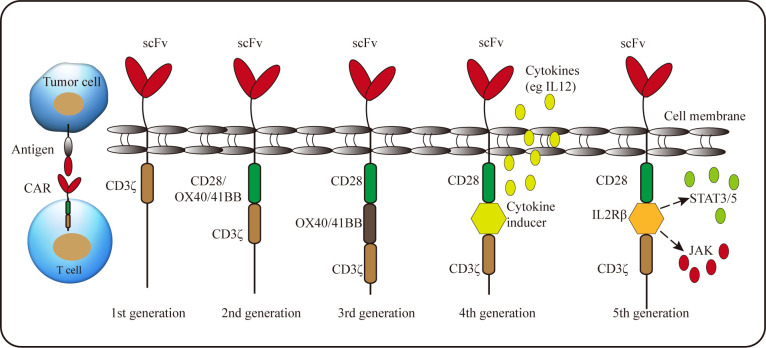
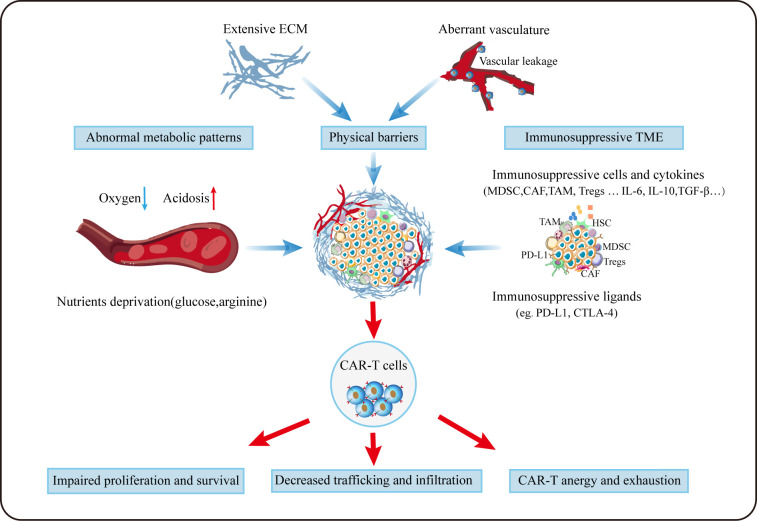
Hepatocellular carcinoma (HCC) is the major subtype of liver cancer, which ranks sixth in cancer incidence and third in mortality. Although great strides have been made in novel therapy for HCC, such as immunotherapy, the prognosis remains less than satisfactory. Increasing evidence demonstrates that the tumor immune microenvironment (TME) exerts a significant role in the evolution of HCC and has a non-negligible impact on the efficacy of HCC treatment. In the past two decades, the success in hematological malignancies made by chimeric antigen receptor-modified T (CAR-T) cell therapy leveraging it holds great promise for cancer treatment. However, in the face of a hostile TME in solid tumors like HCC, the efficacy of CAR-T cells will be greatly compromised. Here, we provide an overview of TME features in HCC, discuss recent advances and challenges of CAR-T immunotherapy in HCC.
肝细胞癌 (HCC) 是肝癌的主要亚型,其发病率居第六位,死亡率居第三位。尽管在 HCC 的新型治疗方法方面取得了重大进展,如免疫疗法,但预后仍不尽如人意。越来越多的证据表明,肿瘤免疫微环境 (TME) 在 HCC 的演变中发挥着重要作用,并对 HCC 治疗的疗效有不可忽视的影响。在过去的二十年中,嵌合抗原受体修饰 T 细胞 (CAR-T) 疗法在血液恶性肿瘤方面取得的成功为癌症治疗带来了巨大的希望。然而,在 HCC 等实体肿瘤中存在的恶劣 TME 面前,CAR-T 细胞的疗效将大大受损。在这里,我们概述了 HCC 中的 TME 特征,讨论了 CAR-T 免疫疗法在 HCC 中的最新进展和挑战。