Section of Neonatology, Texas Children's Hospital, Baylor College of Medicine, 77030, Houston, TX, USA.
Division of Neonatology, Department of Pediatrics, Oregon Health & Science University, 97239, Portland, OR, USA.
J Perinatol. 2023 Jan;43(1):103-107. doi: 10.1038/s41372-022-01502-6. Epub 2022 Sep 12.
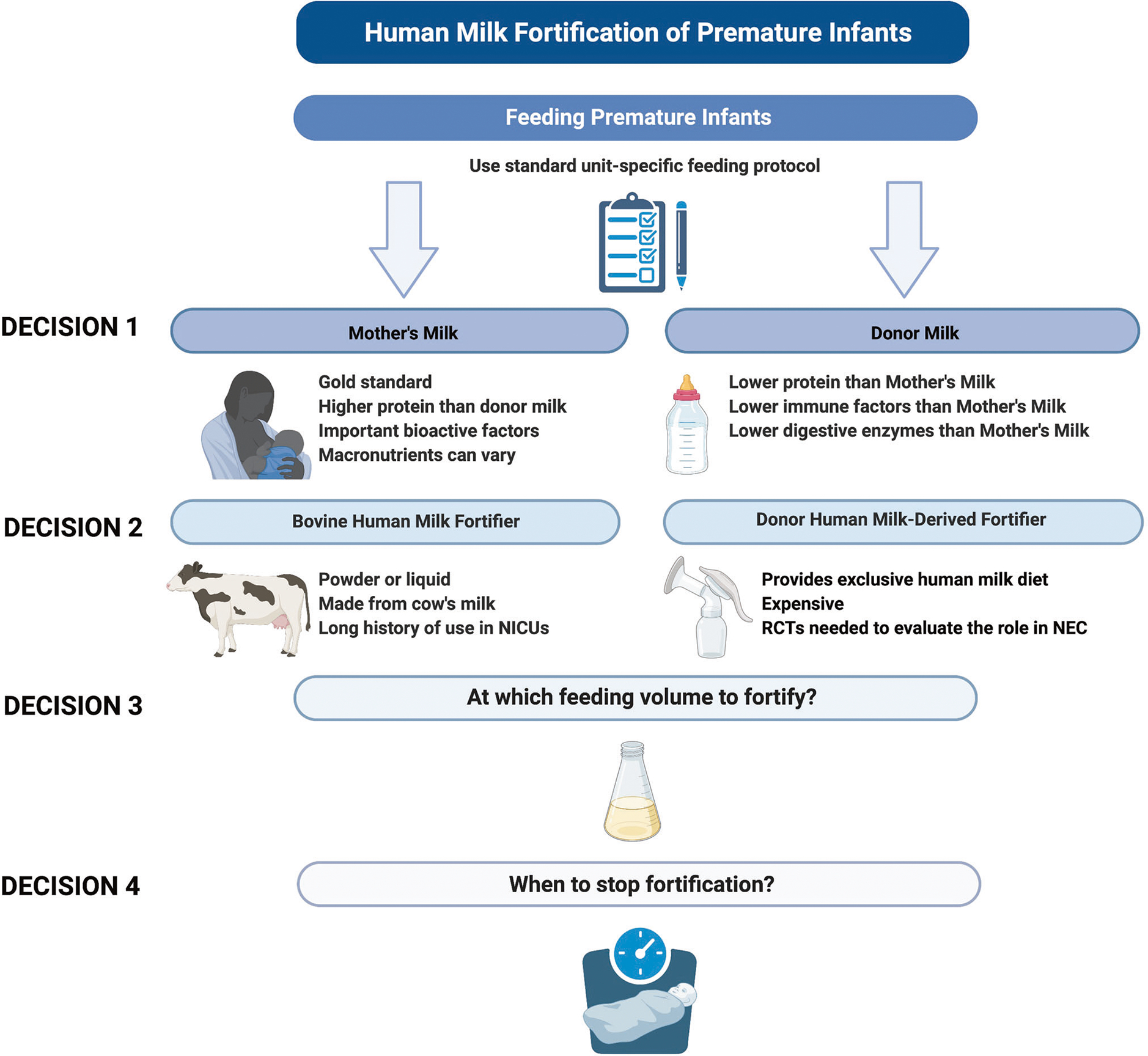
Fortification of human milk is the standard of care for very low birth weight (VLBW) infants and is required to support adequate postnatal growth and development. Achieving adequate growth velocity and preventing growth faltering is critical for the developing neonatal brain and optimizing long-term neurodevelopmental outcomes. Mother's milk is the gold standard nutrition to feed preterm infants, however, it does not provide the nutrients needed to support the growth of VLBW infants. After the decision is made to use mother's milk (if available) or alternatively, donor human milk, many dilemmas exist with regards to additional treatment decisions surrounding the type of fortification to use, when to fortify, and the duration of fortification. In this article, we will review the differences in mother's milk compared to donor milk, the different types of human milk fortifiers, the optimal timing of fortification, and discuss when to discontinue human milk fortification.
母乳强化是极低出生体重儿(VLBW)的标准护理方法,这是支持其出生后充分生长和发育所必需的。实现足够的生长速度和防止生长迟缓对于发育中的新生儿大脑至关重要,这也可优化其长期神经发育结局。母乳是喂养早产儿的黄金标准营养,但它并不能提供支持 VLBW 婴儿生长所需的营养。一旦决定使用母乳(如果有)或替代的捐赠人乳,那么围绕使用何种强化剂、何时强化以及强化持续时间等额外治疗决策就会存在许多难题。在本文中,我们将回顾母乳与捐赠奶之间的差异、不同类型的母乳强化剂、最佳强化时机,并讨论何时停止母乳强化。