Department of Medical Microbiology and Infection Prevention, Amsterdam University Medical Centers, Amsterdam, Netherlands.
Centre for Infectious Disease Control, National Institute for Public Health and the Environment, Bilthoven, Netherlands.
Elife. 2022 Sep 13;11:e78770. doi: 10.7554/eLife.78770.
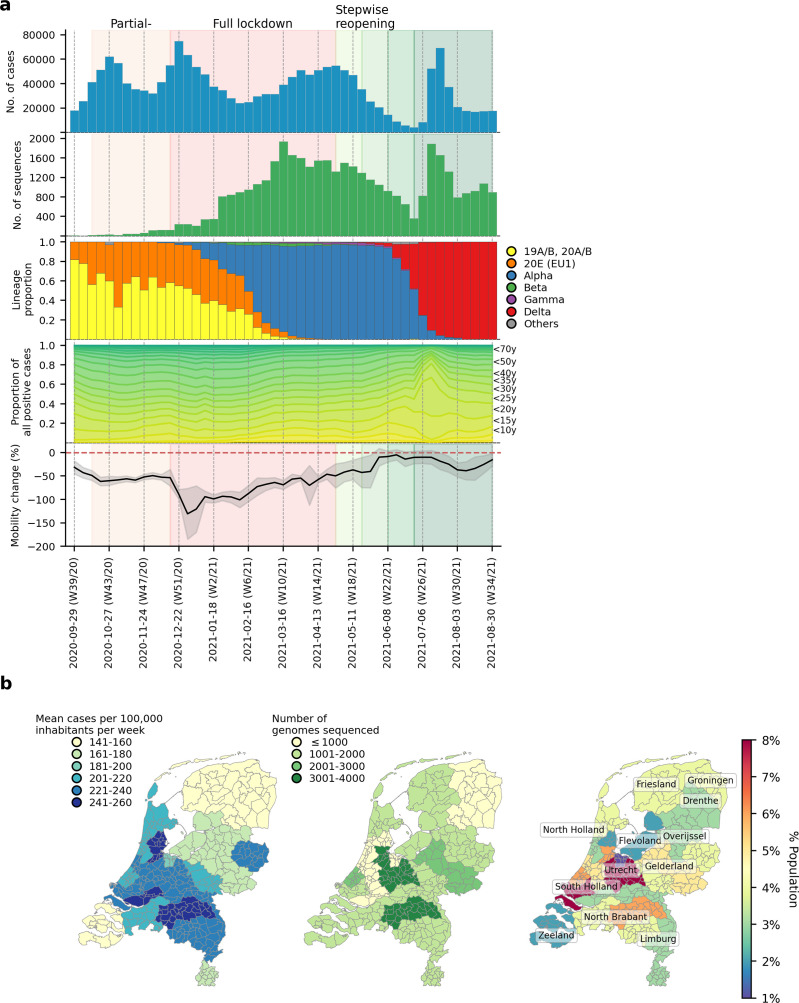
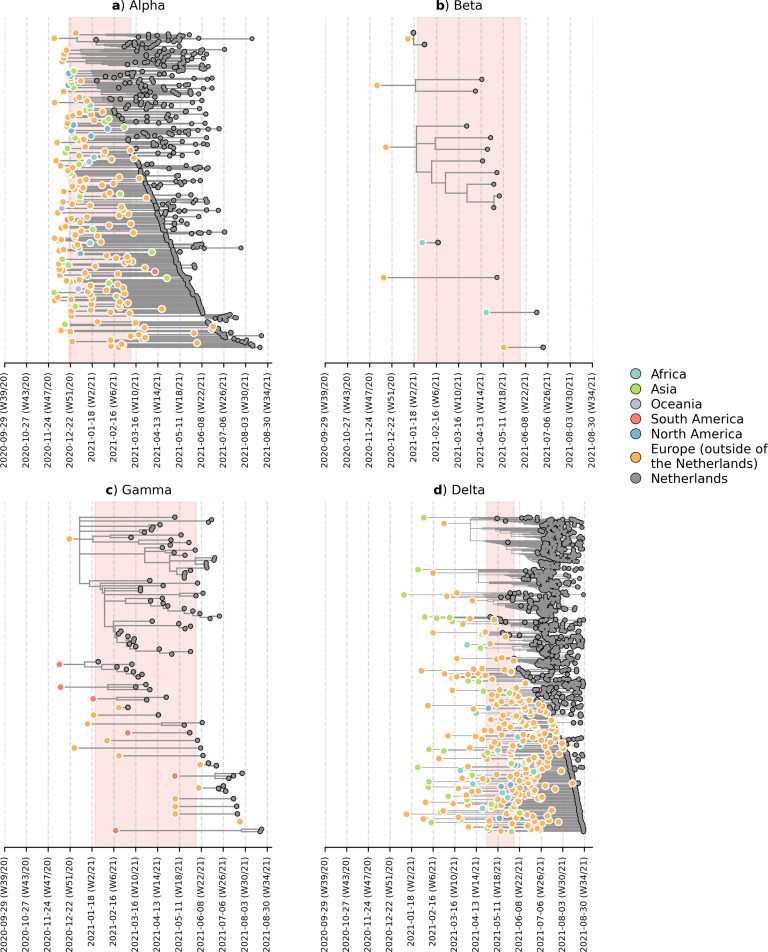
Variants of concern (VOCs) of SARS-CoV-2 have caused resurging waves of infections worldwide. In the Netherlands, the Alpha, Beta, Gamma, and Delta VOCs circulated widely between September 2020 and August 2021. We sought to elucidate how various control measures, including targeted flight restrictions, had impacted the introduction and spread of these VOCs in the Netherlands.
We performed phylogenetic analyses on 39,844 SARS-CoV-2 genomes collected under the Dutch national surveillance program.
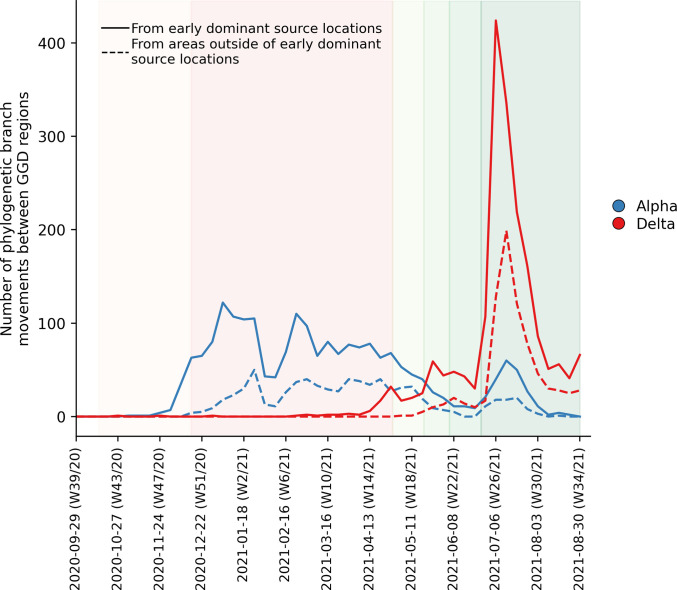
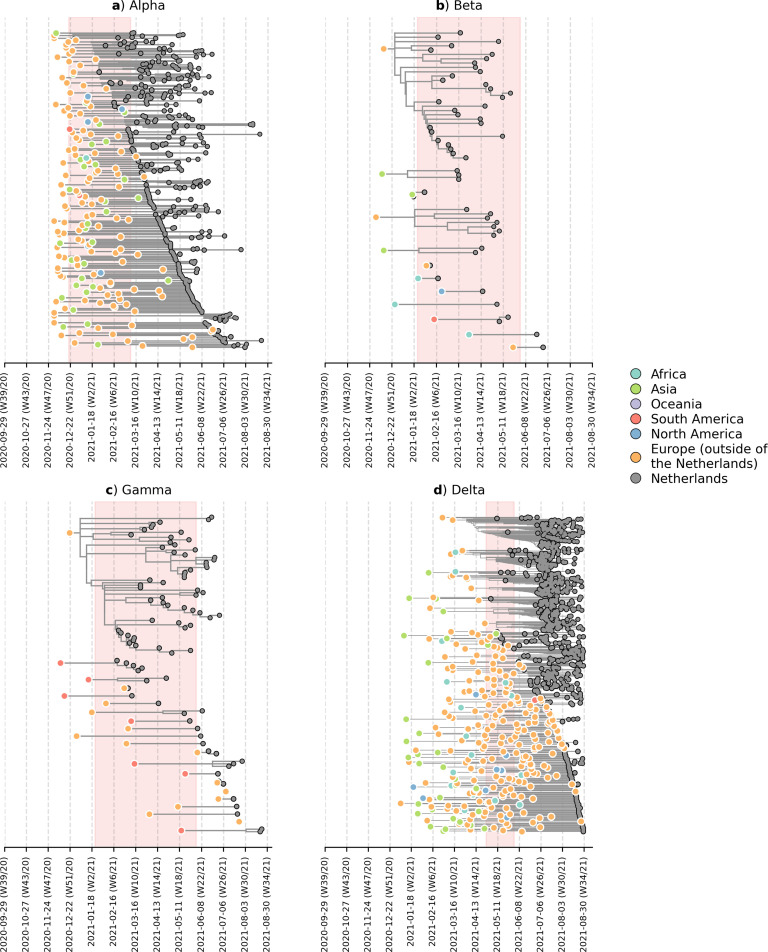
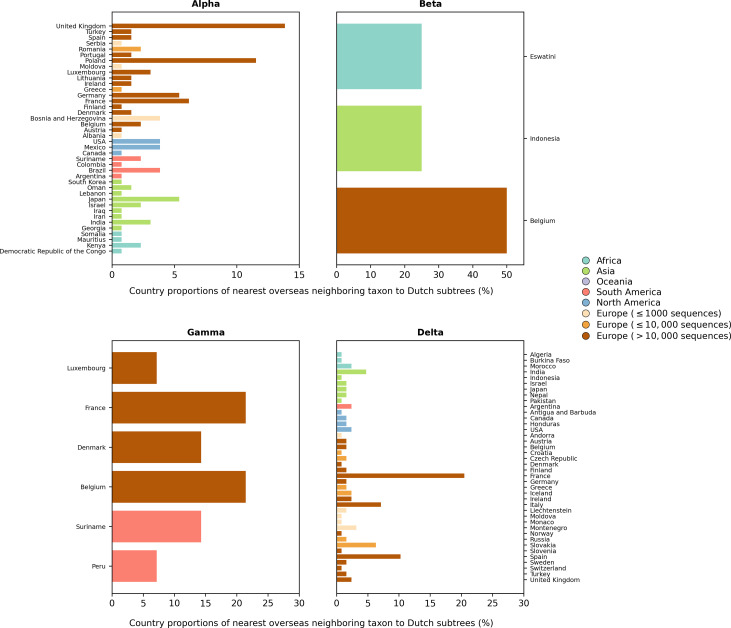
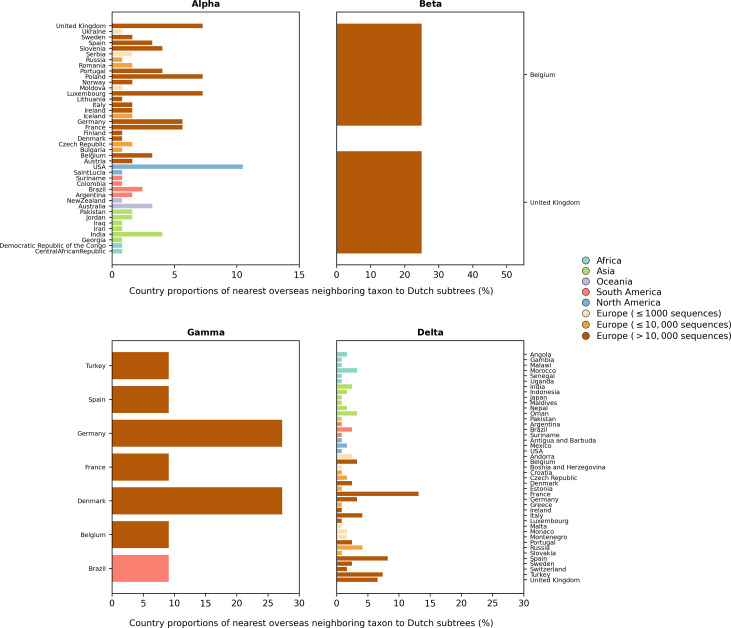
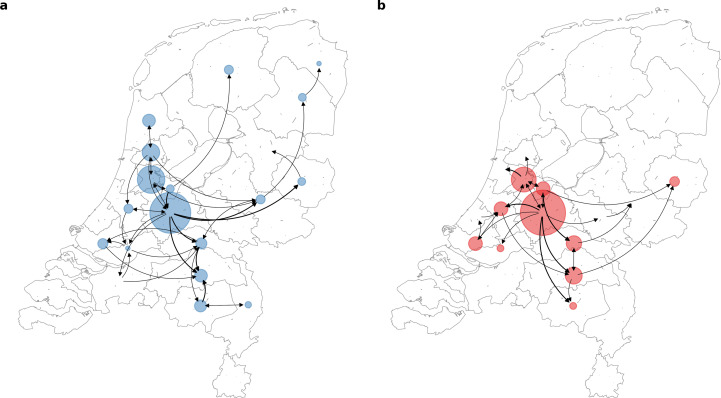
We found that all four VOCs were introduced before targeted flight restrictions were imposed on countries where the VOCs first emerged. Importantly, foreign introductions, predominantly from other European countries, continued during these restrictions. After their respective introductions into the Netherlands, the Alpha and Delta VOCs largely circulated within more populous regions of the country with international connections before asymmetric bidirectional transmissions occurred with the rest of the country and the VOC became the dominant circulating lineage.
Our findings show that flight restrictions had limited effectiveness in deterring VOC introductions due to the strength of regional land travel importation risks. As countries consider scaling down SARS-CoV-2 surveillance efforts in the post-crisis phase of the pandemic, our results highlight that robust surveillance in regions of early spread is important for providing timely information for variant detection and outbreak control.
None.
SARS-CoV-2 的变异株(VOCs)已在全球范围内引发了一波又一波的感染浪潮。在荷兰,Alpha、Beta、Gamma 和 Delta VOCs 在 2020 年 9 月至 2021 年 8 月期间广泛传播。我们旨在阐明各种控制措施(包括有针对性的航班限制)如何影响这些 VOC 在荷兰的引入和传播。
我们对在荷兰国家监测计划下收集的 39844 个 SARS-CoV-2 基因组进行了系统发育分析。
我们发现,所有四个 VOCs 都是在对首次出现 VOC 的国家实施有针对性的航班限制之前引入的。重要的是,在这些限制期间,外国的传入,主要来自其他欧洲国家,仍在继续。在各自引入荷兰后,Alpha 和 Delta VOCs 主要在该国人口较多且与国际有联系的地区传播,然后与该国其他地区发生不对称双向传播,该 VOC 成为主要流行的谱系。
我们的研究结果表明,由于区域陆地旅行输入风险的强度,航班限制在阻止 VOC 引入方面的效果有限。随着各国考虑在大流行后危机阶段减少 SARS-CoV-2 监测工作,我们的研究结果强调,在早期传播地区进行强有力的监测对于及时提供变异检测和疫情控制的信息非常重要。
无。