Université Paris Cité, Inserm, PARCC, F-75015, Paris, France.
Université de Reims Champagne Ardenne, IRMAIC EA 7509, 51097, Reims, France.
Nat Commun. 2022 Sep 14;13(1):5399. doi: 10.1038/s41467-022-33034-0.
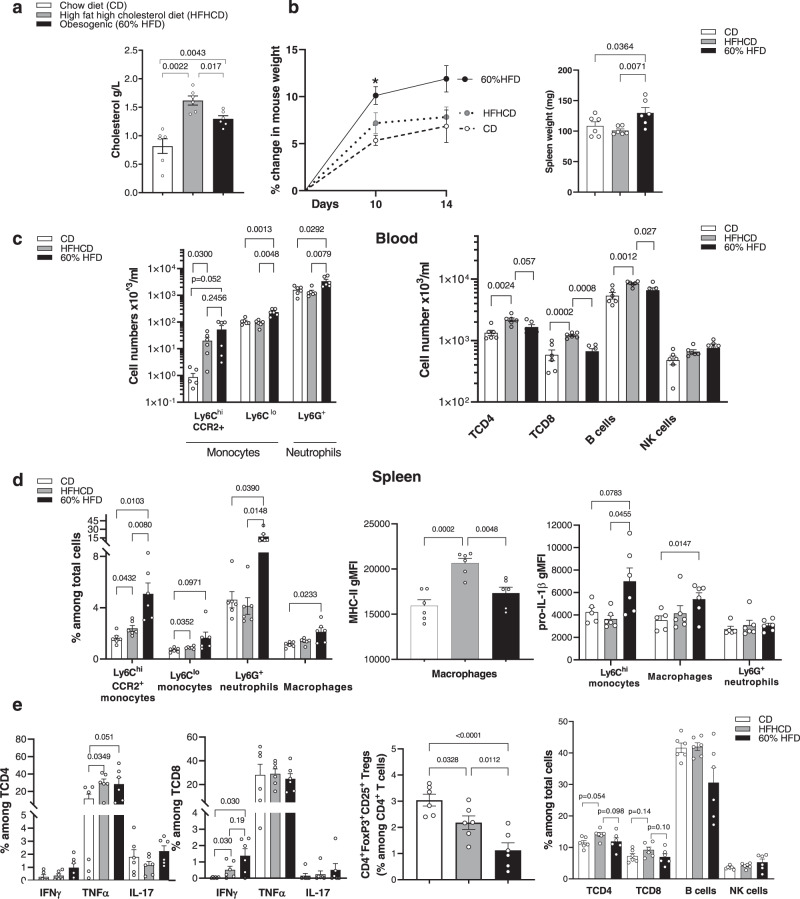
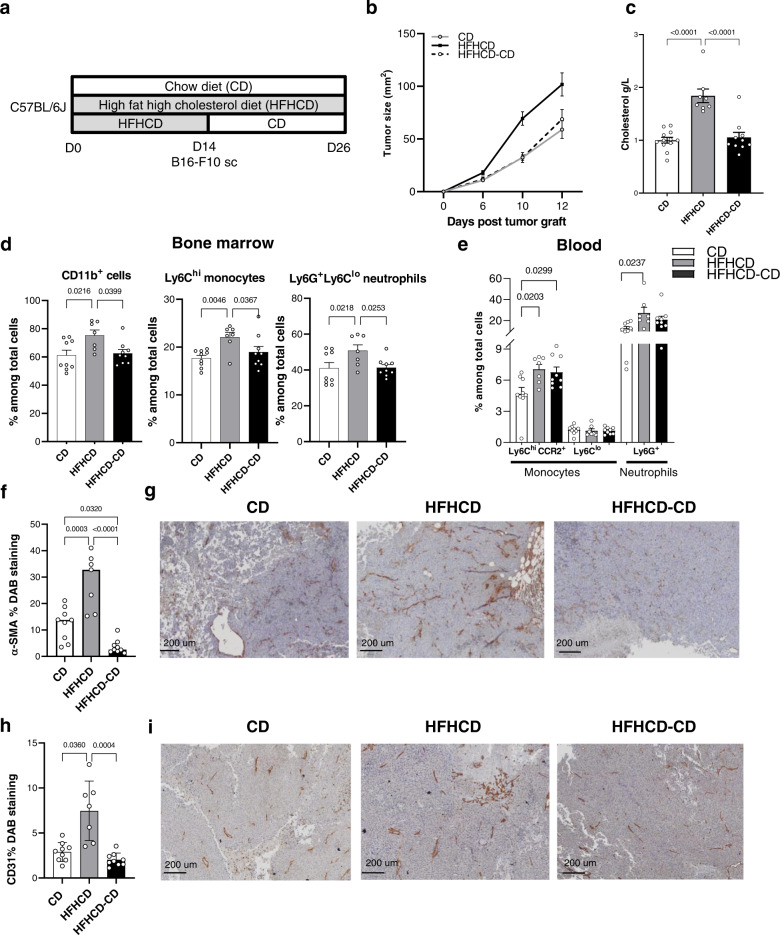
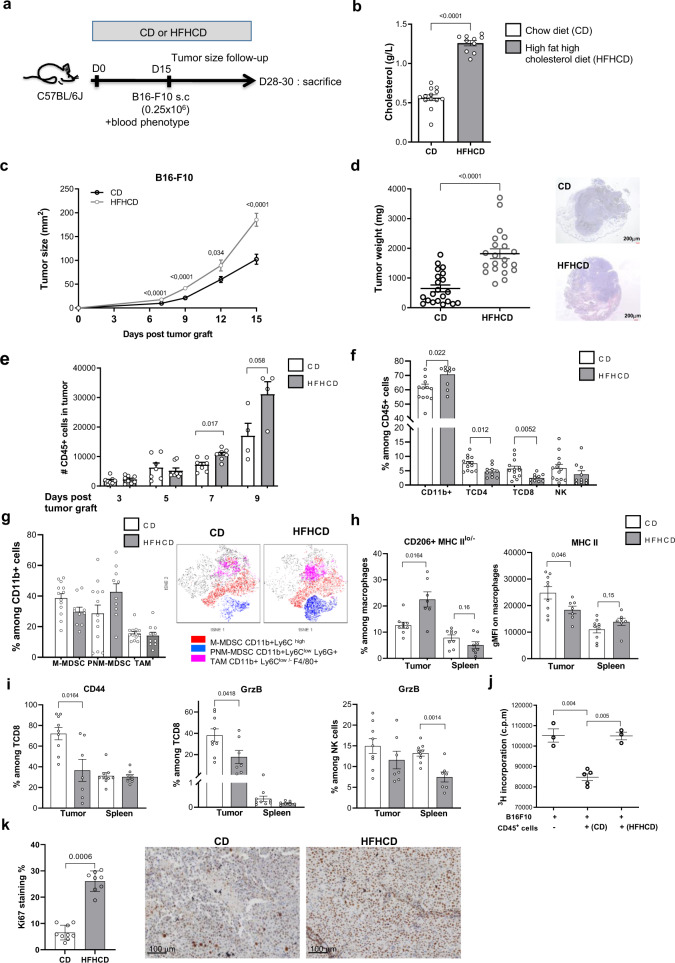
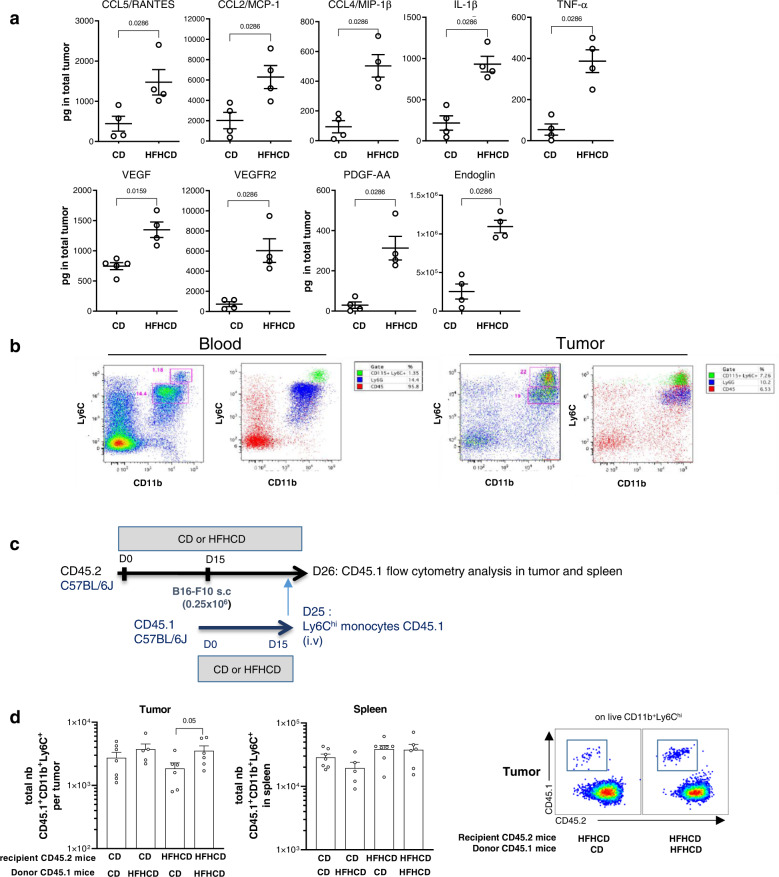
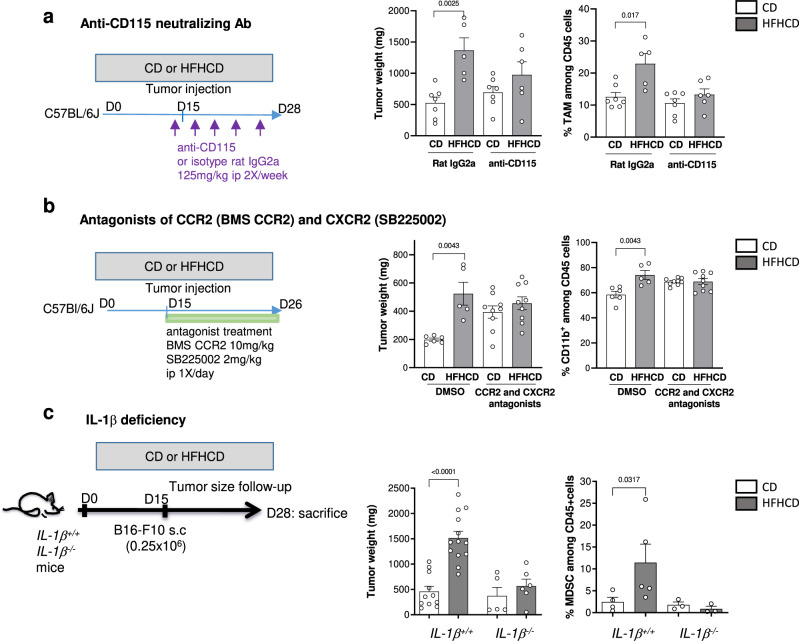
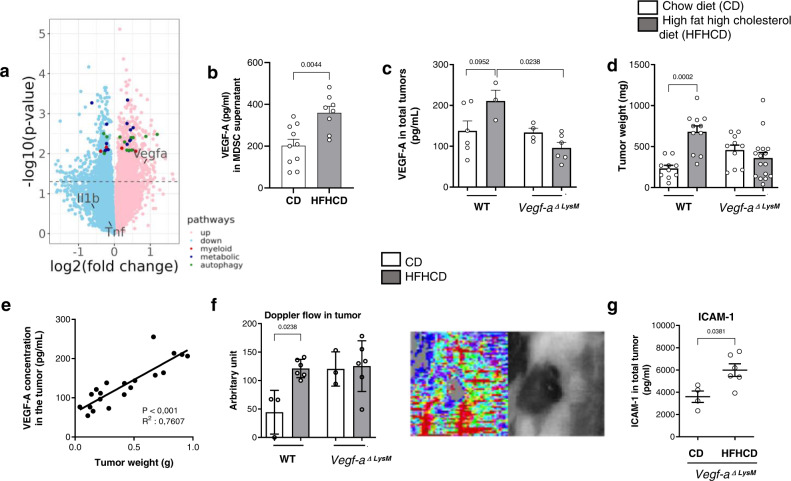
Cancer and cardiovascular disease (CVD) share common risk factors such as dyslipidemia, obesity and inflammation. However, the role of pro-atherogenic environment and its associated low-grade inflammation in tumor progression remains underexplored. Here we show that feeding C57BL/6J mice with a non-obesogenic high fat high cholesterol diet (HFHCD) for two weeks to induce mild dyslipidemia, increases the pool of circulating Ly6C monocytes available for initial melanoma development, in an IL-1β-dependent manner. Descendants of circulating myeloid cells, which accumulate in the tumor microenvironment of mice under HFHCD, heighten pro-angiogenic and immunosuppressive activities locally. Limiting myeloid cell accumulation or targeting VEGF-A production by myeloid cells decrease HFHCD-induced tumor growth acceleration. Reverting the HFHCD to a chow diet at the time of tumor implantation protects against tumor growth. Together, these data shed light on cross-disease communication between cardiovascular pathologies and cancer.
癌症和心血管疾病(CVD)有一些共同的风险因素,如血脂异常、肥胖和炎症。然而,促动脉粥样硬化环境及其相关的低度炎症在肿瘤进展中的作用仍未得到充分探索。在这里,我们表明,给 C57BL/6J 小鼠喂食两周的非肥胖高脂肪高胆固醇饮食(HFHCD)以诱导轻度血脂异常,会以 IL-1β 依赖的方式增加循环 Ly6C 单核细胞的数量,从而有利于黑色素瘤的早期发展。在 HFHCD 下,循环髓样细胞的后代在小鼠的肿瘤微环境中积累,局部增强了促血管生成和免疫抑制活性。限制髓样细胞的积累或靶向髓样细胞中 VEGF-A 的产生,可减少 HFHCD 诱导的肿瘤生长加速。在肿瘤植入时将 HFHCD 转回标准饮食可防止肿瘤生长。总之,这些数据揭示了心血管疾病和癌症之间的跨疾病通讯。