Qiu Dongxu, Deng Yalan, Wen Yanbin, Yin Jun, Feng Jie, Huang Jiabing, Song Mingyu, Zhang Gui, Chen Changqing, Xia Jian
Department of Neurology, Xiangya Hospital, Central South University, Changsha, Hunan, 410008, PR China.
NHC Key Laboratory of Cancer Proteomics & Laboratory of Structural Biology, Xiangya Hospital, Central South University, Changsha, 410008, Hunan, PR China.
Mater Today Bio. 2022 Sep 6;16:100420. doi: 10.1016/j.mtbio.2022.100420. eCollection 2022 Dec.
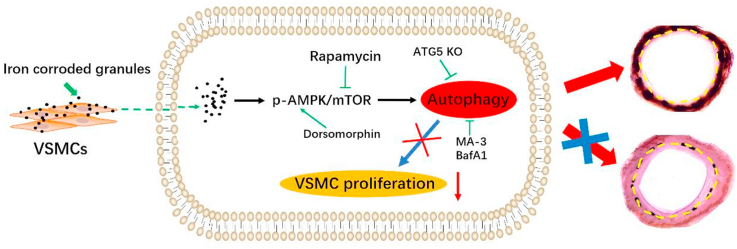
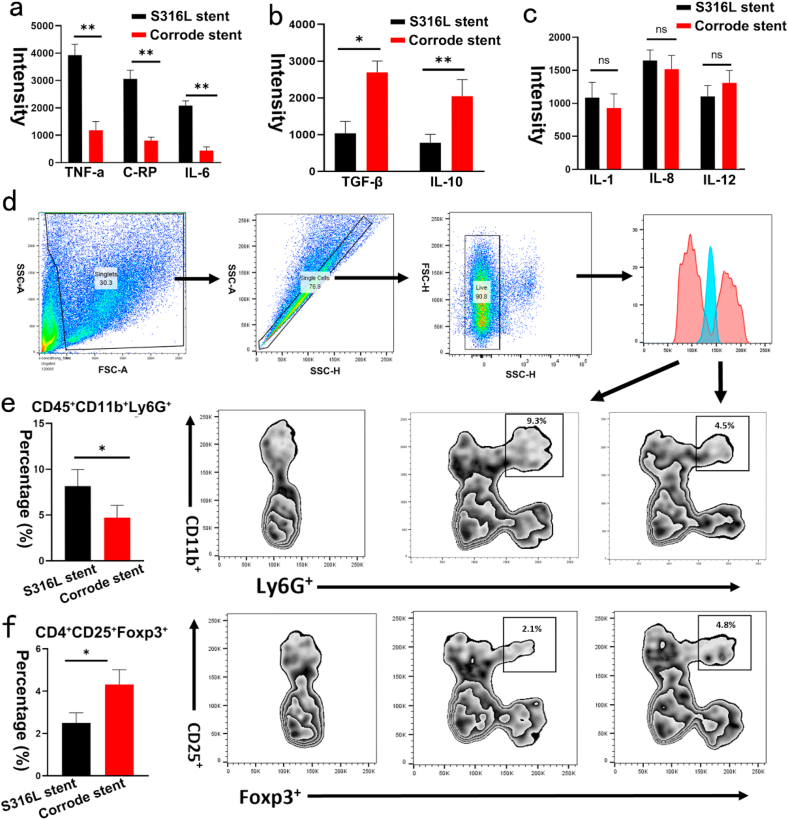
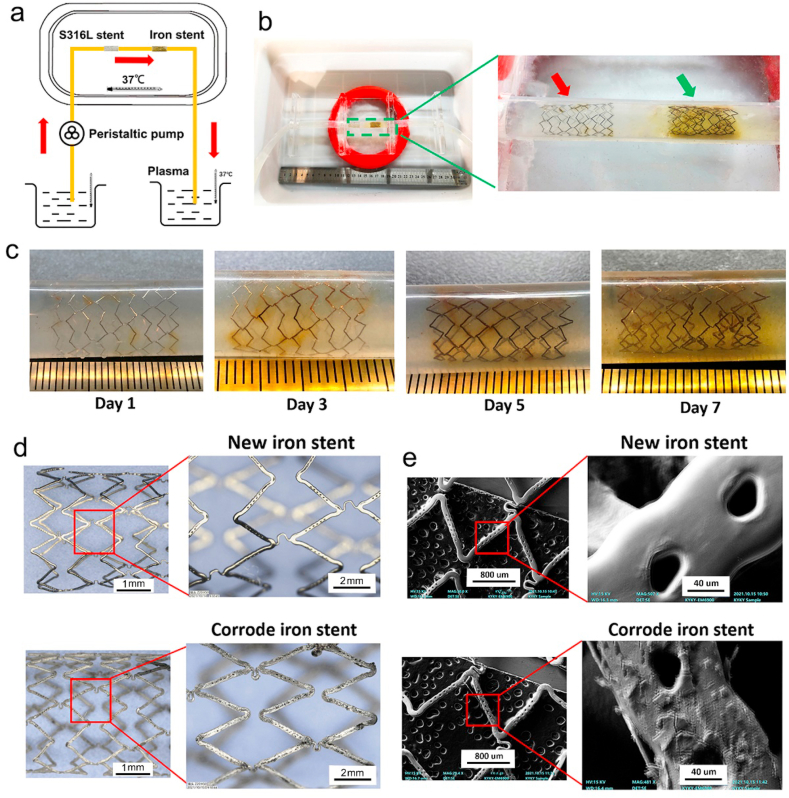
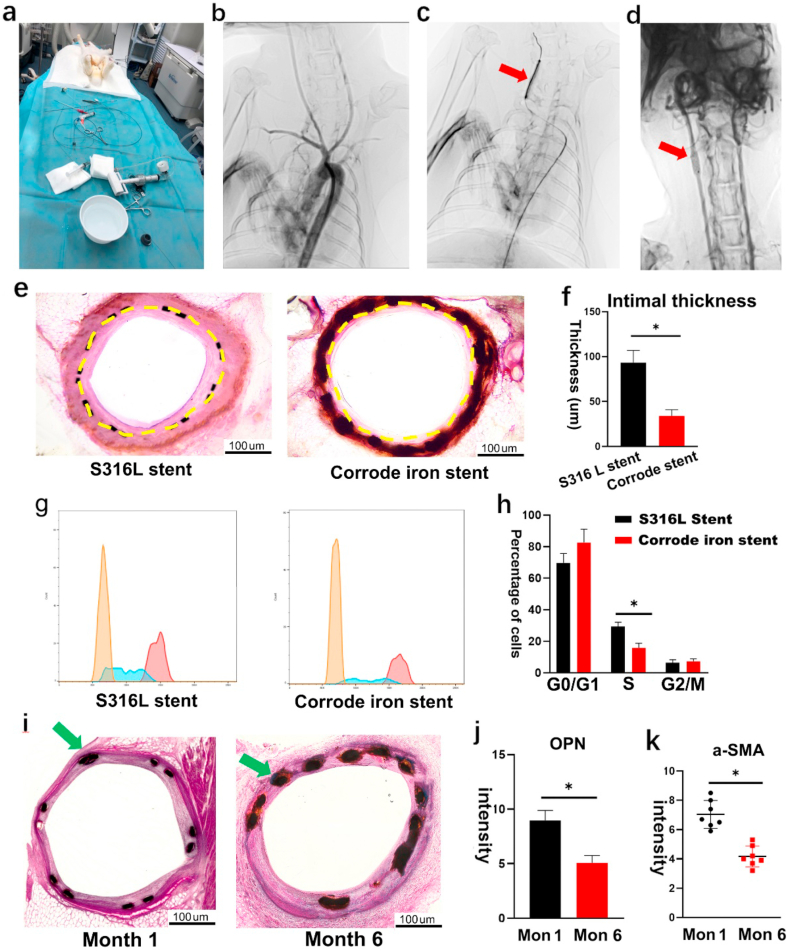
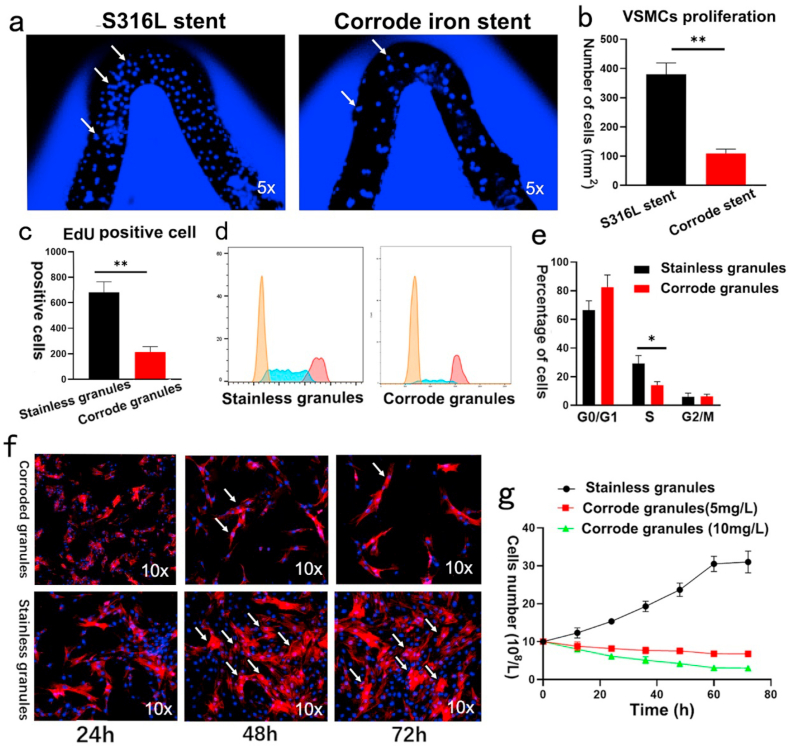
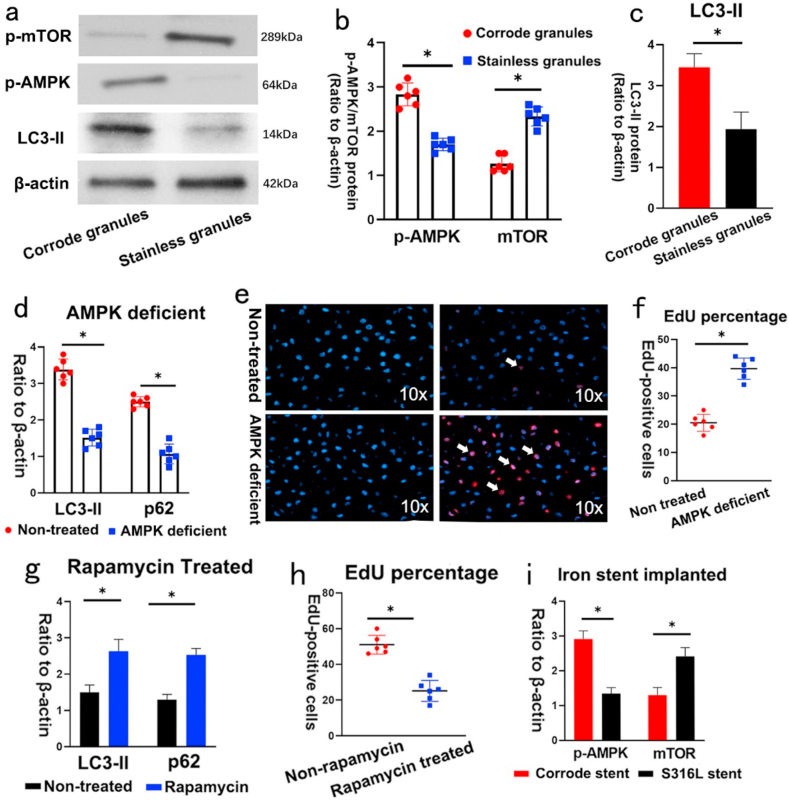
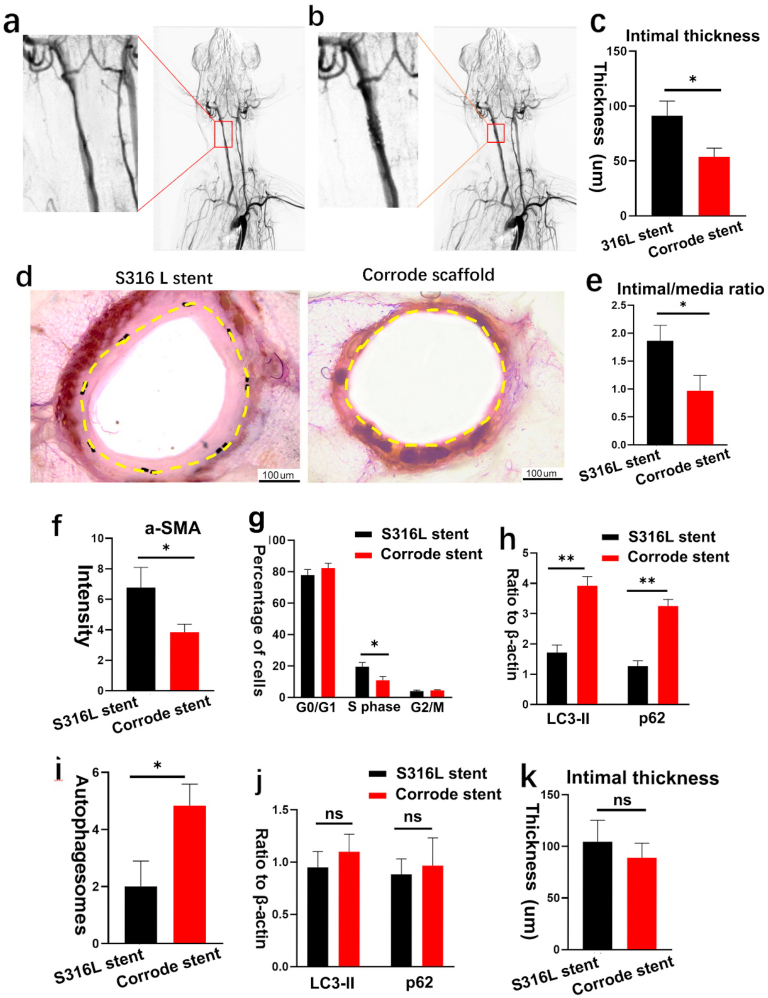
In-stent restenosis after interventional therapy remains a severe clinical complication. Current evidence indicates that neointimal hyperplasia induced by vascular smooth muscle cell (VSMC) proliferation is a major cause of restenosis. Thus, inhibiting VSMC proliferation is critical for preventing in-stent restenosis. The incidence of restenosis was reduced in nitrided iron-based stents (hereafter referred to as iron stents). We hypothesized that the corroded granules produced by the iron stent would prevent in-stent restenosis by inhibiting VSMC proliferation. To verify this hypothesis, we introduced a dynamic circulation device to analyze the components of corroded granules. To investigate the effects of corroded granules on VSMC proliferation, we implanted the corroded iron stent into the artery of the atherosclerotic artery stenosis model. Moreover, we explored the mechanism underlying the inhibition of VSMC proliferation by iron corroded granules. The results indicated that iron stent produced the corroded granules after implantation, and the main component of the corrosion granules was iron oxide. Remarkably, the corroded granules reduced the neointimal hyperplasia in an atherosclerotic artery stenosis model, and iron corroded granules decreased the neointimal hyperplasia by inhibiting VSMC proliferation. In addition, we revealed that corroded granules reduced VSMC proliferation by activating autophagy through the AMPK/mTOR signaling pathway. Importantly, safety of iron corroded granules was evaluated and proved to be satisfactory hemocompatibility in rabbit model. Overall, the role of corroded granules in restenosis prevention was described for the first time. This finding highlighted the implication of corroded granules produced by iron stent in inhibiting VSMC proliferation, pointing to a new direction to prevent in-stent restenosis.
介入治疗后的支架内再狭窄仍然是一种严重的临床并发症。目前的证据表明,血管平滑肌细胞(VSMC)增殖诱导的新生内膜增生是再狭窄的主要原因。因此,抑制VSMC增殖对于预防支架内再狭窄至关重要。氮化铁基支架(以下简称铁支架)可降低再狭窄的发生率。我们推测铁支架产生的腐蚀颗粒可通过抑制VSMC增殖来预防支架内再狭窄。为了验证这一假设,我们引入了一个动态循环装置来分析腐蚀颗粒的成分。为了研究腐蚀颗粒对VSMC增殖的影响,我们将腐蚀后的铁支架植入动脉粥样硬化性动脉狭窄模型的动脉中。此外,我们还探讨了铁腐蚀颗粒抑制VSMC增殖的机制。结果表明,铁支架植入后产生了腐蚀颗粒,腐蚀颗粒的主要成分是氧化铁。值得注意的是,腐蚀颗粒可减少动脉粥样硬化性动脉狭窄模型中的新生内膜增生,铁腐蚀颗粒通过抑制VSMC增殖来减少新生内膜增生。此外,我们发现腐蚀颗粒通过激活AMPK/mTOR信号通路的自噬来减少VSMC增殖。重要的是,我们对铁腐蚀颗粒的安全性进行了评估,并证明其在兔模型中的血液相容性良好。总体而言,首次描述了腐蚀颗粒在预防再狭窄中的作用。这一发现突出了铁支架产生的腐蚀颗粒在抑制VSMC增殖中的意义,为预防支架内再狭窄指明了新的方向。