Zhao Nan, Zeng Jie, Fan Lin, Wang Jing, Zhang Chao, Zou SiHai, Zhang Bi, Li Kai, Yu Cong
Department of Anesthesiology, Stomatology Hospital Affiliated Chongqing Medical University, Chongqing, China.
Chongqing Key Laboratory of Oral Diseases and Biomedical Sciences, Chongqing, China.
Front Med (Lausanne). 2022 Sep 2;9:950564. doi: 10.3389/fmed.2022.950564. eCollection 2022.
Oral dental treatment cause anxiety, fear, and physical stress. This study aimed to investigate the efficacy and safety of moderate sedation by remimazolam with alfentanil vs. propofol with alfentanil in third molar extraction.
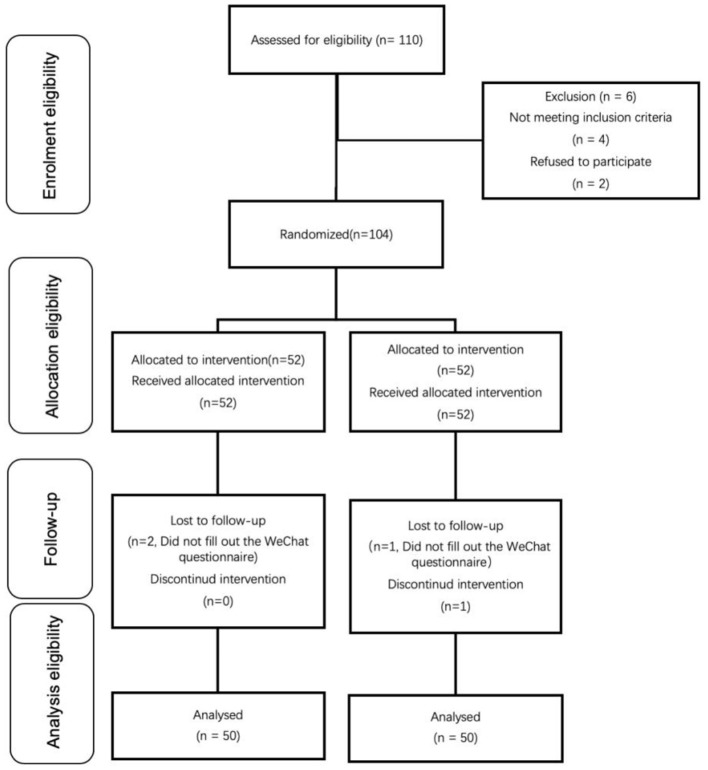
This single-center, randomized, single-blind clinical trial included 100 adults who underwent third molar ambulatory extraction. All patients had continuous infusion of Alfentanil 0.2 μg/kg/min. Group remimazolam with alfentanil (group RA) had an induction dose of 80 μg/kg and maintenance dosage of 5 μg/kg/min. In group propofol with alfentanil (PA group), propofol was infused at an initial concentration of 1.8 μg/mL under target controlled infusion (TCI) mode and a maintenance concentration of 1.5 μg/mL. The incidence rates of adverse effects were recorded and compared. Depth of sedation was assessed using the modified observer alertness/sedation assessment (MOAA/S) and entropy index. Recovery characteristics were recorded and complications observed for next 24 h.
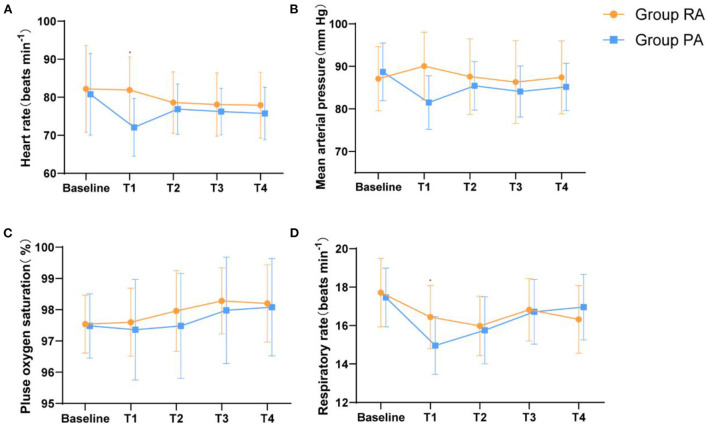
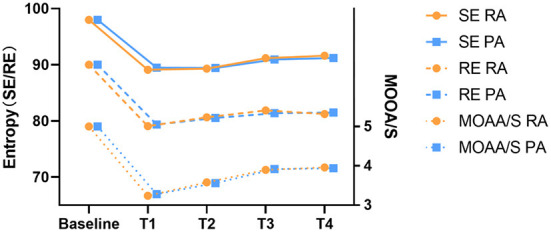
The incident of adverse events 6 (12%) in the group RA was lower than the group PA 25 (50%) [Mean difference 0.136 (95%CI, 0.049-0.377); < 0.05], with no serious adverse events during the sedation procedure. The incidence of injection pain in group RA was significantly lower than that in group PA [4 vs. 26%, mean difference 0.119 (95%CI, 0.025-0.558); = 0.004]. Before starting local anesthesia, the mean arterial pressure, heart rate, and respiratory rate of the PA group were lower than those of the RA group. None of the patients required further treatments for a decreased heart rate, blood pressure, or low SpO. The rate of moderate sedation success was 100% in both groups. The MOAA/S score was similar between the groups indicating that the depth of sedation was effective. Group RA had significantly shorter recovery and discharge times than those of group PA.
Remimazolam with alfentanil is a safer and more effective alternative for ambulatory sedation and can reduce recovery and discharge time and the incidence of perioperative adverse events compare with propofol.
http://www.chictr.org.cn/index.aspx, identifier: ChiCTR2200058106.
口腔牙科治疗会引起焦虑、恐惧和身体应激反应。本研究旨在探讨瑞马唑仑联合阿芬太尼与丙泊酚联合阿芬太尼在拔除第三磨牙时进行中度镇静的有效性和安全性。
这项单中心、随机、单盲临床试验纳入了100例接受第三磨牙门诊拔除术的成年人。所有患者均持续输注阿芬太尼0.2μg/kg/min。瑞马唑仑联合阿芬太尼组(RA组)的诱导剂量为80μg/kg,维持剂量为5μg/kg/min。在丙泊酚联合阿芬太尼组(PA组)中,丙泊酚在靶控输注(TCI)模式下以初始浓度1.8μg/mL输注,维持浓度为1.5μg/mL。记录并比较不良反应的发生率。使用改良的观察者警觉/镇静评估(MOAA/S)和熵指数评估镇静深度。记录恢复特征,并观察接下来24小时内的并发症。
RA组不良事件发生率为6例(12%),低于PA组的25例(50%)[平均差异0.136(95%CI,0.049 - 0.377);P < 0.05],镇静过程中无严重不良事件发生。RA组注射痛的发生率显著低于PA组[4%对26%,平均差异0.119(95%CI,0.025 - 0.558);P = 0.004]。在开始局部麻醉前,PA组的平均动脉压、心率和呼吸频率低于RA组。没有患者因心率、血压下降或低SpO₂需要进一步治疗。两组中度镇静成功率均为100%。两组间MOAA/S评分相似,表明镇静深度有效。RA组的恢复和出院时间明显短于PA组。
与丙泊酚相比,瑞马唑仑联合阿芬太尼是门诊镇静更安全有效的选择,可减少恢复和出院时间以及围手术期不良事件的发生率。