Department of Clinical Chemistry, Neuro chemistry Laboratory and Biobank, Amsterdam Neuroscience, Amsterdam UMC, VU University, The Netherlands.
Department of Medicine and Surgery, Laboratory of Clinical Neuro chemistry, University of Perugia, Perugia, Italy.
J Alzheimers Dis. 2022;90(1):363-380. doi: 10.3233/JAD-220318.
The differential diagnosis of frontotemporal dementia (FTD) is still a challenging task due to its symptomatic overlap with other neurological diseases and the lack of biofluid-based biomarkers.
To investigate the diagnostic potential of a combination of novel biomarkers in cerebrospinal fluid (CSF) and blood.
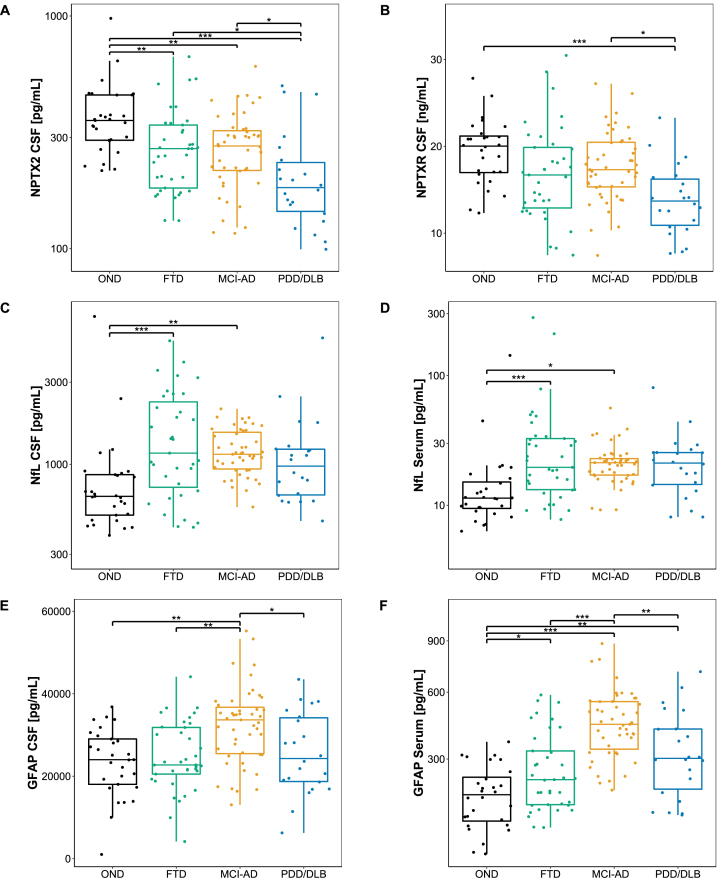
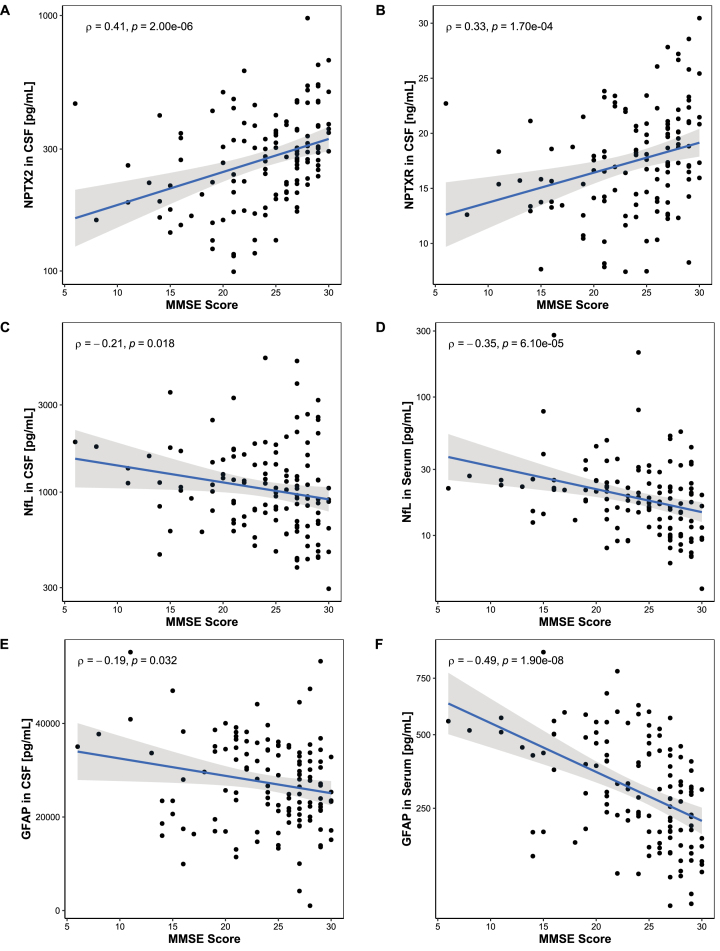
We included 135 patients from the Center for Memory Disturbances, University of Perugia, with the diagnoses FTD (n = 37), mild cognitive impairment due to Alzheimer's disease (MCI-AD, n = 47), Lewy body dementia (PDD/DLB, n = 22), and cognitively unimpaired patients as controls (OND, n = 29). Biomarker levels of neuronal pentraxin-2 (NPTX2), neuronal pentraxin receptor, neurofilament light (NfL) and glial fibrillary acidic protein (GFAP) were measured in CSF, as well as NfL and GFAP in serum. We assessed biomarker differences by analysis of covariance and generalized linear models (GLM). We performed receiver operating characteristics analyses and Spearman correlation to determine biomarker associations.
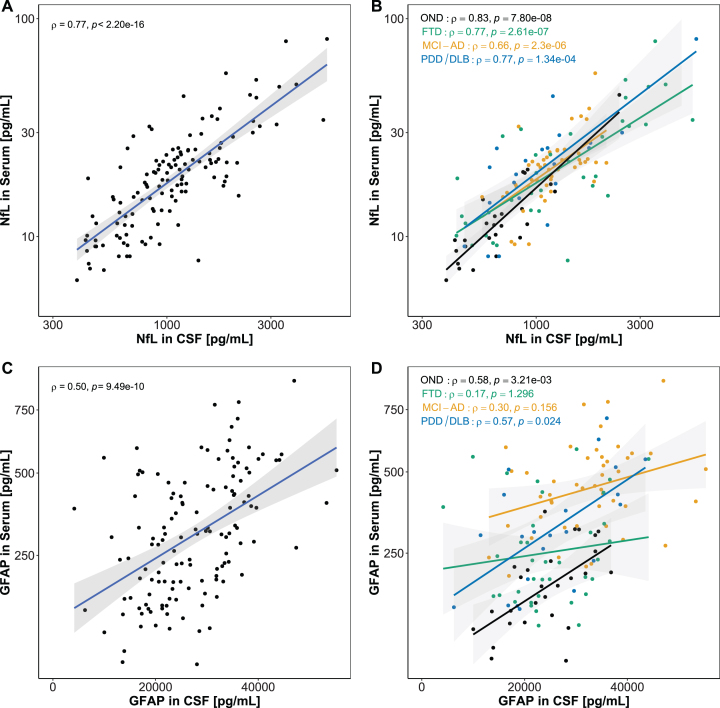
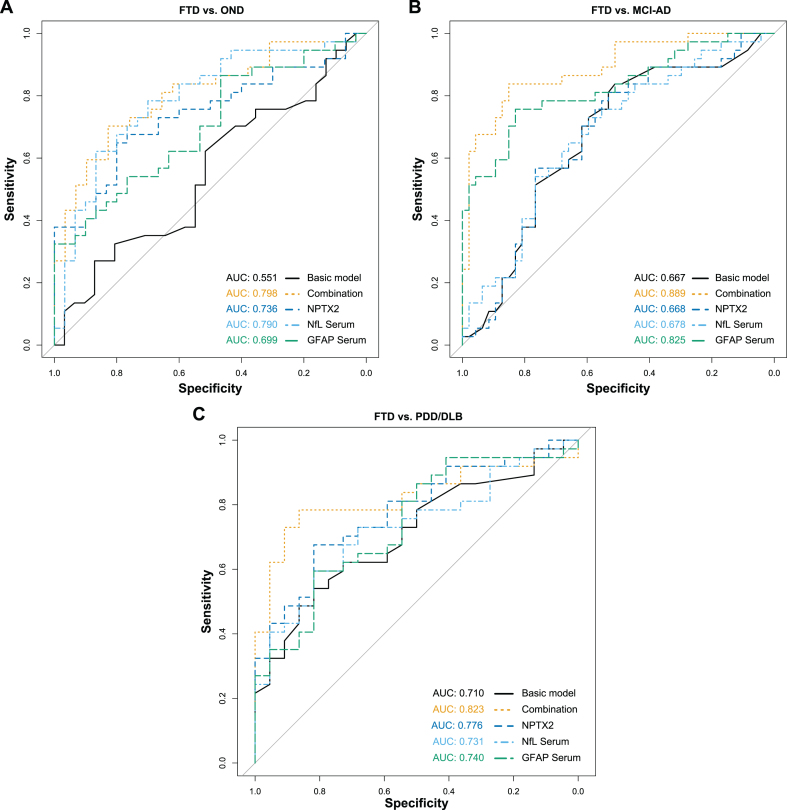
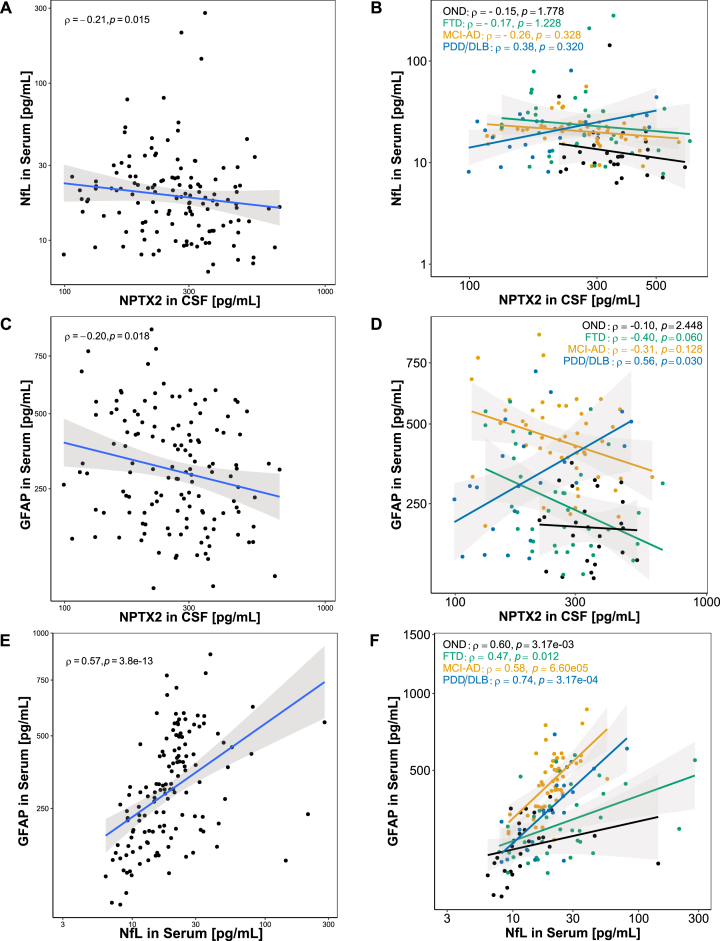
CSF NPTX2 and serum GFAP levels varied most between diagnostic groups. The combination of CSF NPTX2, serum NfL and serum GFAP differentiated FTD from the other groups with good accuracy (FTD versus MCI-AD: area under the curve (AUC) [95% CI] = 0.89 [0.81-0.96]; FTD versus PDD/DLB: AUC = 0.82 [0.71-0.93]; FTD versus OND: AUC = 0.80 [0.70-0.91]). CSF NPTX2 and serum GFAP correlated positively only in PDD/DLB (ρ= 0.56, p < 0.05). NPTX2 and serum NfL did not correlate in any of the diagnostic groups. Serum GFAP and serum NfL correlated positively in all groups (ρ= 0.47-0.74, p < 0.05).
We show the combined potential of CSF NPTX2, serum NfL, and serum GFAP to differentiate FTD from other neurodegenerative disorders.
由于额颞叶痴呆(FTD)的症状与其他神经退行性疾病重叠,且缺乏基于生物体液的生物标志物,因此其鉴别诊断仍然是一项具有挑战性的任务。
研究脑脊液(CSF)和血液中新型生物标志物组合的诊断潜力。
我们纳入了来自佩鲁贾大学记忆障碍中心的 135 名患者,其诊断为 FTD(n=37)、阿尔茨海默病导致的轻度认知障碍(MCI-AD,n=47)、路易体痴呆(PDD/DLB,n=22)和认知正常的对照组(OND,n=29)。我们测量了 CSF 中神经元五聚体蛋白 2(NPTX2)、神经元五聚体蛋白受体、神经丝轻链(NfL)和神经胶质纤维酸性蛋白(GFAP)的水平,以及血清中的 NfL 和 GFAP。我们通过协方差分析和广义线性模型(GLM)来评估生物标志物差异。我们进行了受试者工作特征分析和 Spearman 相关性分析,以确定生物标志物的关联。
CSF NPTX2 和血清 GFAP 水平在诊断组之间的差异最大。CSF NPTX2、血清 NfL 和血清 GFAP 的组合能够很好地区分 FTD 与其他组,具有较高的准确性(FTD 与 MCI-AD:曲线下面积(AUC)[95%CI]为 0.89[0.81-0.96];FTD 与 PDD/DLB:AUC 为 0.82[0.71-0.93];FTD 与 OND:AUC 为 0.80[0.70-0.91])。CSF NPTX2 和血清 GFAP 仅在 PDD/DLB 中呈正相关(ρ=0.56,p<0.05)。在任何诊断组中,NPTX2 和血清 NfL 均无相关性。在所有组中,血清 GFAP 和血清 NfL 均呈正相关(ρ=0.47-0.74,p<0.05)。
我们证明了 CSF NPTX2、血清 NfL 和血清 GFAP 联合用于区分 FTD 与其他神经退行性疾病的潜力。