Sabouni Waddah, Hansa Ismaeel, Al Ali Shuaib Mohamed, Adel Samar M, Vaid Nikhilesh
Department of Orthodontics, Invisalign Center, Jumeirah, Dubai, United Arab Emirates.
Private Practice, Durban, South Africa.
J Clin Imaging Sci. 2022 Jul 29;12:42. doi: 10.25259/JCIS_64_2022. eCollection 2022.
To examine the skeletal, dental, and soft-tissue cephalometric effects of class II correction using Invisalign's mandibular advancement feature in growing patients.
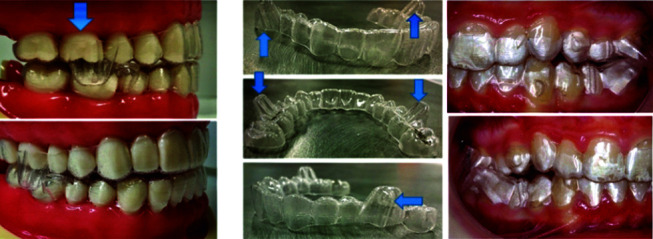
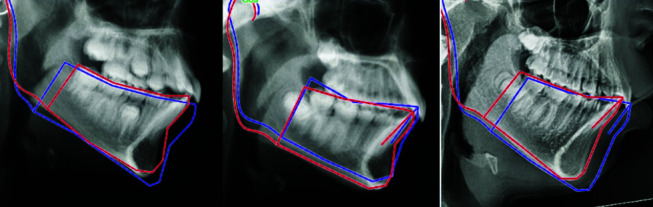
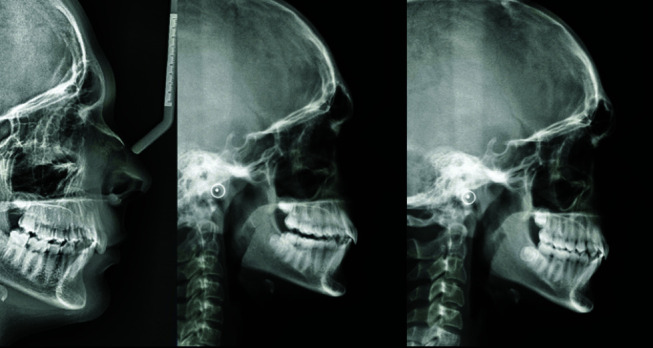
A retrospective cohort clinical study was performed on cases that were started between 2017 and 2019. A total of 32 patients (13 females, 19 males), with an average age of 13 years old (9.9-14.8 years) had undergone Invisalign treatment (Align Technology, Inc., San Jose, CA) wherein the mandibular advancement phase was completed were included. Photos, digital study models, and cephalograms were taken once during the patients' initial visit and again upon completing the mandibular advancement phase of treatment. The number of aligners worn and the time of treatment in months was recorded for each subject. Cephalometric analysis was performed and overjet and overbite were measured. Statistical analysis was performed using SPSS statistical software (version 25; SPSS, Chicago, Ill) and the level of significance was set at <0.05. Descriptive statistics were performed to generate means and differences for each cephalometric measurement as well as patient data including age, treatment time, and aligner number. Differences between measurements from patients before treatment (T1) and after treatment (T2) with the mandibular advancement feature were evaluated using a paired -test.
All 32 patients had multiple jumps staged for the precision wings, i.e., incremental advancement. The average length of treatment for the MA phase was 9.2 months (7.5-13.8 months) and the average number of aligners used during this time was 37 (30-55). Statistically significant differences between T1 and T2, in favor of class II correction, were observed in the ANB angle, WITS appraisal, facial convexity, and mandibular length. The nasolabial angle, overjet, and overbite also showed statistically significant changes between T1 and T2.
Invisalign aligners with the mandibular advancement feature took approximately 9 months for 1.5 mm of overjet correction. The lower incisor angulation was maintained during class II correction. The minimal skeletal changes are in favor of class II correction.
研究在生长发育期患者中使用隐适美下颌前导功能矫治II类错颌对骨骼、牙齿及软组织的头影测量学影响。
对2017年至2019年开始治疗的病例进行一项回顾性队列临床研究。纳入总共32例患者(13例女性,19例男性),平均年龄13岁(9.9 - 14.8岁),这些患者均接受了隐适美治疗(Align Technology公司,加利福尼亚州圣何塞),且已完成下颌前导阶段。在患者初诊时及完成下颌前导治疗阶段后分别拍摄照片、制作数字化研究模型并拍摄头影测量片。记录每位受试者佩戴矫治器的数量及治疗时间(月)。进行头影测量分析并测量覆盖和覆合情况。使用SPSS统计软件(版本25;SPSS公司,伊利诺伊州芝加哥)进行统计分析,显著性水平设定为<0.05。进行描述性统计以得出每项头影测量指标以及包括年龄、治疗时间和矫治器数量在内的患者数据的均值和差异。使用配对t检验评估下颌前导功能矫治前(T1)和矫治后(T2)患者测量值之间的差异。
所有32例患者针对精密翼片均进行了多次跳跃式,即渐进性前导。下颌前导阶段的平均治疗时长为9.2个月(7.5 - 13.8个月),在此期间平均使用的矫治器数量为37副(30 - 55副)。在ANB角、WITS评估、面部凸度和下颌长度方面,观察到T1和T2之间存在有利于II类错颌矫治的统计学显著差异。鼻唇角、覆盖和覆合在T1和T2之间也显示出统计学显著变化。
具有下颌前导功能的隐适美矫治器矫正1.5 mm覆盖大约需要9个月时间。在II类错颌矫治过程中维持了下切牙的角度。最小的骨骼变化有利于II类错颌矫治。