Department of Biochemistry, Center for Biomedical Mass Spectrometry, Boston University School of Medicine, Boston, MA, 02118, USA.
Analytical Development, Pharmaceutical Sciences, Takeda Development Center Americas, Inc., Lexington, MA, 02421, USA.
Anal Bioanal Chem. 2022 Nov;414(27):7855-7863. doi: 10.1007/s00216-022-04318-7. Epub 2022 Sep 22.
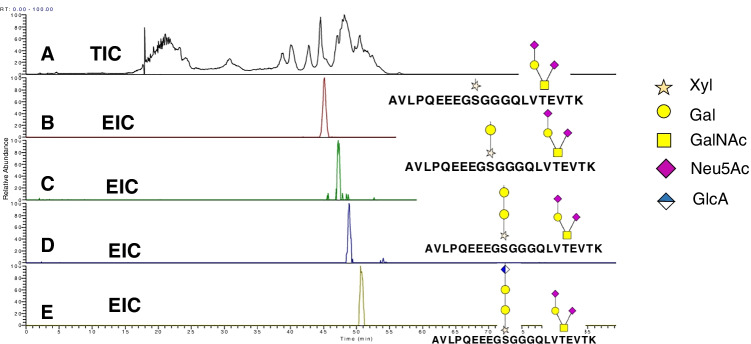
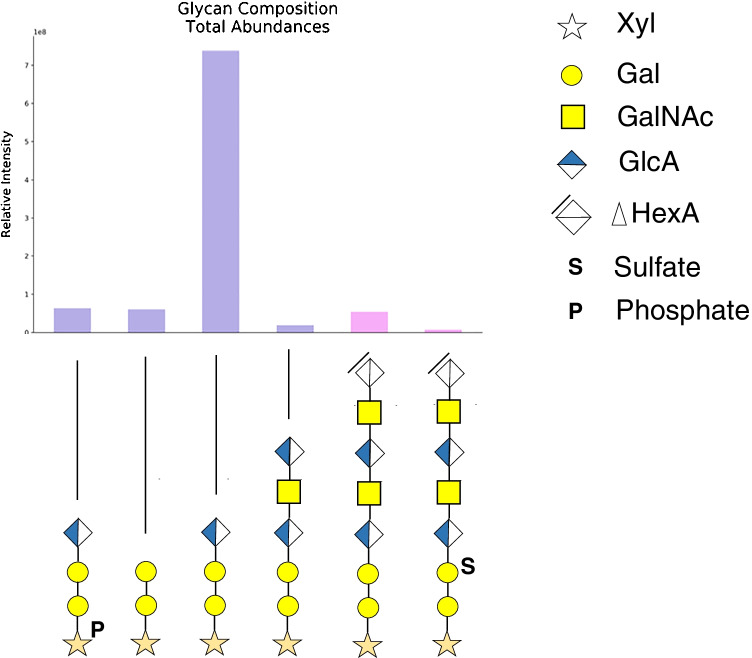
Recombinant protein engineering design affects therapeutic properties including protein efficacy, safety, and immunogenicity. Importantly, glycosylation modulates glycoprotein therapeutic pharmacokinetics, pharmacodynamics, and effector functions. Furthermore, the development of fusion proteins requires in-depth characterization of the protein integrity and its glycosylation to evaluate their critical quality attributes. Fc-fusion proteins can be modified by complex glycosylation on the active peptide, the fragment crystallizable (Fc) domain, and the linker peptides. Moreover, the type of glycosylation and the glycan distribution at a given glycosite depend on the host cell line and the expression system conditions that significantly impact safety and efficacy. Because of the inherent heterogeneity of glycosylation, it is necessary to assign glycan structural detail for glycoprotein quality control. Using conventional reversed-phase LC-MS methods, the different glycoforms at a given glycosite elute over a narrow retention time window, and glycopeptide ionization is suppressed by co-eluting non-modified peptides. To overcome this drawback, we used nanoHILIC-MS to characterize the complex glycosylation of UTI-Fc, a fusion protein that greatly increases the half-life of ulinastatin. By this methodology, we identified and characterized ulinastatin glycopeptides at the Fc domain and linker peptide. The results described herein demonstrate the advantages of nanoHILIC-MS to elucidate glycan features on glycotherapeutics that fail to be detected using traditional reversed-phase glycoproteomics.
重组蛋白工程设计会影响治疗特性,包括蛋白功效、安全性和免疫原性。重要的是,糖基化会调节糖蛋白的治疗药代动力学、药效学和效应功能。此外,融合蛋白的开发需要深入分析蛋白质的完整性及其糖基化,以评估其关键质量属性。Fc 融合蛋白可以通过活性肽、Fc 结构域和连接肽上的复杂糖基化进行修饰。此外,给定糖基化位点的糖基化类型和聚糖分布取决于宿主细胞系和表达系统条件,这些条件会显著影响安全性和功效。由于糖基化的固有异质性,有必要确定糖蛋白的糖基化结构细节,以进行质量控制。采用传统的反相 LC-MS 方法,给定糖基化位点的不同糖型在狭窄的保留时间窗口中洗脱,并且糖肽的离子化受到共洗脱的未修饰肽的抑制。为了克服这一缺点,我们使用纳升高效离子交换色谱-质谱联用(nanoHILIC-MS)来表征 UTI-Fc 的复杂糖基化,UTI-Fc 是一种融合蛋白,可大大延长乌司他丁的半衰期。通过该方法,我们鉴定并表征了 Fc 结构域和连接肽上的乌司他丁糖肽。本文所述的结果表明,nanoHILIC-MS 具有阐明未能通过传统反相糖蛋白质组学检测到的糖基化治疗药物的聚糖特征的优势。