Department of Environmental Protection, Estación Experimental del Zaidín, Consejo Superior de Investigaciones Científicas, Granada, Spain.
Max Planck Institute for Terrestrial Microbiology and Center for Synthetic Microbiology (SYNMIKRO), Marburg, Germany.
mBio. 2022 Oct 26;13(5):e0165022. doi: 10.1128/mbio.01650-22. Epub 2022 Sep 26.
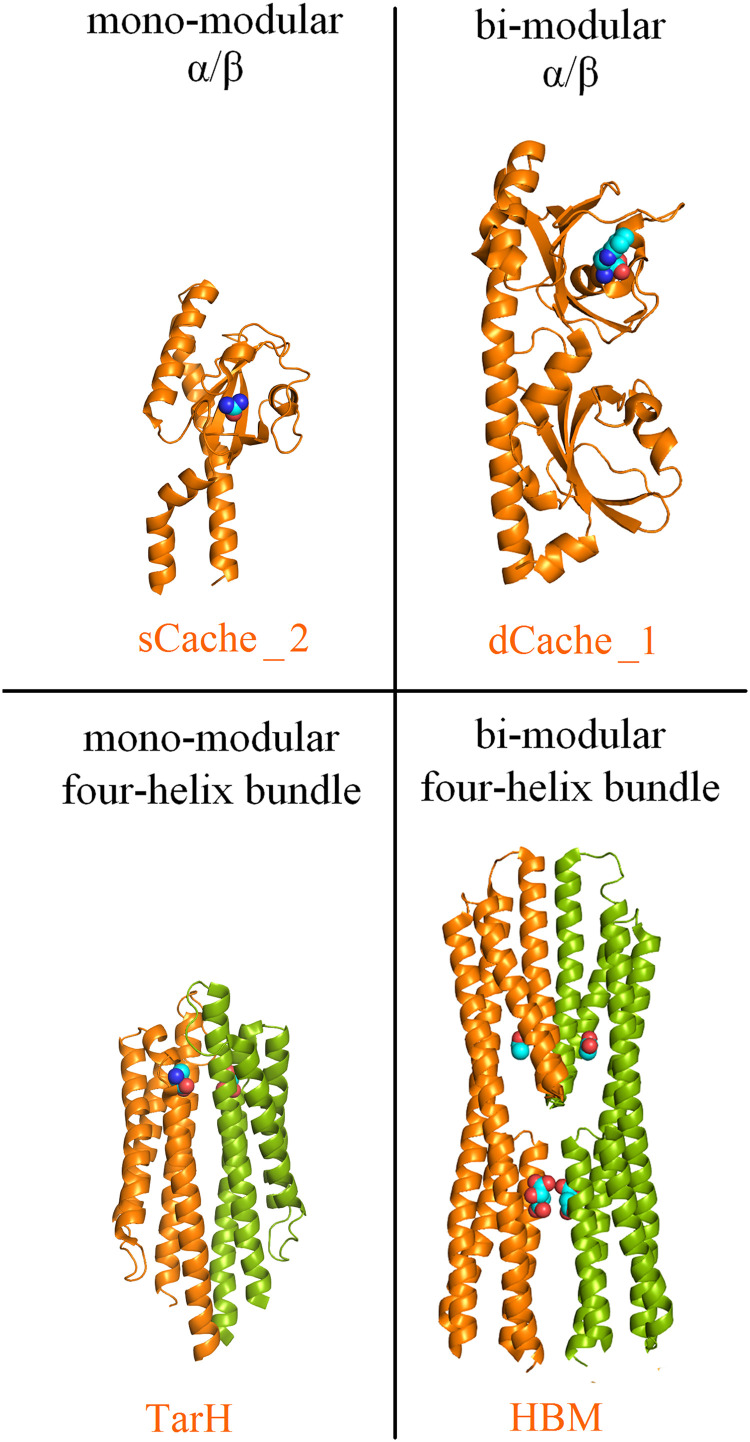
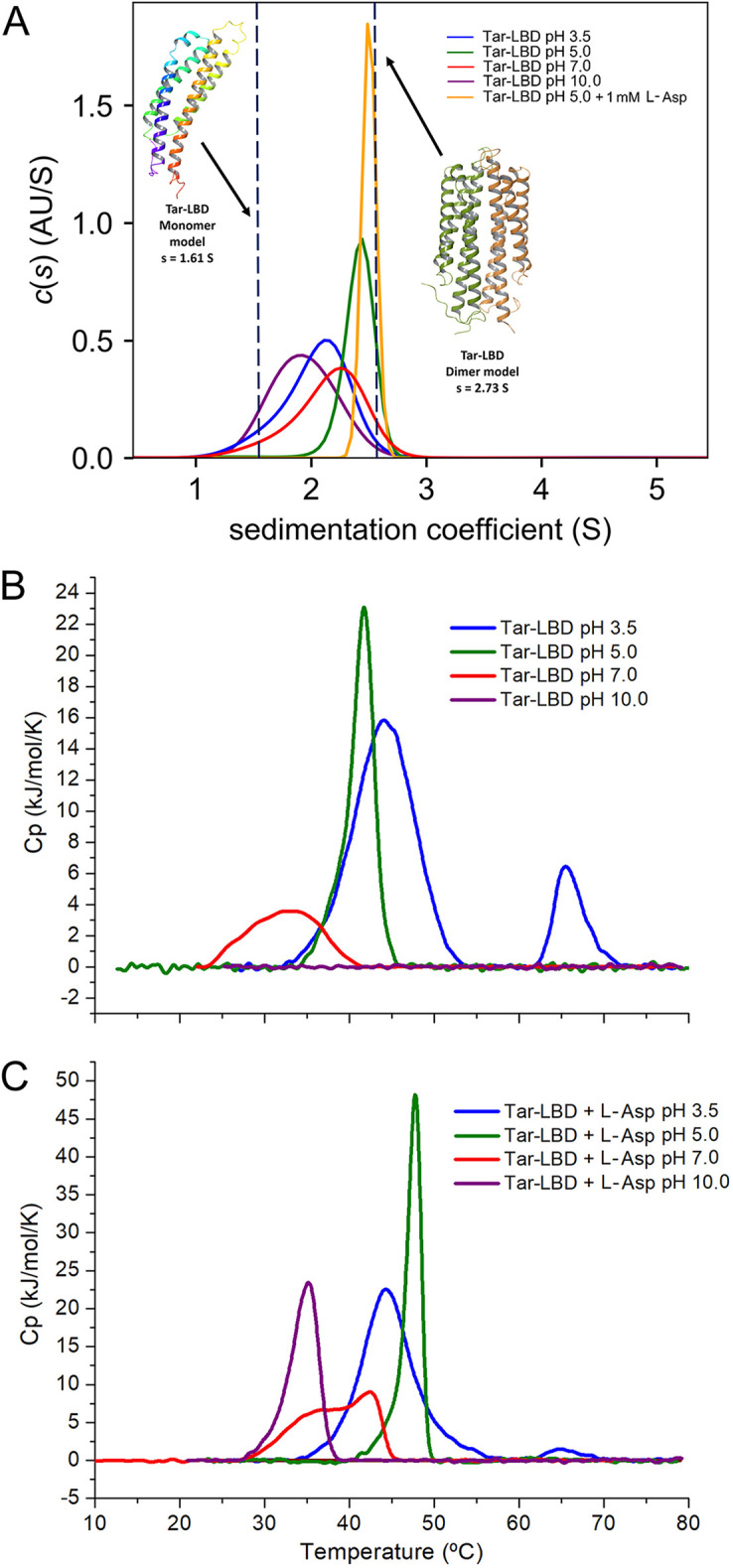
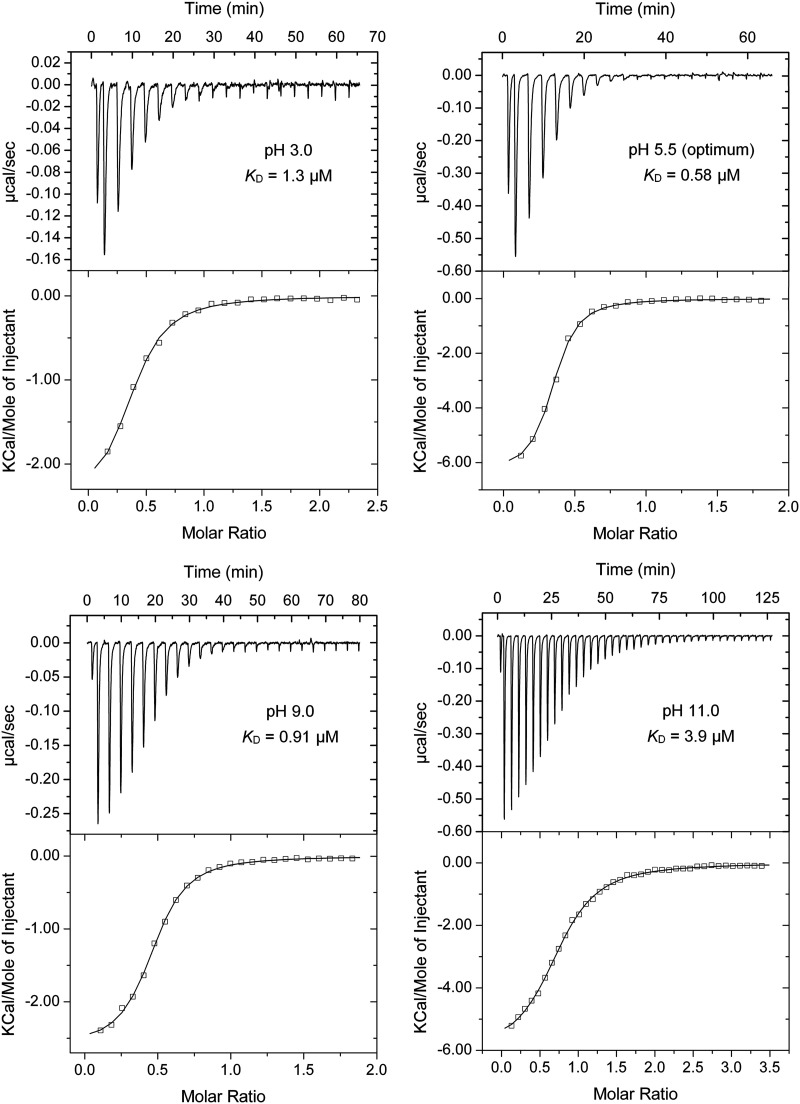
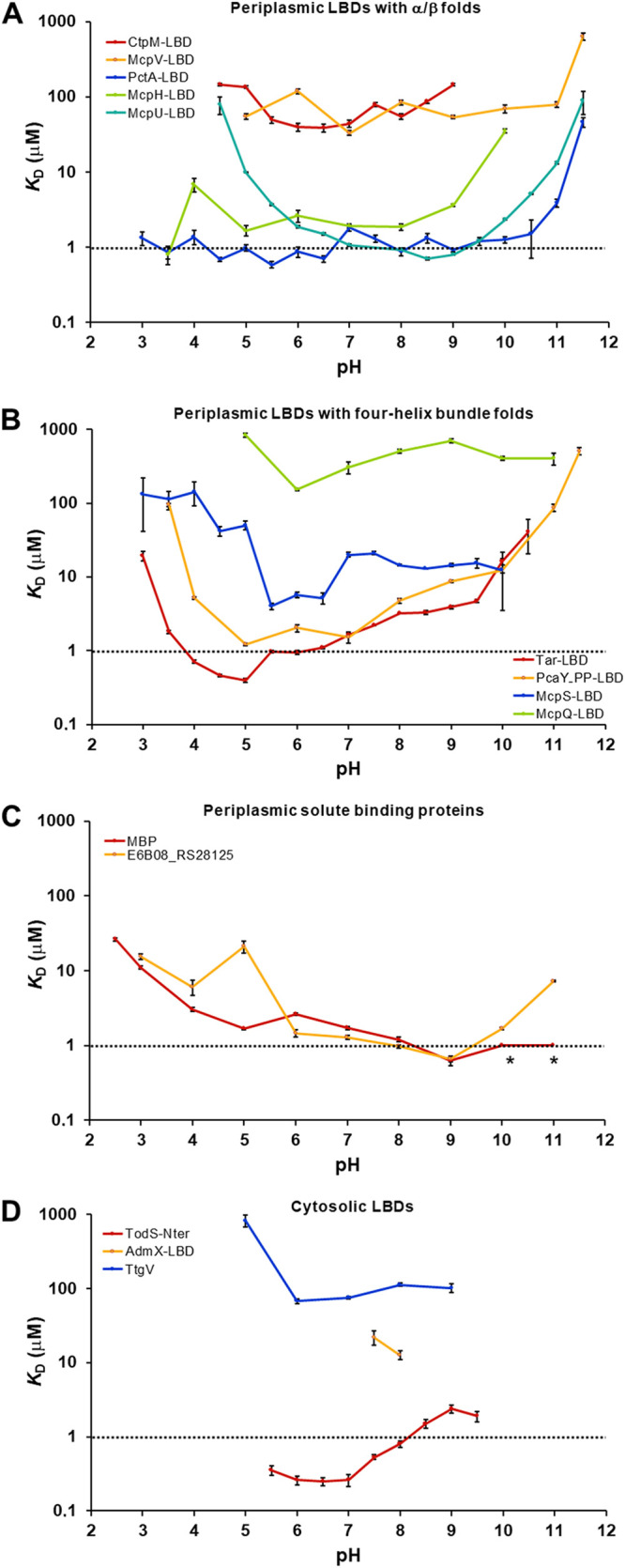
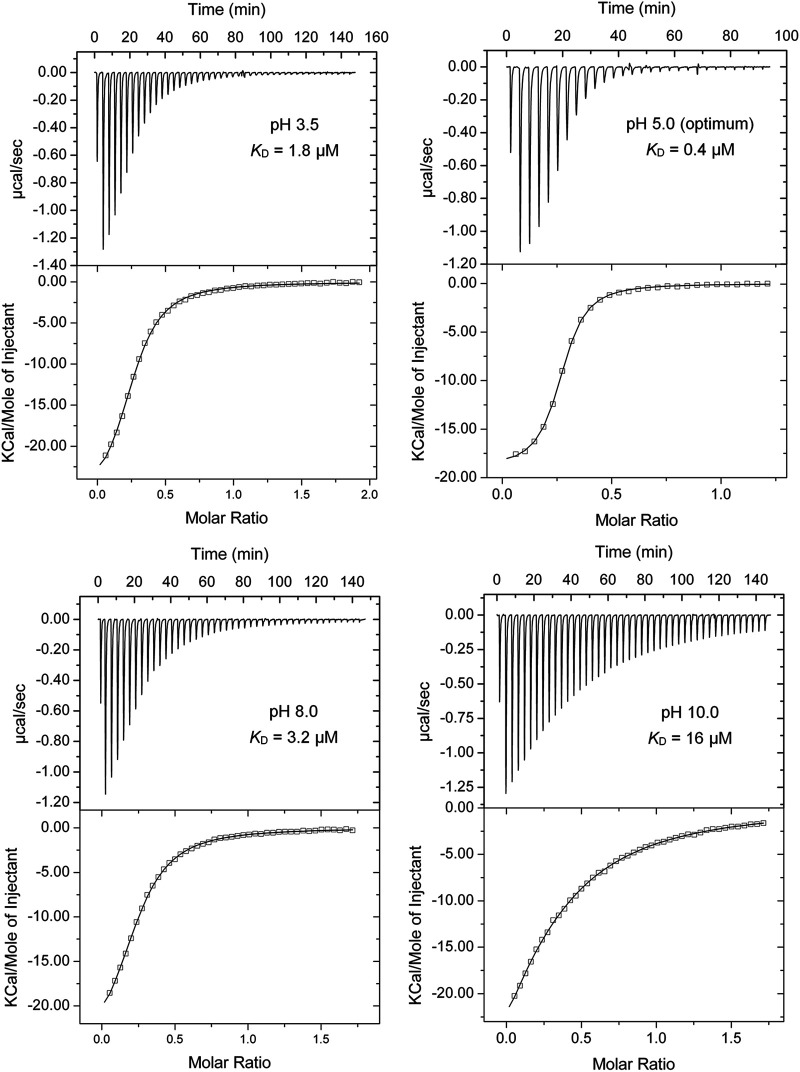
Bacteria have evolved many different signal transduction systems to sense and respond to changing environmental conditions. Signal integration is mainly achieved by signal recognition at extracytosolic ligand-binding domains (LBDs) of receptors. Hundreds of different LBDs have been reported, and our understanding of their sensing properties is growing. Receptors must function over a range of environmental pH values, but there is little information available on the robustness of sensing as a function of pH. Here, we have used isothermal titration calorimetry to determine the pH dependence of ligand recognition by nine LBDs that cover all major LBD superfamilies, of periplasmic solute-binding proteins, and cytosolic LBDs. We show that periplasmic LBDs recognize ligands over a very broad pH range, frequently stretching over eight pH units. This wide pH range contrasts with a much narrower pH response range of the cytosolic LBDs analyzed. Many LBDs must be dimeric to bind ligands, and analytical ultracentrifugation studies showed that the LBD of the Tar chemoreceptor forms dimers over the entire pH range tested. The pH dependences of Pseudomonas aeruginosa motility and chemotaxis were bell-shaped and centered at pH 7.0. Evidence for pH robustness of signaling was obtained by Förster Resonance Energy Transfer (FRET) measurements of the chemotaxis pathway responses in Escherichia coli. Bacteria have evolved several strategies to cope with extreme pH, such as periplasmic chaperones for protein refolding. The intrinsic pH resistance of periplasmic LBDs appears to be another strategy that permits bacteria to survive under adverse conditions. Demonstration of the pH robustness of extracytoplasmic sensing reveals a previously undescribed evolutionary mechanism that enables bacteria to monitor environmental changes under changing conditions. This mechanism includes the maintenance of the dimeric state of four-helixbundle ligand-binding domains (LBDs). The construction of biosensors is a rapidly growing field of research, and their use to monitor the progression of the COVID-19 pandemic has impressively demonstrated their usefulness. LBDs represent an enormous reservoir of binding modules that can be used to create novel biosensors. Among ligands recognized by LBDs are neurotransmitters, hormones, and quorum-sensing signals. The demonstration that extracytosolic LBDs bind their signals over a wide range of pH values will facilitate the design of biosensors that function under highly variable conditions of acidity and alkalinity.
细菌已经进化出许多不同的信号转导系统来感知和响应环境条件的变化。信号整合主要通过受体细胞外配体结合域 (LBD) 的信号识别来实现。已经报道了数百种不同的 LBD,并且我们对它们的传感特性的理解正在不断增加。受体必须在一系列环境 pH 值范围内发挥作用,但关于 pH 值作为功能的传感稳健性的信息很少。在这里,我们使用等温滴定量热法来确定涵盖所有主要 LBD 超家族的九个 LBD 的配体识别对 pH 值的依赖性,以及周质溶质结合蛋白和细胞质 LBD。我们表明,周质 LBD 可以在非常宽的 pH 范围内识别配体,通常延伸超过 8 个 pH 单位。这种宽的 pH 范围与分析的细胞质 LBD 的更窄的 pH 响应范围形成对比。许多 LBD 必须形成二聚体才能结合配体,并且分析超速离心研究表明 Tar 化学感受器的 LBD 在整个测试 pH 范围内形成二聚体。铜绿假单胞菌运动和趋化性的 pH 依赖性呈钟形,中心位于 pH 7.0。通过荧光共振能量转移 (FRET) 测量大肠杆菌趋化途径反应获得了信号传导 pH 稳健性的证据。细菌已经进化出几种策略来应对极端 pH,例如用于蛋白质重折叠的周质伴侣。周质 LBD 的固有 pH 抗性似乎是另一种策略,使细菌能够在不利条件下生存。细胞外感应 pH 稳健性的证明揭示了一种以前未描述的进化机制,使细菌能够在不断变化的条件下监测环境变化。该机制包括维持四螺旋束配体结合域 (LBD) 的二聚状态。生物传感器的构建是一个快速发展的研究领域,其用于监测 COVID-19 大流行的进展令人印象深刻地证明了它们的有用性。LBD 代表了一个巨大的结合模块库,可以用于创建新型生物传感器。LBD 识别的配体包括神经递质、激素和群体感应信号。证明细胞外 LBD 在广泛的 pH 值范围内结合它们的信号将有助于设计在酸度和碱度变化很大的条件下起作用的生物传感器。