Behavioral Neuroscience Program, Department of Psychology, Binghamton University, Binghamton, NY 13902-6000, United States.
Behavioral Neuroscience Program, Department of Psychology, Binghamton University, Binghamton, NY 13902-6000, United States.
Alcohol. 2023 Mar;107:108-118. doi: 10.1016/j.alcohol.2022.08.013. Epub 2022 Sep 22.
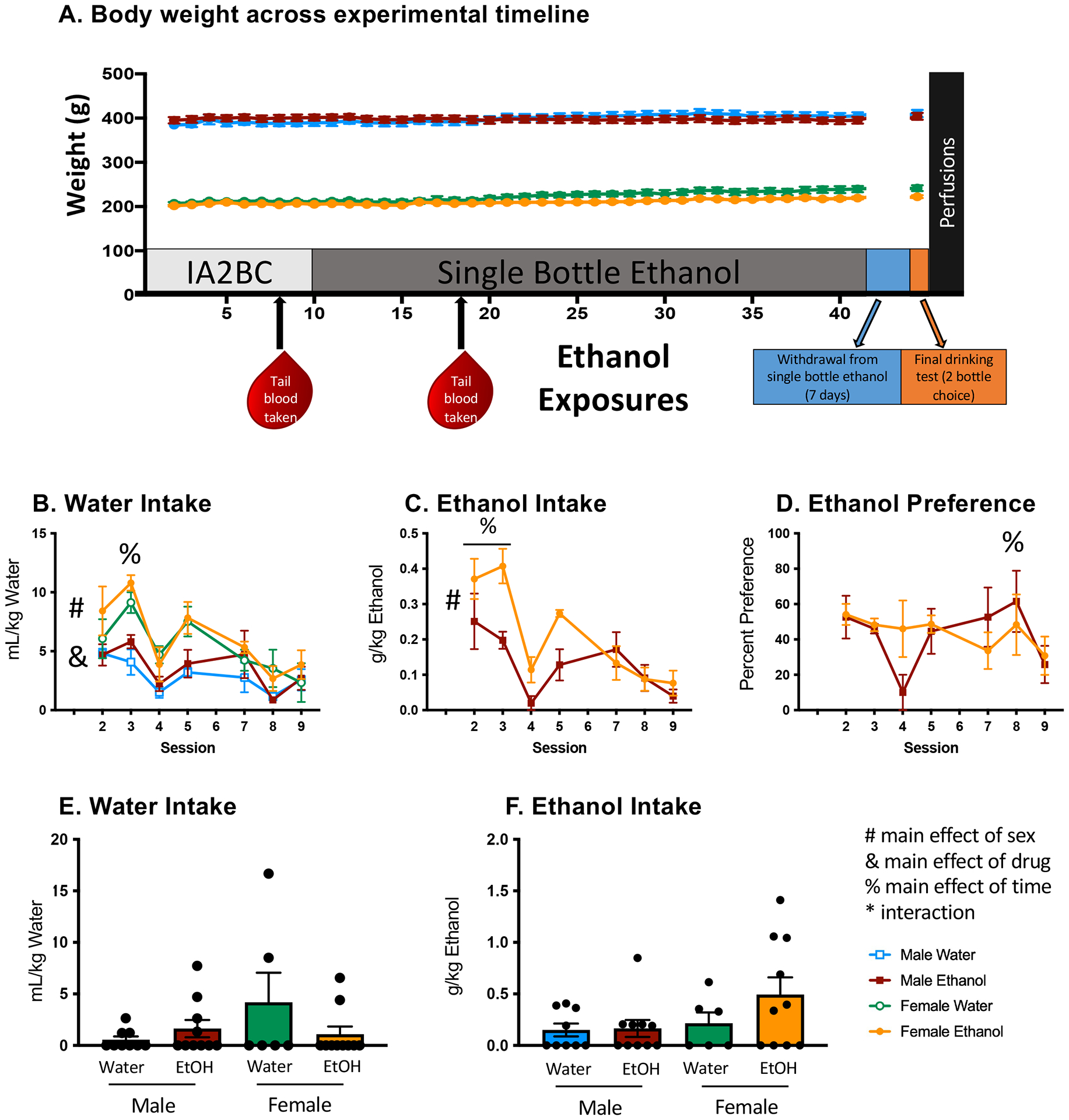
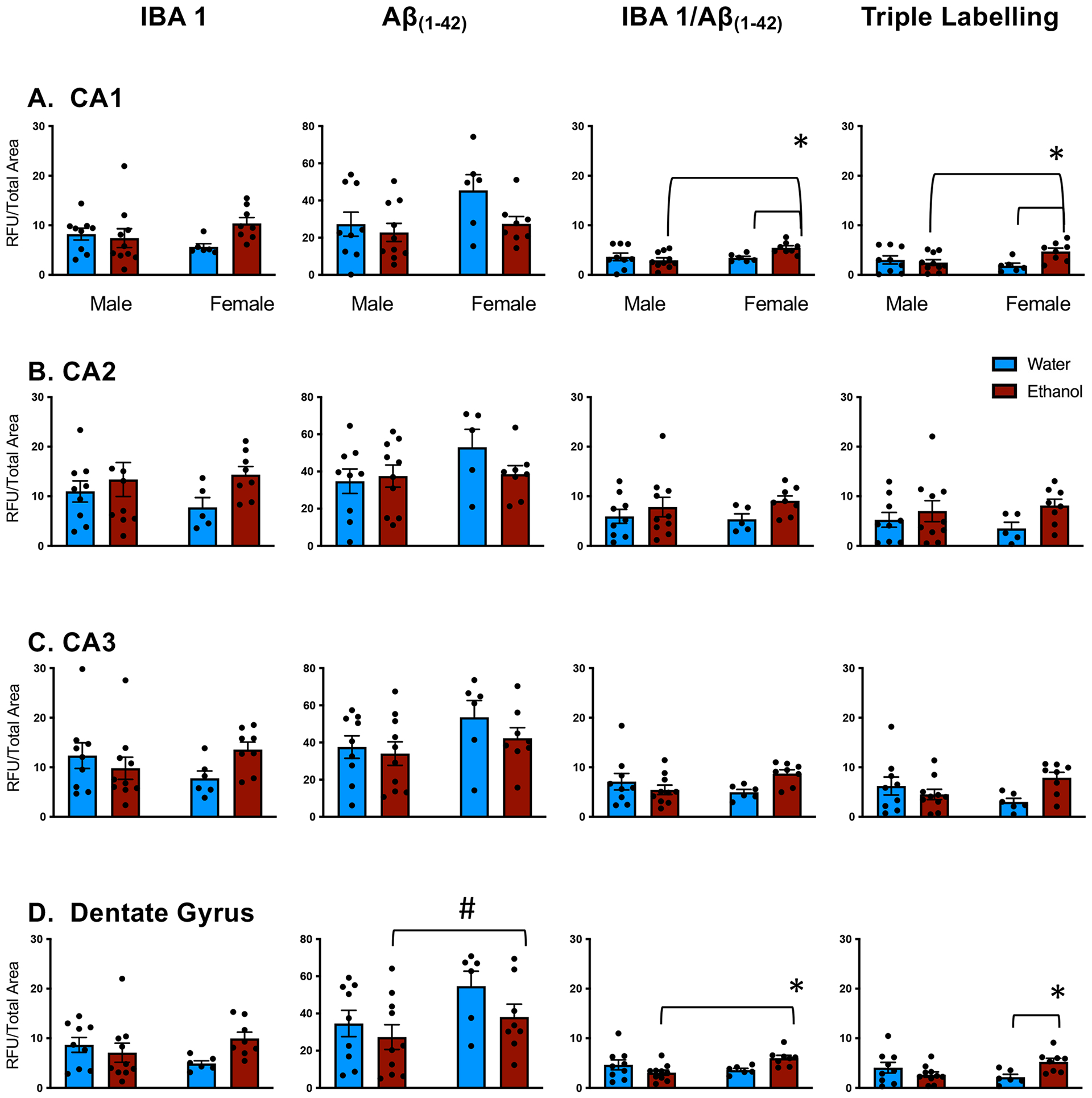
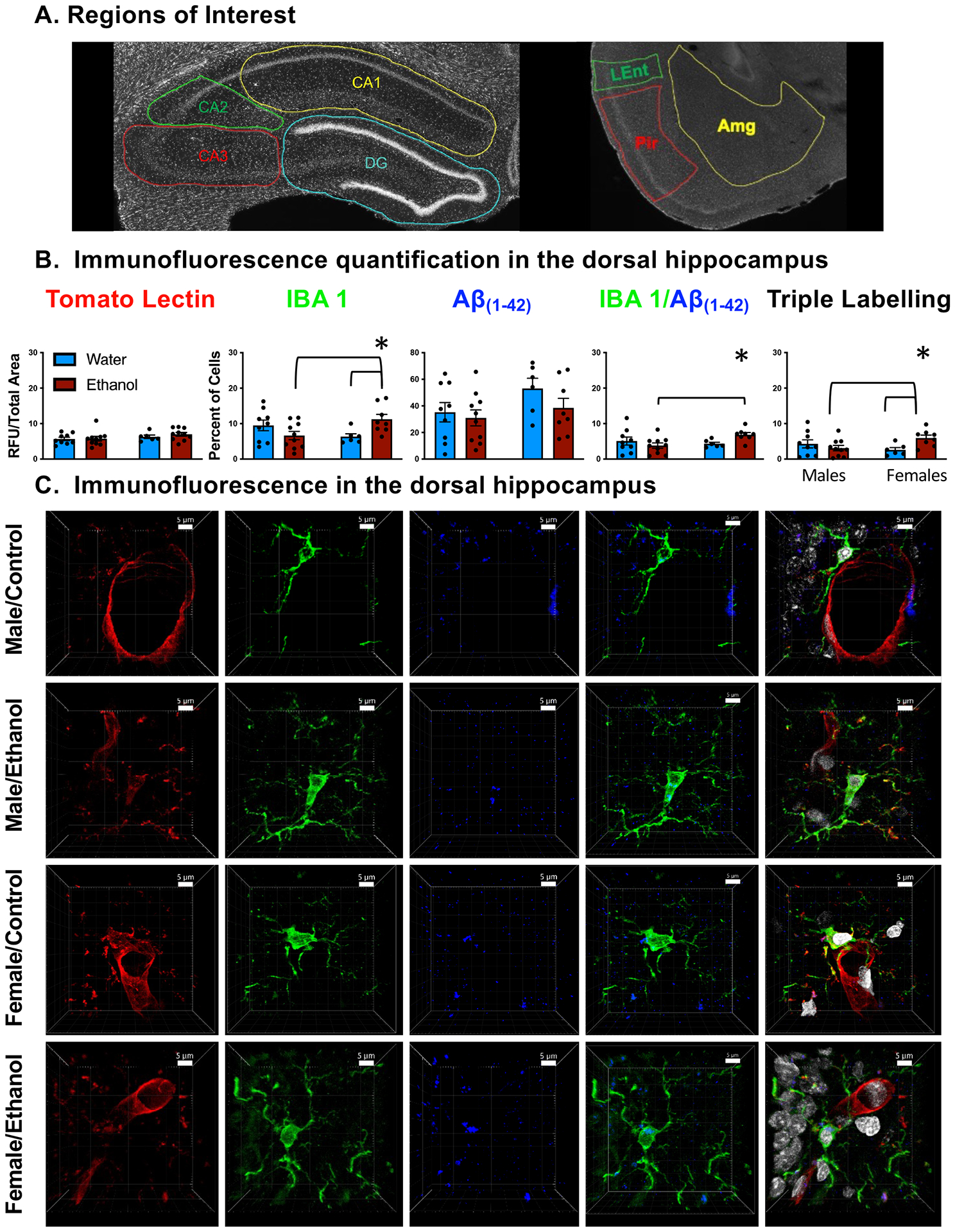
Chronic alcohol consumption, Alzheimer's disease (AD), and vascular dementia are all associated with cognitive decline later in life, raising questions about whether their underlying neuropathology may share some common features. Indeed, recent evidence suggests that ethanol exposure during adolescence or intermittent drinking in young adulthood increased neuropathological markers of AD, including both tau phosphorylation and beta-amyloid (Aβ) accumulation. The goal of the present study was to determine whether alcohol consumption later in life, a time when microglia and other neuroimmune processes tend to become overactive, would influence microglial clearance of Aβ, focusing specifically on microglia in close proximity to the neurovasculature. To do this, male and female Fischer 344 rats were exposed to a combination of voluntary and involuntary ethanol consumption from ∼10 months of age through ∼14 months of age. Immunofluorescence revealed profound sex differences in microglial co-localization, with Aβ showing that aged female rats with a history of ethanol consumption had a higher number of iba1+ cells and marginally reduced expression of Aβ, suggesting greater phagocytic activity of Aβ among females after chronic ethanol consumption later in life. Interestingly, these effects were most prominent in Iba1+ cells near neurovasculature that was stained with tomato lectin. In contrast, no significant effects of ethanol consumption were observed on any markers in males. These findings are among the first reports of a sex-specific increase in microglia-mediated phagocytosis of Aβ by perivascular microglia in aged, ethanol-consuming rats, and may have important implications for understanding mechanisms of cognitive decline associated with chronic drinking.
慢性酒精摄入、阿尔茨海默病(AD)和血管性痴呆都与晚年认知能力下降有关,这引发了一个问题,即它们潜在的神经病理学是否可能具有一些共同特征。事实上,最近的证据表明,青春期暴露于乙醇或青年期间歇性饮酒会增加 AD 的神经病理学标志物,包括tau 磷酸化和β-淀粉样蛋白(Aβ)积累。本研究的目的是确定晚年的酒精摄入(此时小胶质细胞和其他神经免疫过程往往变得过度活跃)是否会影响 Aβ的小胶质细胞清除,特别关注靠近神经血管的小胶质细胞。为此,雄性和雌性 Fischer 344 大鼠从大约 10 个月到大约 14 个月龄期间,经历了自愿和非自愿的乙醇摄入的组合暴露。免疫荧光显示,小胶质细胞的共定位存在明显的性别差异,Aβ表明,有饮酒史的老年雌性大鼠有更多的 iba1+细胞,Aβ的表达略有减少,这表明老年雌性大鼠在慢性乙醇摄入后对 Aβ的吞噬活性更高。有趣的是,这些影响在靠近用番茄凝集素染色的神经血管的 Iba1+细胞中最为明显。相比之下,乙醇摄入对雄性的任何标志物都没有显著影响。这些发现是关于老年、饮酒大鼠中血管周围小胶质细胞介导的 Aβ吞噬作用的性别特异性增加的首批报告之一,可能对理解与慢性饮酒相关的认知能力下降的机制具有重要意义。