School of Nursing, University of Tasmania, Hobart, Tasmania, Australia.
School of Health Sciences, University of Tasmania, Launceston, Tasmania, Australia.
PLoS One. 2022 Sep 26;17(9):e0274861. doi: 10.1371/journal.pone.0274861. eCollection 2022.
Accessing quality palliative care, especially at the end of life is vital in reducing physical and emotional distress and optimising quality of life. For people living in rural and remote Australia, telehealth services can be effective in providing access to after-hours palliative care.
To review and map the available evidence on the use of telehealth in providing after-hours palliative care services in rural and remote Australia.
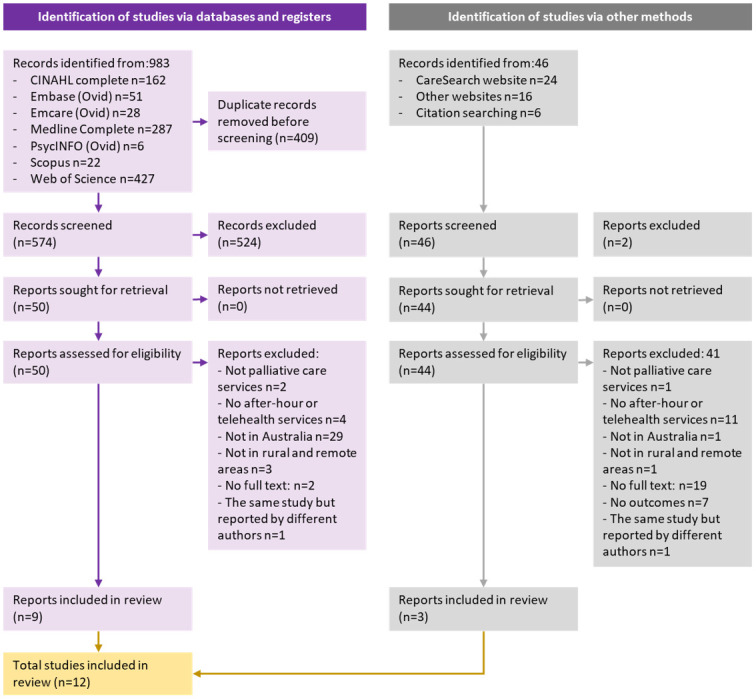
Scoping review using Arksey and O'Malley methodological framework. Findings are reported in accordance with the Preferred Reporting Items for Systematic reviews and Meta-Analyses extension for Scoping Reviews (PRISMA-ScR). Scopus, Web of Science, CINAHL Complete, Embase via Ovid, Emcare via Ovid, and Medline via Ovid databases were searched. Peer-reviewed studies and grey literature published in English from 2000 to May 2021 were included.
Twelve studies were included in the review. Four main themes were identified: 1) Stakeholder perceptions of service; 2) benefits to services and users; 3) service challenges; and 4) recommendations for service improvement.
Telehealth can connect patients and families with healthcare professionals and enable patients to continue receiving care at home. However, challenges relating to patients, service, staff skills, and experience need to be overcome to ensure the success and sustainability of this service. Improved communication and care coordination, better access to patient records, and ongoing healthcare professional education are required.
Protocols, comprehensive policy documents and standardized operating procedures to guide healthcare professionals to provide after-hours palliative care is needed. Ongoing education and training for staff is crucial in managing patients' symptoms. Existing service gaps need to be explored and alternative models of after-hours palliative care need to be tested.
在减少身体和情绪痛苦并优化生活质量方面,获得高质量的姑息治疗至关重要,尤其是在生命的末期。对于居住在澳大利亚农村和偏远地区的人来说,远程医疗服务可以有效地提供下班后的姑息治疗服务。
综述并绘制在澳大利亚农村和偏远地区使用远程医疗提供下班后姑息治疗服务的现有证据。
采用 Arksey 和 O'Malley 方法学框架进行范围综述。研究结果按照系统评价和荟萃分析扩展的首选报告项目(PRISMA-ScR)进行报告。在 Scopus、Web of Science、CINAHL Complete、Embase via Ovid、Emcare via Ovid 和 Medline via Ovid 数据库中进行了检索。纳入了 2000 年至 2021 年 5 月期间以英文发表的同行评议研究和灰色文献。
综述纳入了 12 项研究。确定了四个主要主题:1)利益相关者对服务的看法;2)对服务和用户的益处;3)服务挑战;和 4)服务改进建议。
远程医疗可以将患者和家属与医疗保健专业人员联系起来,并使患者能够继续在家中接受护理。然而,需要克服与患者、服务、员工技能和经验相关的挑战,以确保这项服务的成功和可持续性。需要改善沟通和护理协调,更好地获取患者记录,并为医疗保健专业人员提供持续的教育。
需要制定协议、综合政策文件和标准化操作程序,以指导医疗保健专业人员提供下班后的姑息治疗。对员工进行持续的教育和培训对于管理患者的症状至关重要。需要探索现有的服务差距,并测试下班后姑息治疗的替代模式。