Huang Meixia, Li Shuxian, Wu Xiling, Xu Dan, Tang Lanfang, Chen Zhimin
Department of Pulmonology, The Children's Hospital, Zhejiang University School of Medicine, National Clinical Research Center for Child Health, Hangzhou, China.
Front Pediatr. 2022 Sep 7;10:921258. doi: 10.3389/fped.2022.921258. eCollection 2022.
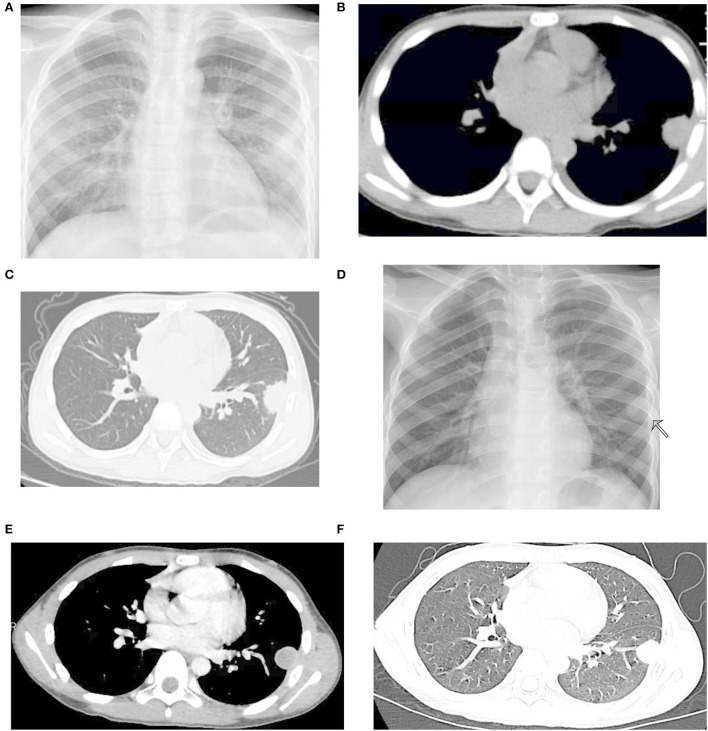
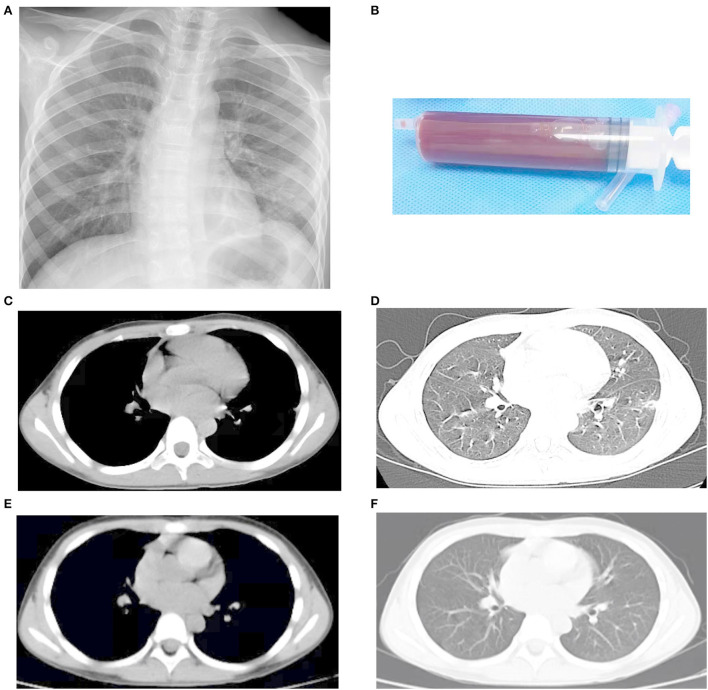
, as a Gram-positive commensal bacterium, tends to cause various infections, such as brain and liver abscesses, endocarditis, and empyema, especially in immunocompromised patients. However, an isolated pulmonary nodule caused by in previously healthy individuals without traditional risk factors is rarely reported. Herein, we present a case of a 10-year-old immunocompetent boy referred to our department with a 5-day history of intermittent, left-sided chest pain. Chest X-ray and computed tomography revealed a left lung nodule. Although his blood, sputum, and bronchoalveolar lavage fluid cultures were negative, metagenomic next-generation sequencing (mNGS) showed only the presence of in ultrasonography-guided lung biopsy tissue and pleural fluid (416 and 110 reads, respectively). He was then successfully treated with appropriate intravenous antibiotics and avoided surgical intervention. To the best of our knowledge, this is the first report of -related pulmonary nodule confirmed by mNGS analysis in healthy children. For achieving proper diagnosis and treatment, infection with should be included in the differential diagnosis when coming across such a similar pulmonary nodule. mNGS, as a valuable supplement to conventional culture methods, is an essential diagnostic tool for identifying pathogens without typical characteristics.
作为一种革兰氏阳性共生菌,往往会引发各种感染,如脑脓肿、肝脓肿、心内膜炎和脓胸,尤其是在免疫功能低下的患者中。然而,由[细菌名称未给出]引起的、在无传统危险因素的既往健康个体中出现的孤立性肺结节鲜有报道。在此,我们报告一例10岁免疫功能正常的男孩,因间歇性左侧胸痛5天转诊至我科。胸部X线和计算机断层扫描显示左肺有一个结节。尽管他的血液、痰液和支气管肺泡灌洗液体培养均为阴性,但宏基因组下一代测序(mNGS)仅在超声引导下的肺活检组织和胸腔积液中显示出[细菌名称未给出]的存在(分别为416和110条 reads)。随后,他通过适当的静脉抗生素治疗成功治愈,避免了手术干预。据我们所知,这是首例通过mNGS分析在健康儿童中确诊的与[细菌名称未给出]相关的肺结节报告。为了实现正确的诊断和治疗,遇到此类相似肺结节时,在鉴别诊断中应考虑[细菌名称未给出]感染。mNGS作为传统培养方法的重要补充,是识别无典型特征病原体的重要诊断工具。