Jovanovic Nemanja M, Glavinic Uros, Ristanic Marko, Vejnovic Branislav, Stevanovic Jevrosima, Cosic Milivoje, Stanimirovic Zoran
Department of Parasitology, Faculty of Veterinary Medicine, University of Belgrade, Belgrade, Serbia.
Department of Biology, Faculty of Veterinary Medicine, University of Belgrade, Belgrade, Serbia.
Front Physiol. 2022 Sep 12;13:1000944. doi: 10.3389/fphys.2022.1000944. eCollection 2022.
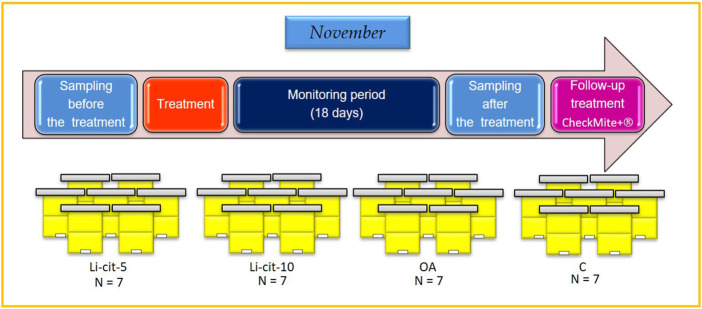
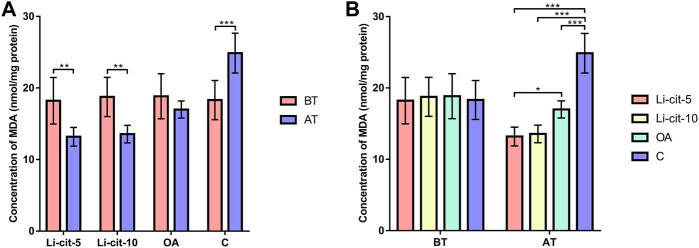
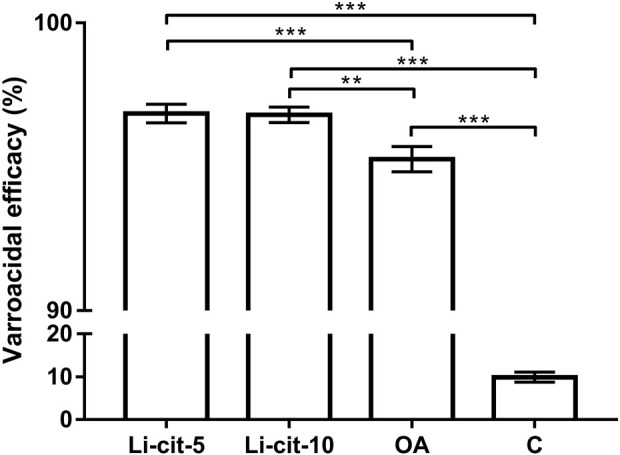
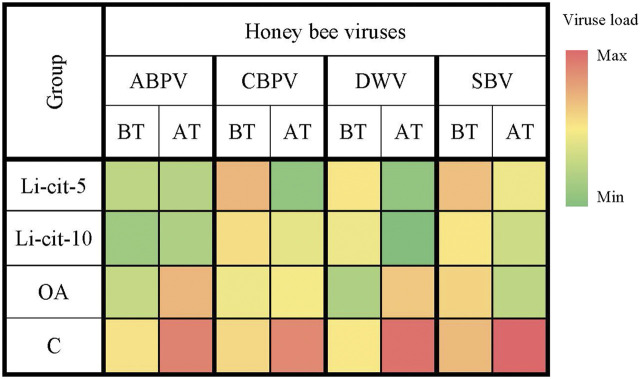
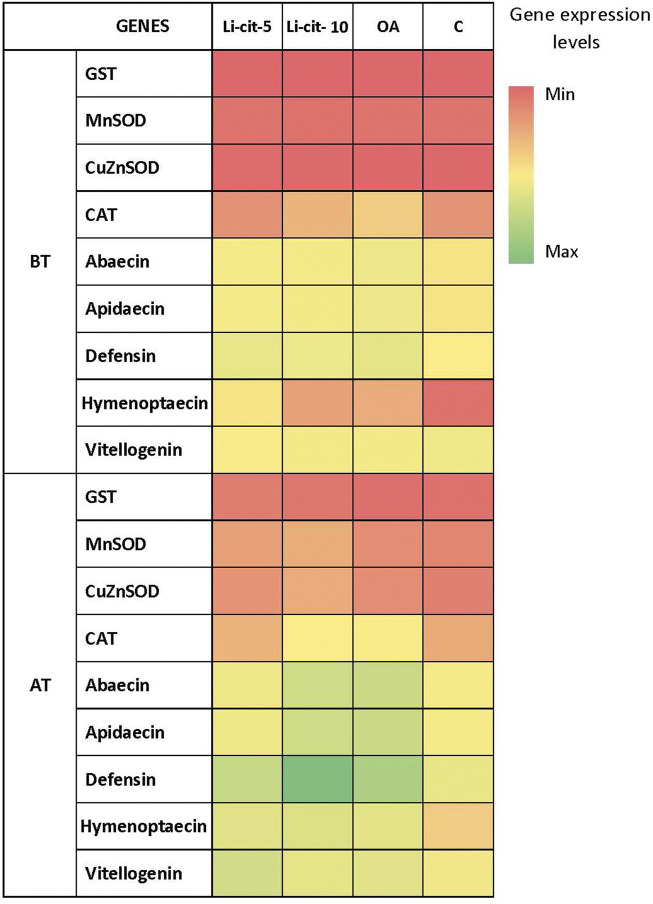
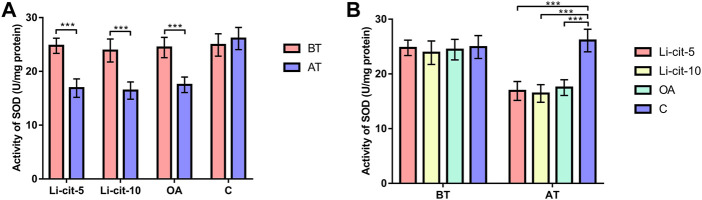
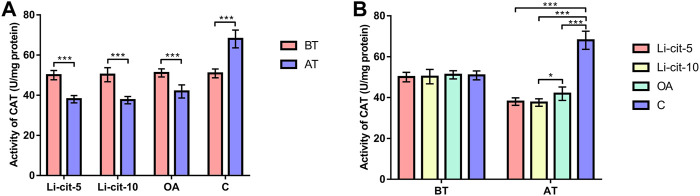
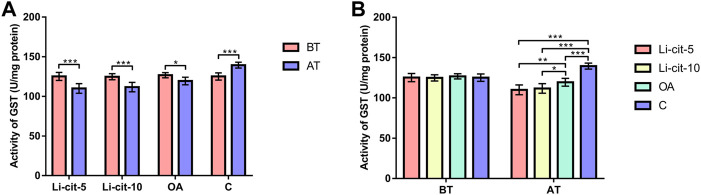
With an almost global distribution, is the leading cause of weakening and loss of honey bee colonies. New substances are constantly being tested in order to find those that will exhibit high anti- efficacy at low doses/concentrations, without unwanted effects on bees. Lithium (Li) salts stood out as candidates based on previous research. The aims of this study were to evaluate Li citrate hydrate (Li-cit) for its contact efficacy against , but also the effect of Li-cit on honey bees by estimating loads of honey bee viruses, expression levels of immune-related genes and genes for antioxidative enzymes and oxidative stress parameters on two sampling occasions, before the treatment and after the treatment. Our experiment was performed on four groups, each consisting of seven colonies. Two groups were treated with the test compound, one receiving 5 mM and the other 10 mM of Li-cit; the third received oxalic acid treatment (OA group) and served as positive control, and the fourth was negative control (C group), treated with 50% w/v pure sucrose-water syrup. Single trickling treatment was applied in all groups. Both tested concentrations of Li-cit, 5 and 10 mM, expressed high varroacidal efficacy, 96.85% and 96.80%, respectively. Load of Chronic Bee Paralysis Virus significantly decreased ( < 0.01) after the treatment in group treated with 5 mM of Li-cit. In OA group, loads of Acute Bee Paralysis Virus and Deformed Wing Virus significantly ( < 0.05) increased, and in C group, loads of all viruses significantly ( < 0.01 or < 0.001) increased. Transcript levels of genes for abaecin, apidaecin, defensin and vitellogenin were significantly higher ( < 0.05- < 0.001), while all oxidative stress parameters were significantly lower ( < 0.05- < 0.001) after the treatment in both groups treated with Li-cit. All presented results along with easy application indicate benefits of topical Li-cit treatment and complete the mosaic of evidence on the advantages of this salt in the control of .
几乎在全球范围内分布,是导致蜜蜂蜂群衰弱和损失的主要原因。人们不断测试新物质,以寻找那些在低剂量/浓度下具有高抗功效且对蜜蜂无不良影响的物质。基于先前的研究,锂(Li)盐脱颖而出成为候选物质。本研究的目的是评估水合柠檬酸锂(Li-cit)对的接触功效,同时通过估计在处理前和处理后的两个采样时间点蜜蜂病毒载量、免疫相关基因和抗氧化酶基因的表达水平以及氧化应激参数,来评估Li-cit对蜜蜂的影响。我们的实验在四组中进行,每组由七个蜂群组成。两组用测试化合物处理,一组接受5 mM,另一组接受10 mM的Li-cit;第三组接受草酸处理(OA组)作为阳性对照,第四组为阴性对照(C组),用50% w/v纯蔗糖水糖浆处理。所有组均采用单次滴灌处理。测试的两种Li-cit浓度,5 mM和10 mM,分别表现出96.85%和96.80%的高杀螨功效。在接受5 mM Li-cit处理的组中,慢性蜜蜂麻痹病毒载量在处理后显著降低(<0.01)。在OA组中,急性蜜蜂麻痹病毒和残翅病毒载量显著(<0.05)增加,而在C组中,所有病毒载量均显著(<0.01或<0.001)增加。在接受Li-cit处理的两组中,处理后abaecin、apidaecin、防御素和卵黄蛋白原基因的转录水平显著更高(<0.05-<0.001),而所有氧化应激参数均显著更低(<0.05-<0.001)。所有呈现的结果以及易于应用表明局部Li-cit处理的益处,并完善了关于该盐在控制方面优势的证据拼图。