Li Yuchao, Chen Jinghui, Chen Baoxia, Wang Tingting, Wu Zhusheng, Huang Xia, Li Shanshan
Sports Department, University of Electronic Science and Technology of China, Chengdu, China.
School of Physical Education, Sichuan University, Chengdu, China.
Front Psychol. 2022 Sep 14;13:963133. doi: 10.3389/fpsyg.2022.963133. eCollection 2022.
This study systematically evaluates the effect of mindfulness meditation on depression during pregnancy. We provide evidence-based suggestions for preventing and reducing depression during pregnancy by exploring the most effective intervention mode, cycle, and frequency of mindfulness meditation.
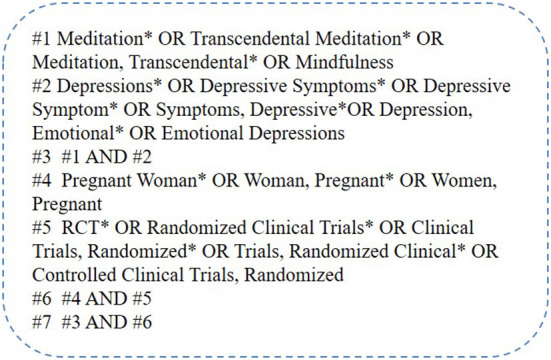
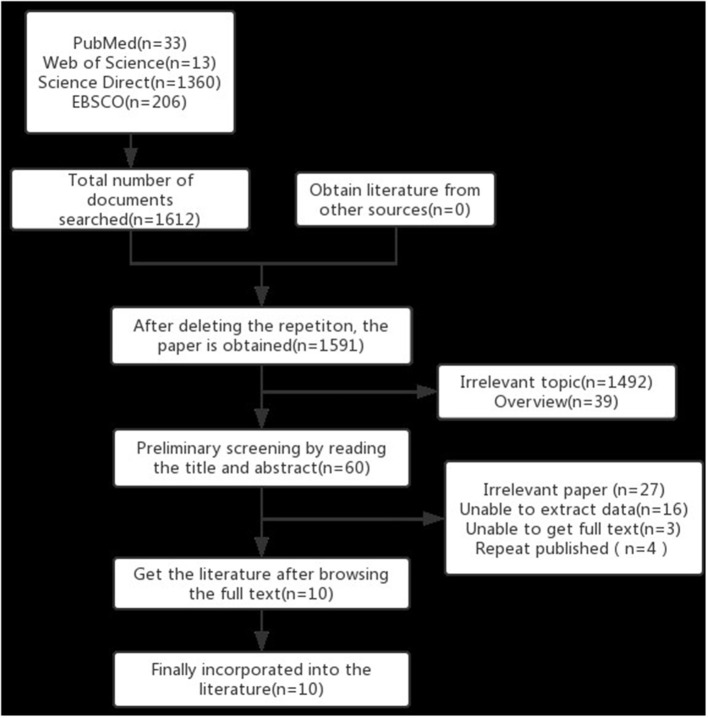
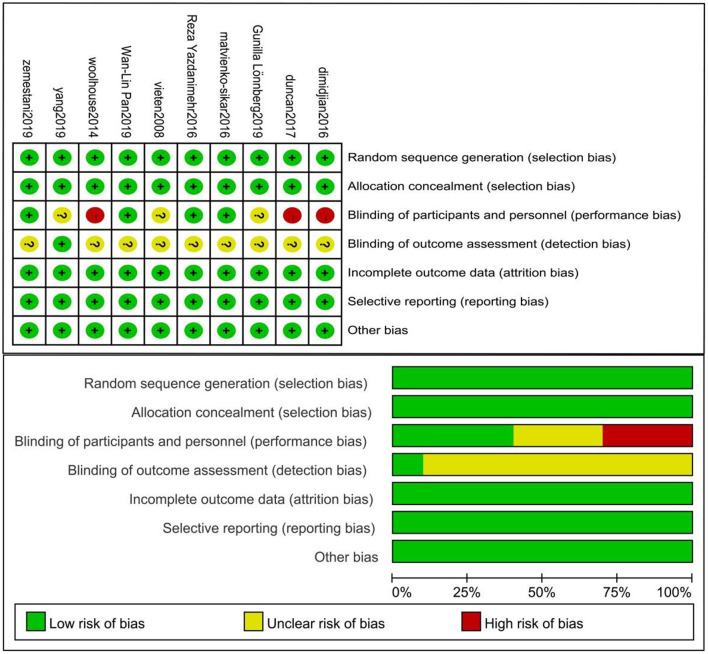
Records were retrieved from PubMed, Web of Science, EBSCO, and Science Direct. A total of 1,612 randomized controlled trial studies on the effect of mindfulness meditation on pregnancy depression were collected. 10 studies with 658 subjects meeting the inclusion criteria were extracted and analyzed by Revman 5.3 to evaluate study qualities. Stata 12.0 was used for the meta-analysis.
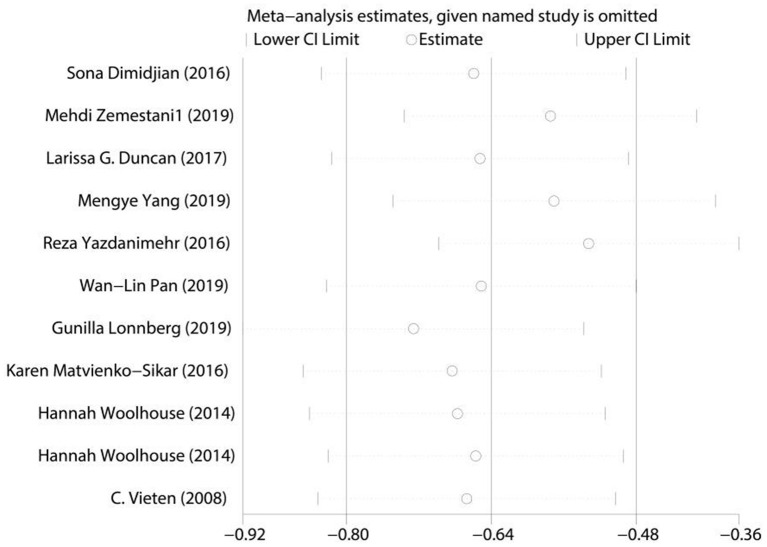
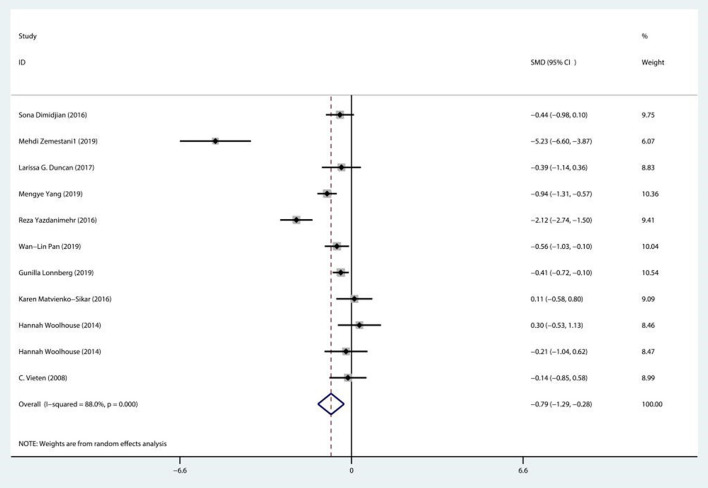
Mindfulness meditation had a positive effect on depression during pregnancy [standardized difference of the mean (SMD) = -0.786, 95% confidence interval (-1.289, -0.283), < 0.001]. Subgroup analysis showed that mindfulness-based cognitive therapy (MBCT) had the best intervention effect on depression during pregnancy (SMD = 2.795), the best intervention duration was below 4 weeks (SMD = 1.756), applied from the first to the third stage of pregnancy (SMD = 1.024), the frequency guided by experts was less than six times a week (SMD = 2.055) of <60 min each time (SMD = 1.068), and completing homework by themselves every day for 30 mins (SMD = 1.822) was most significant for the improvement of depression during pregnancy. We found high heterogeneity across studies [q = 97.003, DF = 10, I = 88.0% ( < 0.001), I > 75%]. This may be caused by variance in measurement tools, among which Beck Depression Inventory-II was a significant source of heterogeneity.
Mindfulness meditation can improve the prevention, remission, and reduction of depression during pregnancy and can be used as an auxiliary measure for the clinical treatment of pregnancy depression.
本研究系统评价正念冥想对孕期抑郁的影响。通过探索正念冥想最有效的干预方式、周期和频率,为预防和减轻孕期抑郁提供循证建议。
从PubMed、Web of Science、EBSCO和Science Direct检索记录。共收集了1612项关于正念冥想对孕期抑郁影响的随机对照试验研究。提取10项研究共658名符合纳入标准的受试者,采用Revman 5.3进行分析以评估研究质量。使用Stata 12.0进行荟萃分析。
正念冥想对孕期抑郁有积极影响[平均标准化差异(SMD)=-0.786,95%置信区间(-1.289,-0.283),<0.001]。亚组分析显示,基于正念的认知疗法(MBCT)对孕期抑郁的干预效果最佳(SMD = 2.795),最佳干预时长为4周以下(SMD = 1.756),从孕期第一阶段至第三阶段应用(SMD = 1.024),专家指导频率为每周少于6次(SMD = 2.055)且每次<60分钟(SMD = 1.068),每天自行完成30分钟作业(SMD = 1.822)对改善孕期抑郁最为显著。我们发现各研究间存在高度异质性[q = 97.003,DF = 10,I² = 88.0%(<0.001),I²>75%]。这可能是由测量工具的差异导致的,其中贝克抑郁量表第二版是异质性的一个重要来源。
正念冥想可改善孕期抑郁的预防、缓解和减轻,可作为孕期抑郁临床治疗的辅助措施。