Yuan Bo, Zhang Yuxiang, Zhao Rui, Lin Hai, Yang Xiao, Zhu Xiangdong, Zhang Kai, Mikos Antonios G, Zhang Xingdong
National Engineering Research Center for Biomaterials, Sichuan University, Chengdu 610064, P. R. China.
School of Biomedical Engineering, Sichuan University, Chengdu 610064, P. R. China.
Sci Adv. 2022 Oct 7;8(40):eabq7116. doi: 10.1126/sciadv.abq7116. Epub 2022 Oct 5.
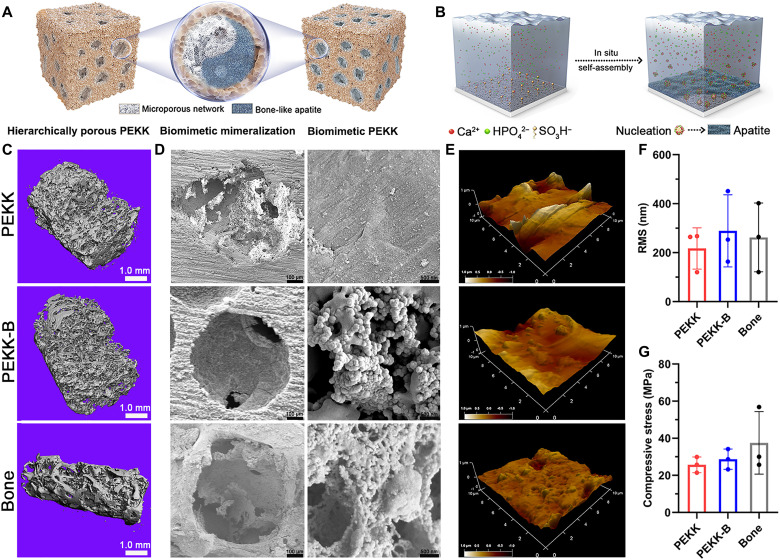
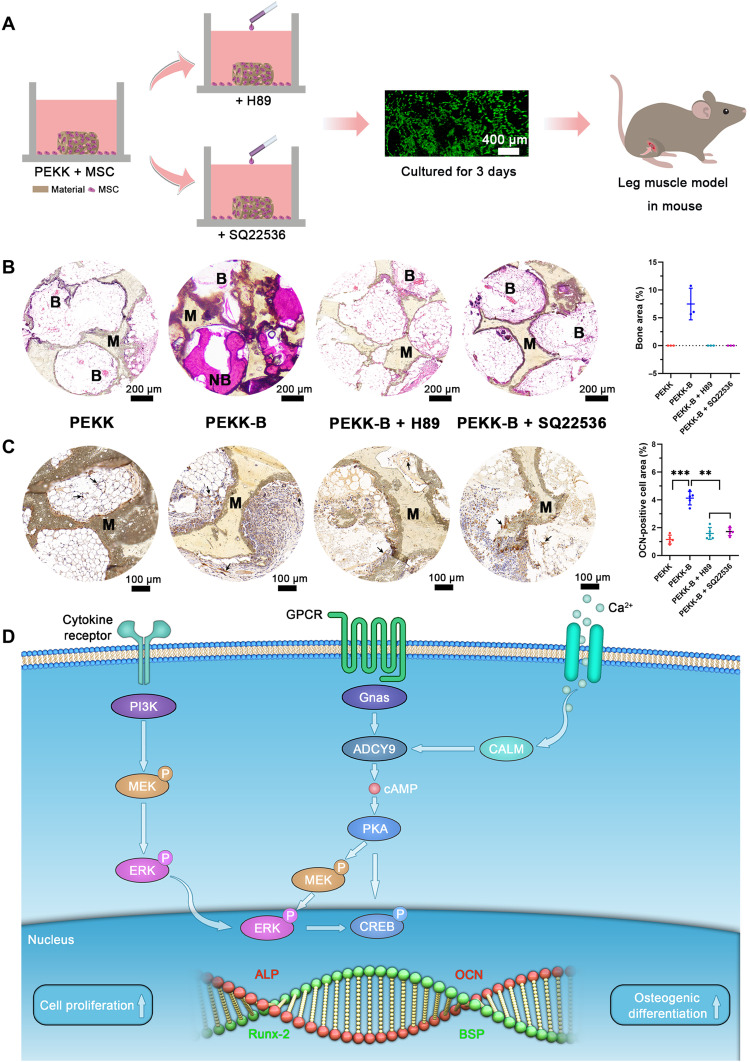
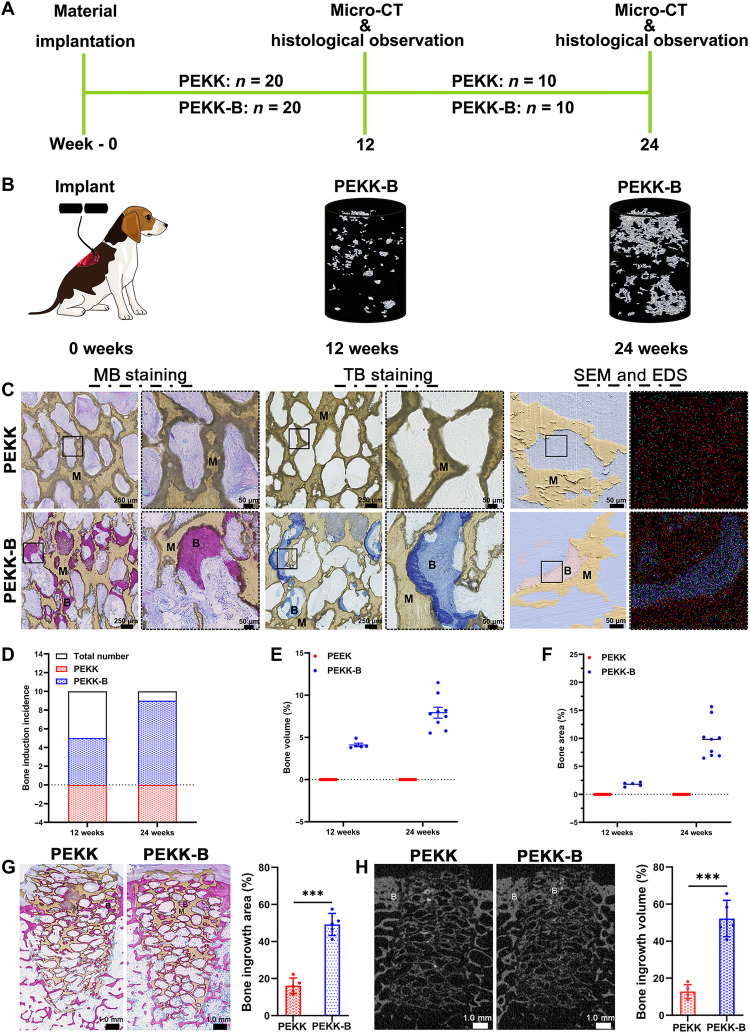
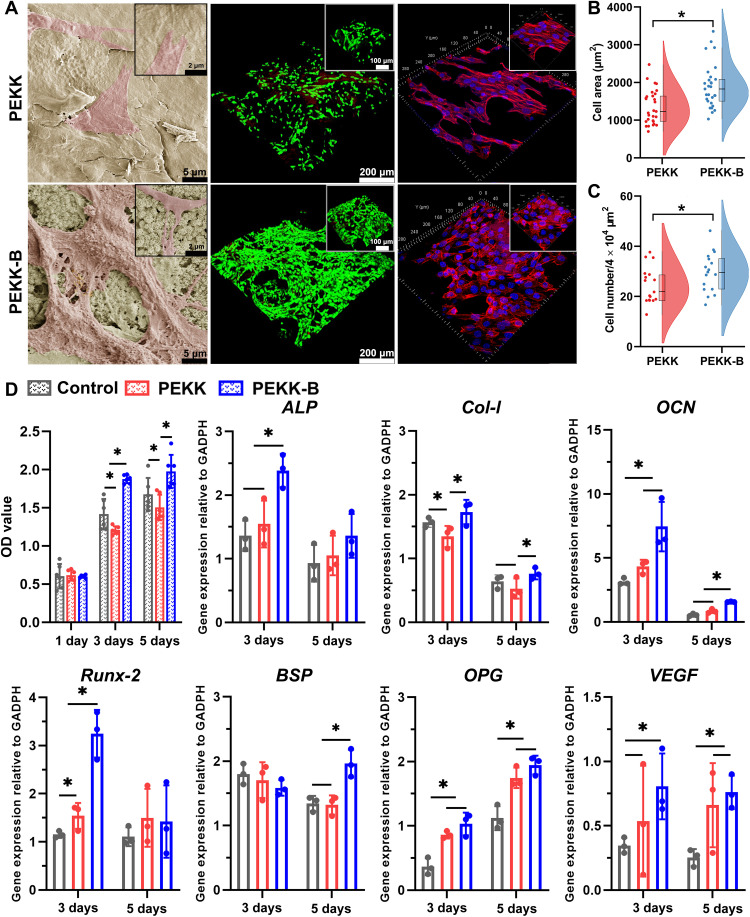
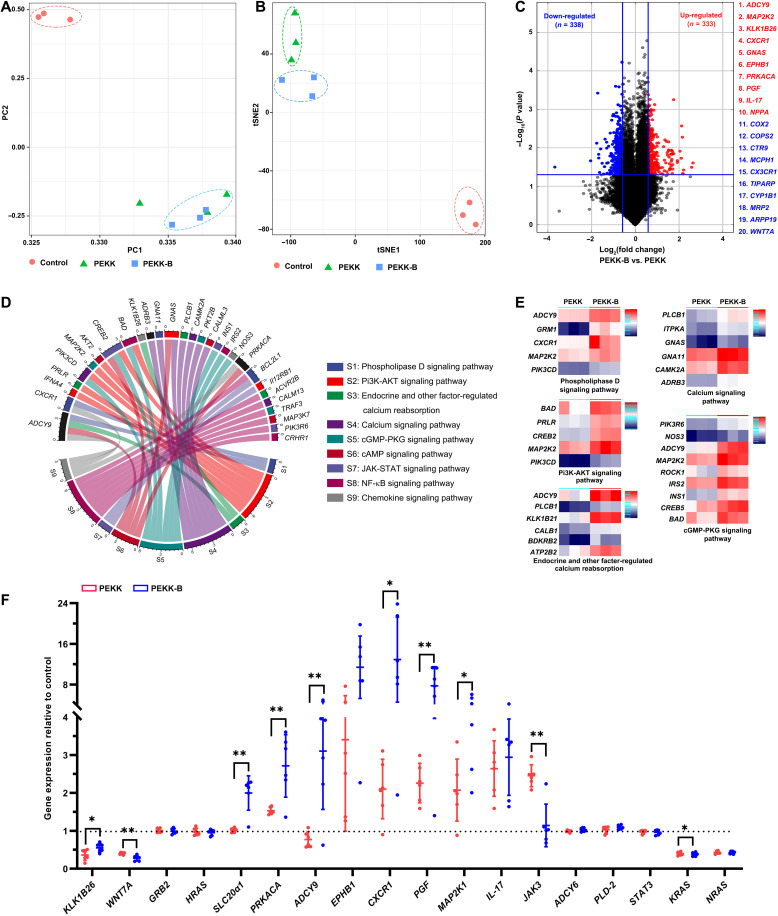
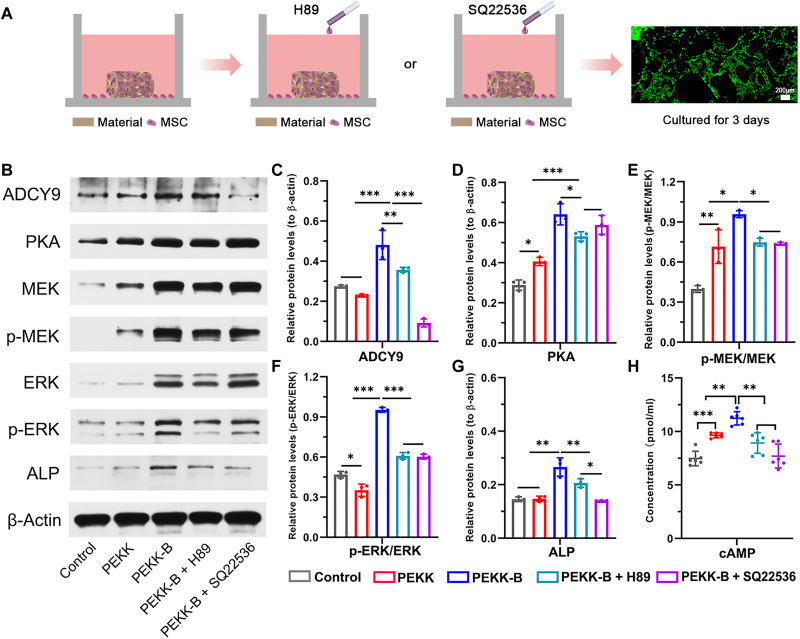
Osteoinductivity of a biomaterial scaffold can notably enhance the bone healing performance. In this study, we developed a biomimetic and hierarchically porous polyetherketoneketone (PEKK) scaffold with unique osteoinductivity using a combined surface treatment strategy of a sulfonated process and a nano bone-like apatite deposition. In a beagle intramuscular model, the scaffold induced bone formation ectopically after 12-week implantation. The better bone healing ability of the scaffold than the original PEKK was also confirmed in orthotopic sites. After culturing with bone marrow-derived mesenchymal stem cells (BMSCs), the scaffold induced osteogenic differentiation of BMSCs, and the new bone formation could be mainly depending on cell signaling through adenylate cyclase 9, which activates the cyclic adenosine monophosphate/protein kinase A signaling cascade pathways. The current work reports a new osteoinductive synthetic polymeric scaffold with its detailed molecular mechanism of action for bone repair and regeneration.
生物材料支架的骨诱导性可显著提高骨愈合性能。在本研究中,我们采用磺化处理和纳米骨样磷灰石沉积相结合的表面处理策略,开发了一种具有独特骨诱导性的仿生且具有分级多孔结构的聚醚酮酮(PEKK)支架。在比格犬肌肉内模型中,该支架在植入12周后异位诱导了骨形成。在原位部位也证实了该支架比原始PEKK具有更好的骨愈合能力。在用骨髓间充质干细胞(BMSC)培养后,该支架诱导了BMSC的成骨分化,新骨形成可能主要依赖于通过腺苷酸环化酶9的细胞信号传导,其激活环磷酸腺苷/蛋白激酶A信号级联途径。目前的工作报道了一种新型的具有骨诱导性的合成聚合物支架及其用于骨修复和再生的详细分子作用机制。