Department of Communication and Cognition, Tilburg Center for Cognition and Communication, Tilburg School of Humanities and Digital Sciences, Tilburg University, P.O. Box 90153, 5037 LE, Tilburg, The Netherlands.
Department of Research and Development, Netherlands Comprehensive Cancer Organisation, Utrecht, The Netherlands.
BMC Med Inform Decis Mak. 2022 Oct 5;22(1):260. doi: 10.1186/s12911-022-02005-2.
Statistical information (e.g., on long-term survival or side effects) may be valuable for healthcare providers to share with their patients to facilitate shared decision making on treatment options. In this pre-registered study, we assessed cancer survivors' need for generic (population-based) versus personalized (tailored towards patient/tumor characteristics) statistical information after their diagnosis. We examined how information coping style, subjective numeracy, and anxiety levels of survivors relate to these needs and identified statistical need profiles. Additionally, we qualitatively explored survivors' considerations for (not) wanting statistical information.
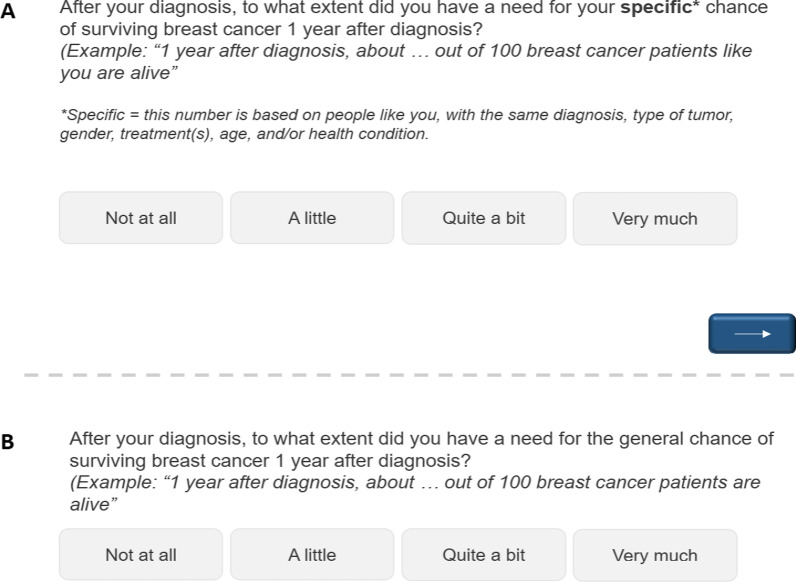
Cancer survivors' need for statistics regarding incidence, survival, recurrence, side effects and quality of life were assessed with an online questionnaire. For each of these topics, survivors were asked to think back to their first cancer diagnosis and to indicate their need for generic and personalized statistics on a 4-point scale ('not at all'- 'very much'). Associations between information coping style, subjective numeracy, and anxiety with need for generic and personalized statistics were examined with Pearson's correlations. Statistical need profiles were identified using latent class analysis. Considerations for (not) wanting statistics were analyzed qualitatively.
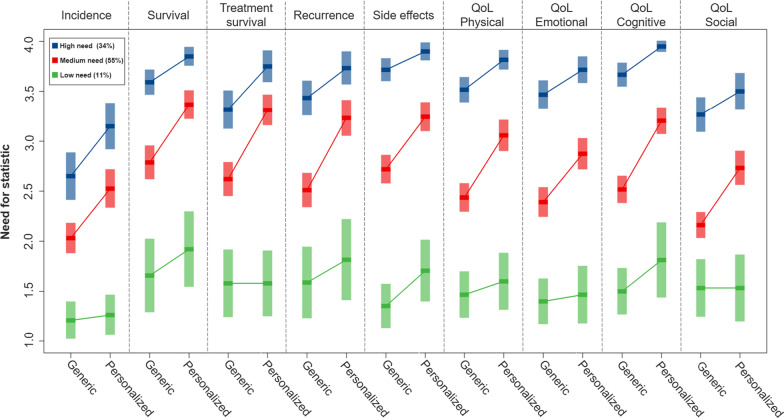
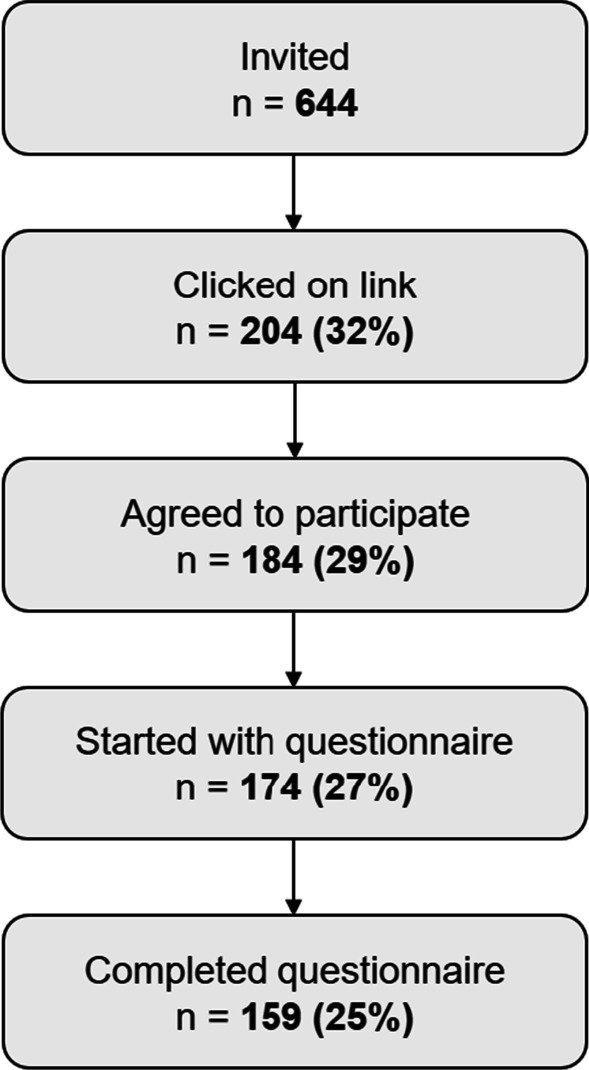
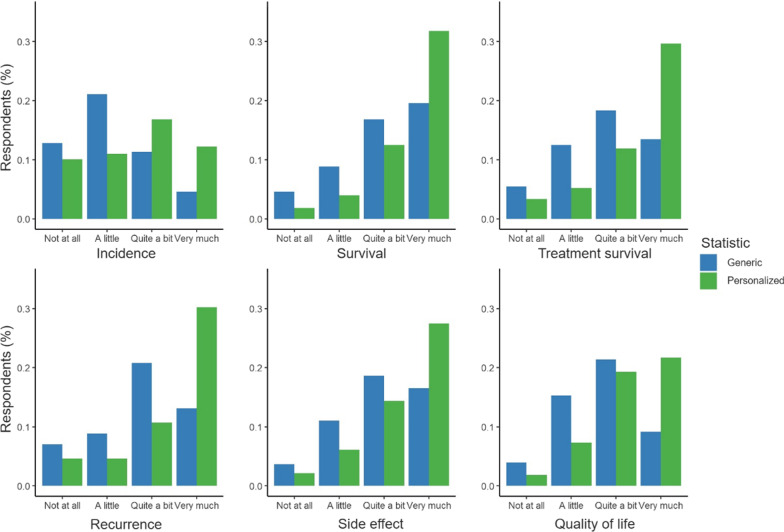
Overall, cancer survivors (n = 174) had a higher need for personalized than for generic statistics (p < .001, d = 0.74). Need for personalized statistics was associated with higher subjective numeracy (r = .29) and an information-seeking coping style (r = .41). Three statistical need profiles were identified (1) a strong need for both generic and personalized statistics (34%), (2) a stronger need for personalized than for generic statistics (55%), and (3) a little need for both generic and personalized statistics (11%). Considerations for wanting personalized cancer statistics ranged from feelings of being in control to making better informed decisions about treatment. Considerations for not wanting statistics related to negative experience with statistics and to the unpredictability of future events for individual patients.
In light of the increased possibilities for using personalized statistics in clinical practice and decision aids, it appears that most cancer survivors want personalized statistical information during treatment decision-making. Subjective numeracy and information coping style seem important factors influencing this need. We encourage further development and implementation of data-driven personalized decision support technologies in oncological care to support patients in treatment decision making.
统计信息(例如长期生存或副作用)对于医疗保健提供者与患者共享以促进治疗选择的共同决策可能很有价值。在这项预先注册的研究中,我们评估了癌症幸存者在诊断后对通用(基于人群)与个性化(针对患者/肿瘤特征)统计信息的需求。我们研究了信息应对方式、主观算术能力和幸存者的焦虑水平如何与这些需求相关,并确定了统计需求特征。此外,我们还从定性角度探讨了幸存者对(不)需要统计信息的考虑。
通过在线问卷评估癌症幸存者对发病率、生存率、复发率、副作用和生活质量的统计信息的需求。对于每个主题,幸存者被要求回想他们的第一次癌症诊断,并在 4 分制上表示他们对通用和个性化统计信息的需求(“一点也不”-“非常”)。使用 Pearson 相关分析检查信息应对方式、主观算术能力和焦虑与通用和个性化统计信息需求之间的关联。使用潜在类别分析确定统计需求特征。对(不)想要统计信息的考虑因素进行了定性分析。
总体而言,癌症幸存者(n=174)对个性化统计信息的需求高于通用统计信息(p<0.001,d=0.74)。对个性化统计信息的需求与较高的主观算术能力(r=0.29)和信息寻求应对方式(r=0.41)相关。确定了三种统计需求特征(1)对通用和个性化统计信息都有强烈的需求(34%),(2)对个性化统计信息的需求强于通用统计信息(55%),以及(3)对通用和个性化统计信息的需求都较低(11%)。想要个性化癌症统计信息的考虑因素从控制感到对治疗做出更明智的决策不等。不想要统计信息的考虑因素与对统计信息的负面体验以及对个体患者未来事件的不可预测性有关。
鉴于在临床实践和决策辅助中使用个性化统计信息的可能性增加,大多数癌症幸存者似乎希望在治疗决策制定过程中获得个性化的统计信息。主观算术能力和信息应对方式似乎是影响这种需求的重要因素。我们鼓励进一步开发和实施数据驱动的个性化决策支持技术在肿瘤学护理中,以支持患者的治疗决策。