Department of Biological Sciences, University of Notre Dame, Notre Dame, Indiana, USA; email:
Annu Rev Pathol. 2023 Jan 24;18:205-229. doi: 10.1146/annurev-pathmechdis-031521-022116. Epub 2022 Oct 6.
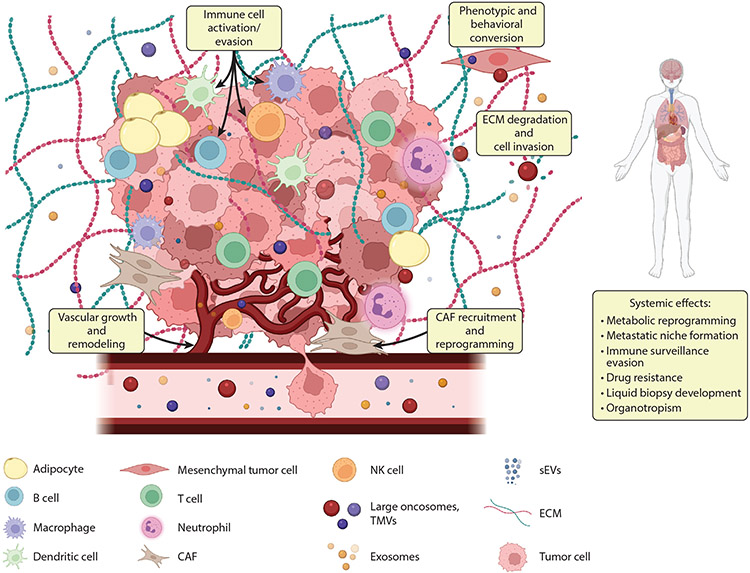
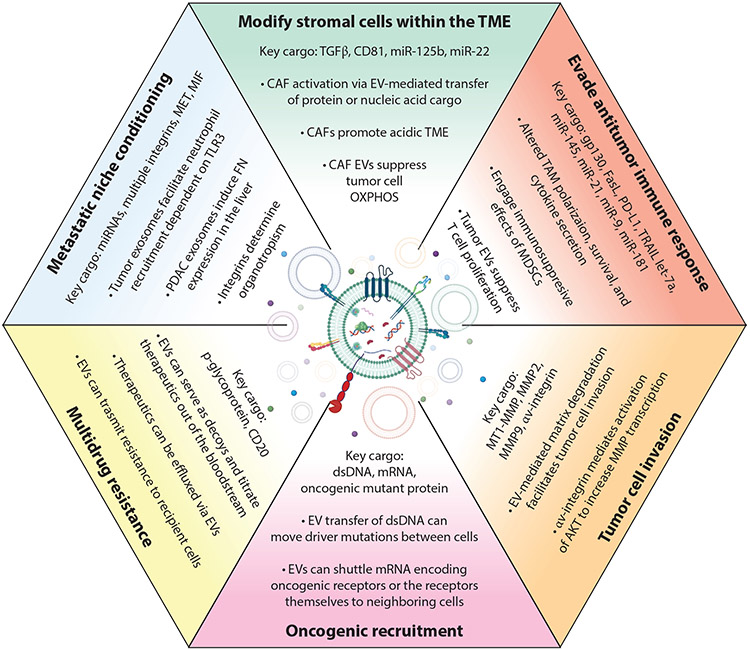
Tumor cells release extracellular vesicles (EVs) that can function as mediators of intercellular communication in the tumor microenvironment. EVs contain a host of bioactive cargo, including membrane, cytosolic, and nuclear proteins, in addition to noncoding RNAs, other RNA types, and double-stranded DNA fragments. These shed vesicles may deposit paracrine information and can also be taken up by stromal cells, causing the recipient cells to undergo phenotypic changes that profoundly impact diverse facets of cancer progression. For example, this unique form of cellular cross talk helps condition the premetastatic niche, facilitates evasion of the immune response, and promotes invasive and metastatic activity. These findings, coupled with those demonstrating that the number and content of EVs produced by tumors can vary depending on their tumor of origin, disease stage, or response to therapy, have raised the exciting possibility that EVs can be used for risk stratification, diagnostic, and even prognostic purposes. We summarize recent developments and the current knowledge of EV cargoes, their impact on disease progression, and implementation of EV-based liquid biopsies as tumor biomarkers.
肿瘤细胞释放细胞外囊泡 (EVs),这些囊泡可以作为肿瘤微环境中细胞间通讯的介质。EVs 包含一系列生物活性货物,包括膜、细胞质和核蛋白,以及非编码 RNA、其他 RNA 类型和双链 DNA 片段。这些脱落的囊泡可能会沉积旁分泌信息,也可以被基质细胞摄取,导致受赠细胞发生表型变化,深刻影响癌症进展的各个方面。例如,这种独特的细胞串扰形式有助于调节转移前生态位,促进免疫逃逸,并促进侵袭和转移活性。这些发现,加上那些表明肿瘤产生的 EV 数量和内容可以根据其肿瘤起源、疾病阶段或对治疗的反应而变化的发现,提出了一个令人兴奋的可能性,即 EV 可以用于风险分层、诊断,甚至预后目的。我们总结了 EV 货物的最新进展和现有知识,以及它们对疾病进展的影响,以及实施基于 EV 的液体活检作为肿瘤生物标志物。