Universidade Federal de Mato Grosso do Sul, Campo Grande, MS, Brazil.
Faculdade de Medicina, Universidade de São Paulo, São Paulo, SP, Brazil.
Sci Rep. 2022 Oct 6;12(1):16701. doi: 10.1038/s41598-022-21086-7.
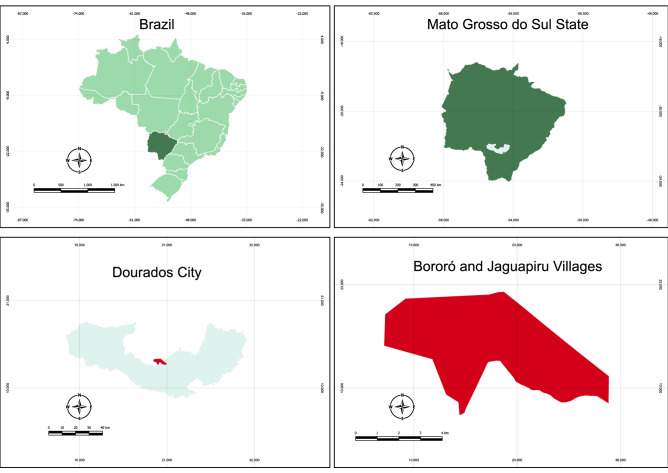
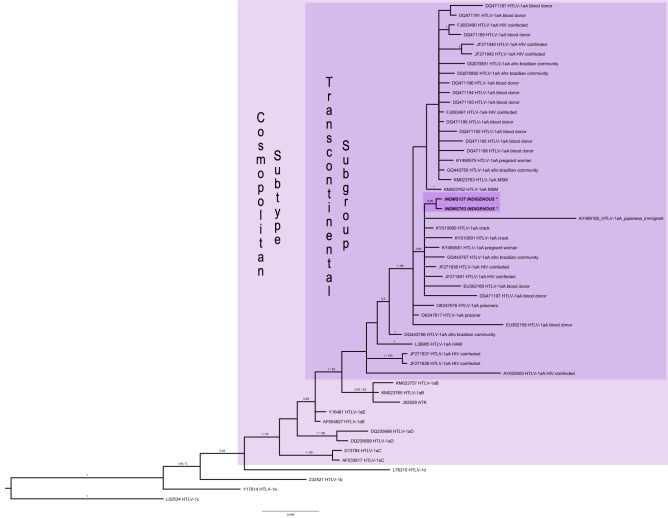
Human T-lymphotropic viruses 1 and 2 (HTLV-1/2) have a worldwide distribution. HTLV-1 has been associated with several diseases, including an aggressive malignant disease known as adult T-cell leukemia/lymphoma and a chronic inflammatory neurological disease called HTLV-1-associated myelopathy, while HTLV-2 has not been definitively associated with diseases. HTLV-2 is most prevalent in specific groups such as injecting drug users and the indigenous population. In Brazil, most studies about HTLV in indigenous are carried out in indigenous communities from the north of the country. Mato Grosso do Sul (MS), Central Brazil, has the second-largest indigenous population in Brazil. However, there is no available data about HTLV infection in this group. We conducted the first investigation of HTLV-1/2 infection prevalence in the indigenous population from Jaguapiru and Bororó villages in Dourados City, MS, to provide the prevalence and molecular characterization of HTLV. For that, a total of 1875 indigenous participated in the study. All the serum samples were screened by an enzyme-linked immunosorbent assay commercial kit for the presence of anti-HTLV-1/2 antibodies. Positive samples were confirmed by HTLV-1/2 Western Blot assay. The HTLV-1 5'LTR region was detected by nested PCR amplification and sequenced by Sanger. Most of the study population declared belonging to Guarani-Kaiowá ethnicity (69.18%), 872 (46.51%), and 1003 (53.49%) were from Jaguapiru and Bororó villages, respectively. The median age of participants was 31 years, and 74.24% were females. Two individuals were detected with HTLV-1 (0.1%; CI 95% 0.1-0.2). The phylogenetic analysis revealed that isolates belong to the Cosmopolitan subtype and the Transcontinental subgroup (HTLV-1aA). The low HTLV-1 prevalence found in this study is similar to that observed among blood donors, and pregnant populations from Mato Grosso do Sul. The absence of HTLV-2 infection among these Brazilian indigenous communities would suggest a distinct behavior pattern from other indigenous populations in Brazil.
人类 T 淋巴细胞病毒 1 和 2(HTLV-1/2)在全球范围内分布。HTLV-1 与几种疾病有关,包括一种称为成人 T 细胞白血病/淋巴瘤的侵袭性恶性疾病和一种称为 HTLV-1 相关性脊髓病的慢性炎症性神经系统疾病,而 HTLV-2 并未明确与疾病相关。HTLV-2 在特定群体中最为普遍,如注射吸毒者和土著人群。在巴西,大多数关于土著人群中 HTLV 的研究都是在该国北部的土著社区进行的。巴西的南马托格罗索州(MS)拥有巴西第二大的土著人口。然而,关于该群体中 HTLV 感染的可用数据尚未可知。我们首次对来自南马托格罗索州首府多拉多市的 Jaguapiru 和 Bororó 村的土著人群进行了 HTLV-1/2 感染流行率调查,以提供 HTLV 的流行率和分子特征。为此,共有 1875 名土著参与了研究。所有血清样本均采用商业酶联免疫吸附试验试剂盒筛查抗-HTLV-1/2 抗体的存在情况。阳性样本通过 HTLV-1/2 Western Blot 试验确认。通过巢式 PCR 扩增检测 HTLV-1 5'LTR 区,并通过 Sanger 测序进行序列分析。研究人群中大多数人自称属于瓜拉尼-卡瓦瓦族(69.18%),872 人(46.51%)和 1003 人(53.49%)分别来自 Jaguapiru 和 Bororó 村。参与者的中位年龄为 31 岁,74.24%为女性。有 2 人被检出 HTLV-1(0.1%;95%CI 0.1-0.2)。系统发育分析显示,分离株属于世界性亚型和跨大陆亚群(HTLV-1aA)。本研究中发现的 HTLV-1 低流行率与南马托格罗索州献血者和孕妇人群中观察到的流行率相似。这些巴西土著社区中不存在 HTLV-2 感染表明,与巴西其他土著人群相比,它们具有不同的感染模式。