Lyu Peng-Fei, Wang Yu, Meng Qing-Xiang, Fan Ping-Ming, Ma Ke, Xiao Sha, Cao Xun-Chen, Lin Guang-Xun, Dong Si-Yuan
Department of Breast Surgery, The First Affiliated Hospital of Hainan Medical University, Haikou, China.
The First Department of Breast Cancer, Tianjin Medical University Cancer Institute and Hospital, National Clinical Research Center for Cancer, Key Laboratory of Cancer Prevention and Therapy, Key Laboratory of Breast Cancer Prevention and Therapy, Tianjin Medical University, Ministry of Education, Tianjin's Clinical Research Center for Cancer, Tianjin, China.
Front Oncol. 2022 Sep 22;12:955668. doi: 10.3389/fonc.2022.955668. eCollection 2022.
Artificial intelligence (AI) is more and more widely used in cancer, which is of great help to doctors in diagnosis and treatment. This study aims to summarize the current research hotspots in the Application of Artificial Intelligence in Cancer (AAIC) and to assess the research trends in AAIC.
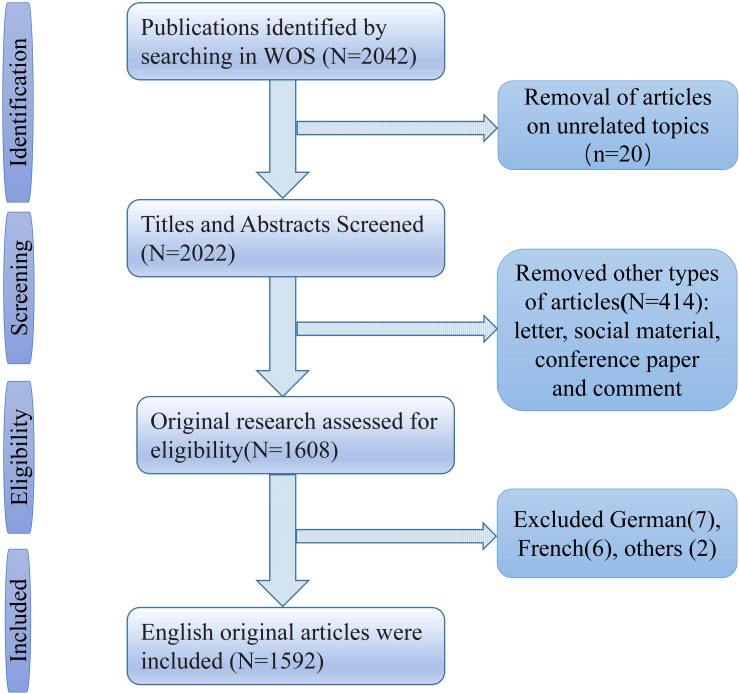
Scientific publications for AAIC-related research from 1 January 1998 to 1 July 2022 were obtained from the Web of Science database. The metrics analyses using bibliometrics software included publication, keyword, author, journal, institution, and country. In addition, the blustering analysis on the binary matrix was performed on hot keywords.
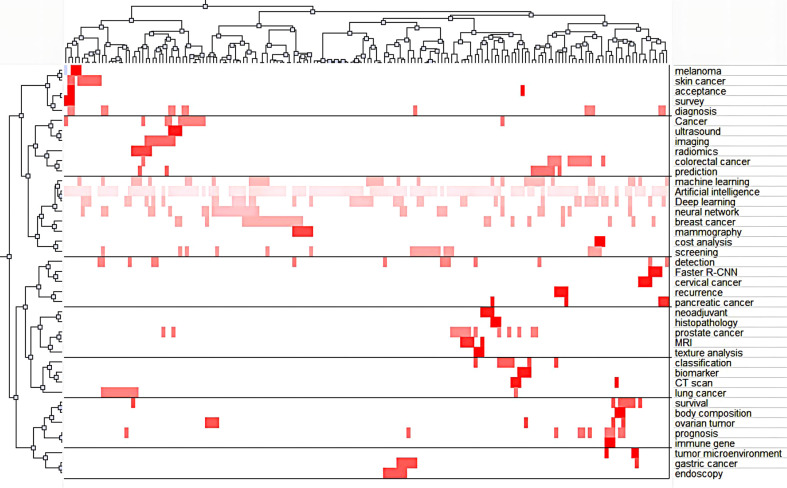
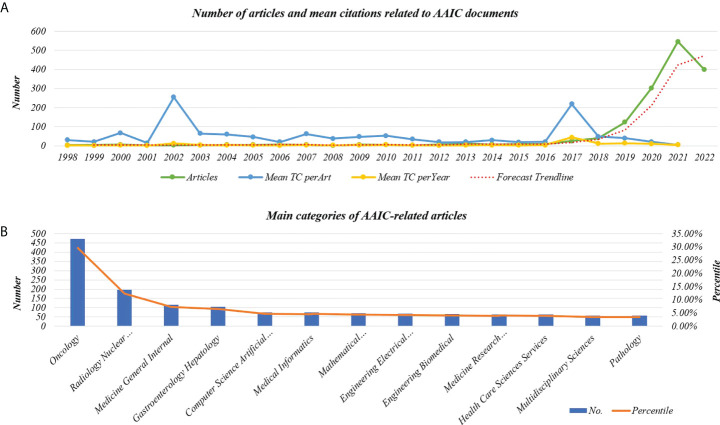
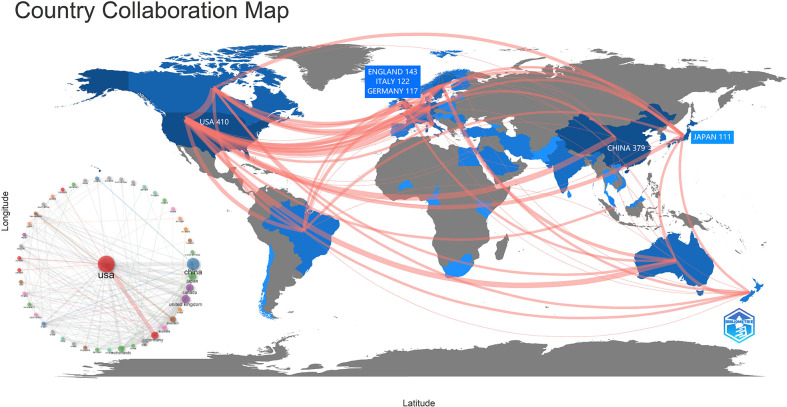
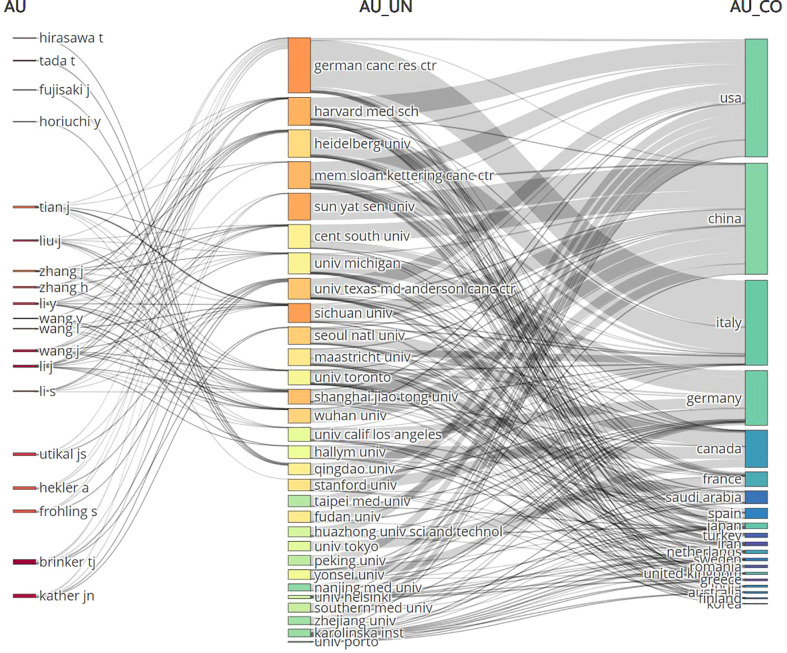
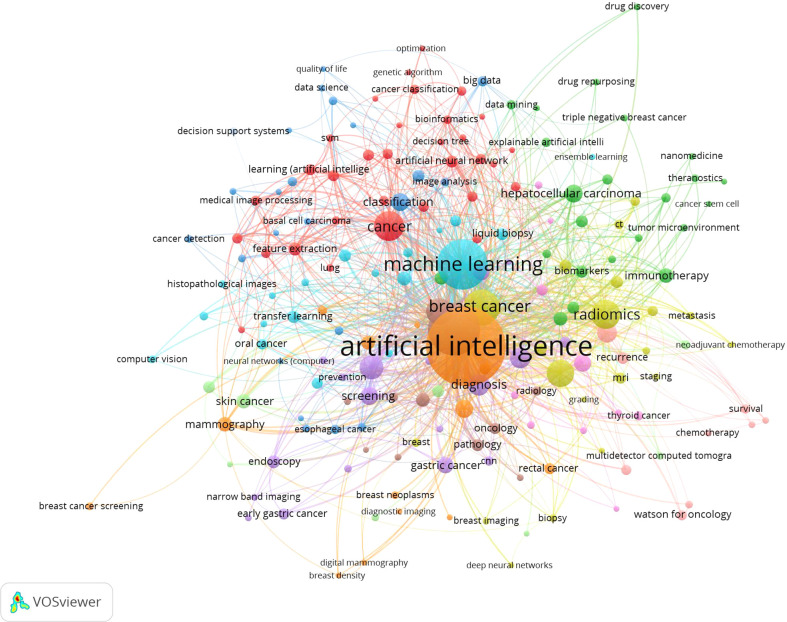
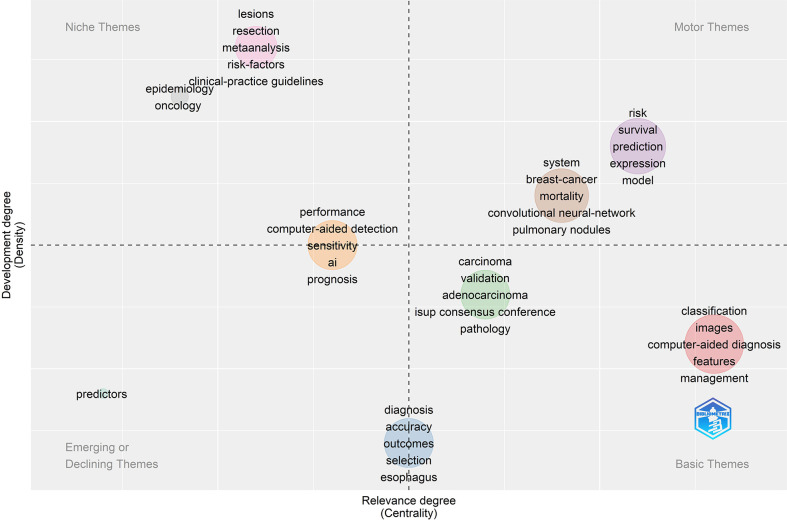
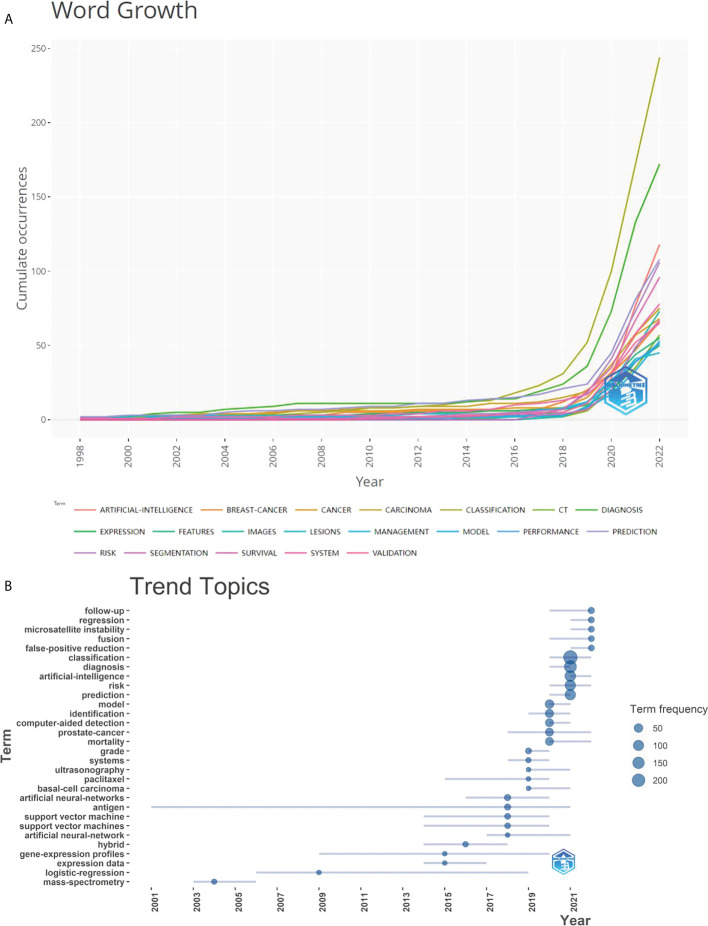
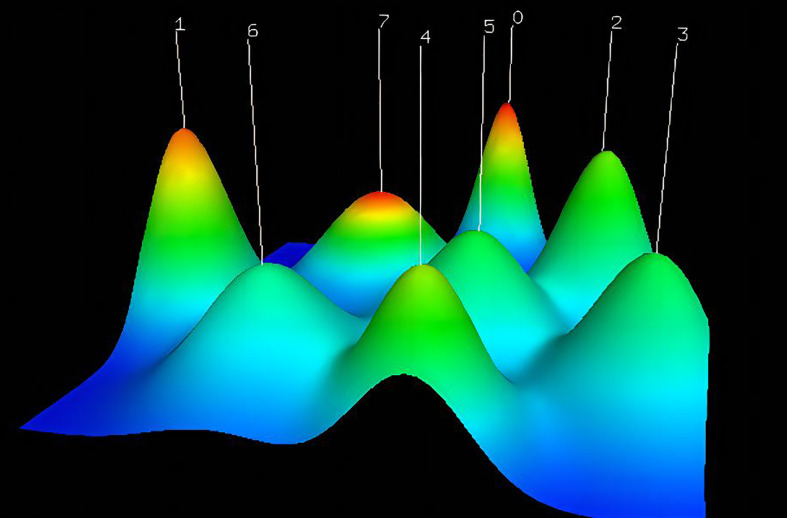
The total number of papers in this study is 1592. The last decade of AAIC research has been divided into a slow development phase (2013-2018) and a rapid development phase (2019-2022). An international collaboration centered in the USA is dedicated to the development and application of AAIC. Li J is the most prolific writer in AAIC. Through clustering analysis and high-frequency keyword research, it has been shown that AI plays a significantly important role in the prediction, diagnosis, treatment and prognosis of cancer. Classification, diagnosis, carcinogenesis, risk, and validation are developing topics. Eight hotspot fields of AAIC were also identified.
AAIC can benefit cancer patients in diagnosing cancer, assessing the effectiveness of treatment, making a decision, predicting prognosis and saving costs. Future AAIC research may be dedicated to optimizing AI calculation tools, improving accuracy, and promoting AI.
人工智能(AI)在癌症领域的应用越来越广泛,这对医生的诊断和治疗有很大帮助。本研究旨在总结人工智能在癌症应用(AAIC)中的当前研究热点,并评估AAIC的研究趋势。
从科学网数据库获取1998年1月1日至2022年7月1日与AAIC相关研究的科学出版物。使用文献计量软件进行的指标分析包括出版物、关键词、作者、期刊、机构和国家。此外,对热门关键词进行二元矩阵的聚类分析。
本研究的论文总数为1592篇。AAIC研究的过去十年分为缓慢发展阶段(2013 - 2018年)和快速发展阶段(2019 - 2022年)。以美国为中心的国际合作致力于AAIC的开发和应用。李J是AAIC领域最多产的作者。通过聚类分析和高频关键词研究表明,AI在癌症的预测、诊断、治疗和预后中发挥着极其重要的作用。分类、诊断、致癌作用、风险和验证是正在发展的主题。还确定了AAIC的八个热点领域。
AAIC在癌症诊断、评估治疗效果、做出决策、预测预后和节省成本方面可以使癌症患者受益。未来的AAIC研究可能致力于优化AI计算工具、提高准确性并推广AI。