Balis Bikila, Debella Adera, Ketema Indeshaw, Eshetu Bajrond, Zerihun Ebisa, Deressa Wayesa Alemayehu, Habte Sisay, Alemu Adisu, Bekele Habtamu
School of Nursing and Midwifery, College of Health and Medical Sciences, Haramaya University, Harar, Ethiopia.
Department of Nursing, College of Health Science, Oda Bultum University, Chiro, Ethiopia.
Front Glob Womens Health. 2022 Sep 22;3:948288. doi: 10.3389/fgwh.2022.948288. eCollection 2022.
Operative vaginal deliveries represent an alternative to address problems during the second stage of labor. Clinicians have access to two different instruments obstetrics forceps and vacuum which should be conducted with indication. Understanding the pooled prevalence of operative vaginal deliveries, its indications, and outcomes would help in adopting suitable measures to reduce operative vaginal deliveries-related maternal and neonatal complications. Therefore, this systematic review and meta-analysis aimed to determine the prevalence, indications, and outcomes of operative vaginal deliveries among mothers who gave birth in Ethiopia.
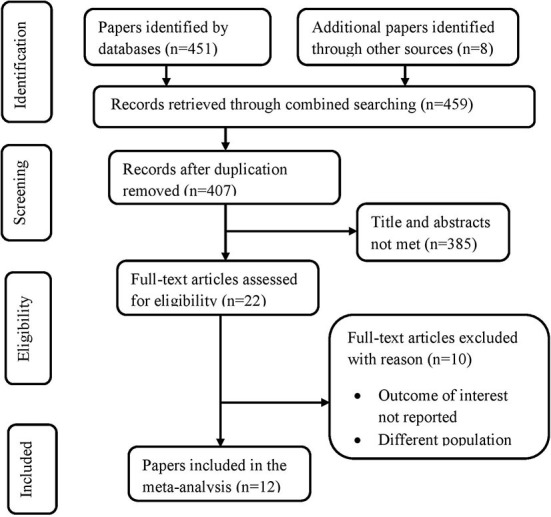
A literature search was done through databases such as PubMed, SCOPUS, Web of Sciences, CAB Abstract, and CINHAL (EBSCO) to search studies that have been conducted in Ethiopia. Relevant sources were consulted to retrieve unpublished studies. Original observational studies that reported the prevalence, indication and outcomes of operative vaginal deliveries conducted in the English language were identified and screened. Studies were independently assessed for inclusion, data extraction, and risk of bias.
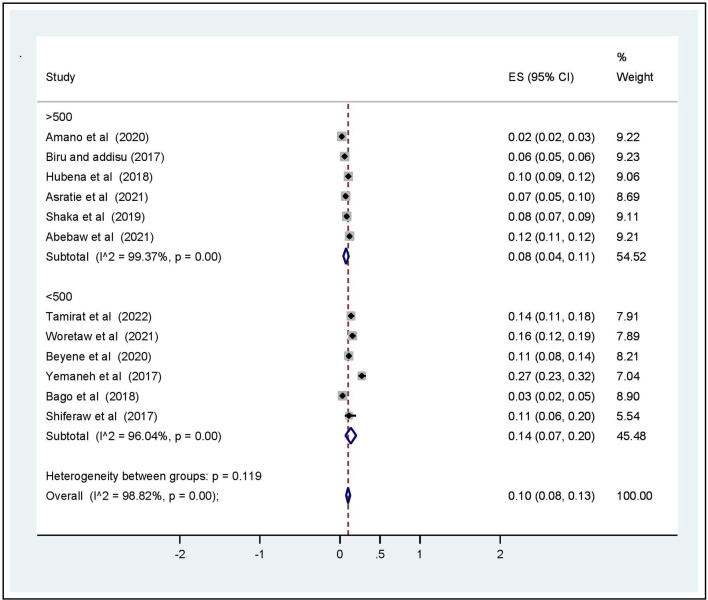
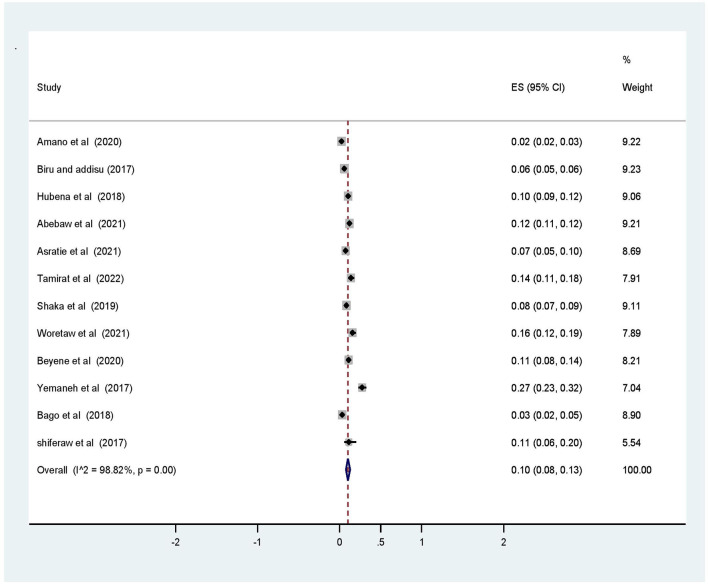
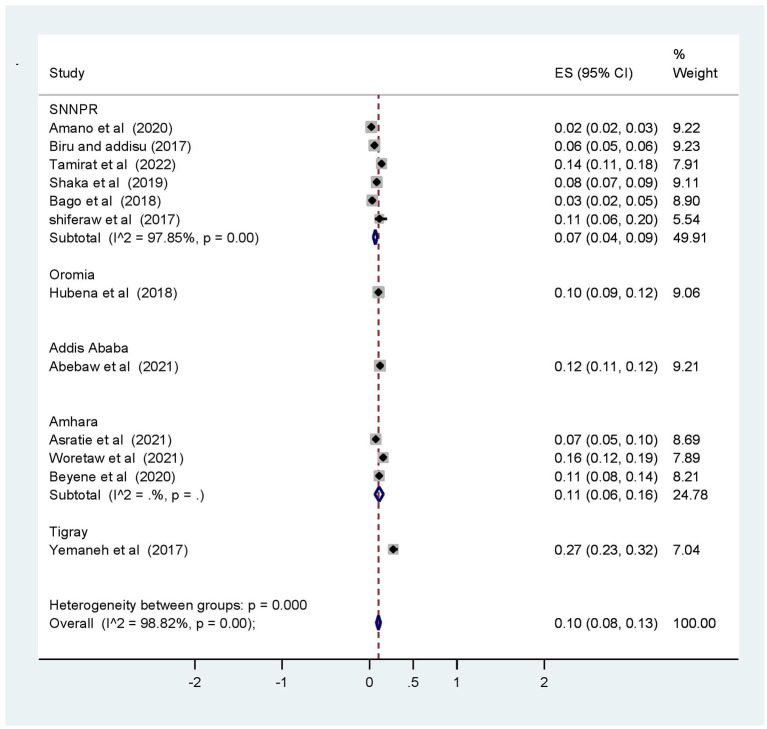
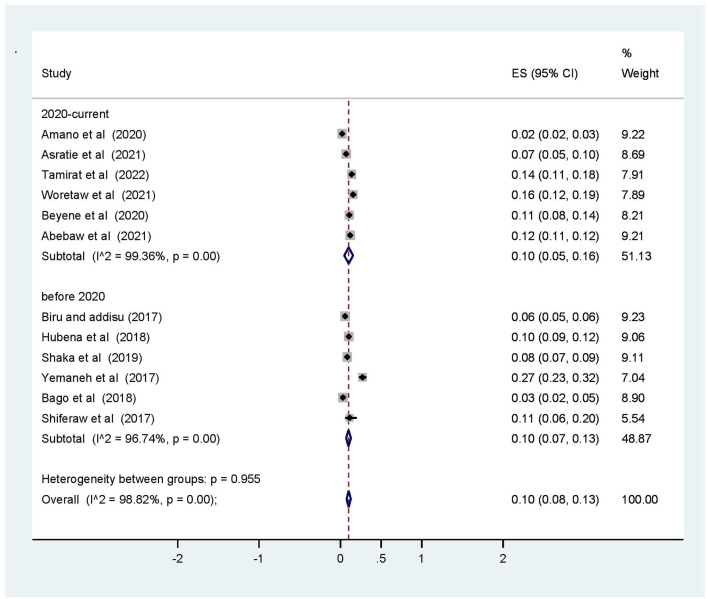
Twelve studies were reviewed. The overall pooled prevalence of operative vaginal delivery among mothers who gave birth in Ethiopia was 10% (95% CI: 8 to 13) with = 98.82% and a -value ≤ 0.001. Fetal distress, prolonged labor, and maternal exhaustion were the most common feto-maternal indications of OVDs whereas; neonatal death, poor Apgar score, admission to neonatal intensive care unit, perianal tear, and postpartum hemorrhage were complications that occur following the operative vaginal deliveries in Ethiopia.
This systematic review and meta-analysis showed one out of 10 mothers undergo operative vaginal deliveries. Almost all feto-maternal complications that arise following operative vaginal deliveries were preventable. Thus, concerned stakeholders should encourage quality OVDs practice by avoiding unnecessary indications and scaling up the skill of health professionals through special training.
http://www.crd.york.ac.uk/PROSPERO/, identifier CRD42022311432.
手术助产是解决第二产程问题的一种替代方法。临床医生可以使用两种不同的器械——产科产钳和真空吸引器,使用时应有明确指征。了解手术助产的合并患病率、其指征和结局,将有助于采取适当措施,以减少与手术助产相关的孕产妇和新生儿并发症。因此,本系统评价和荟萃分析旨在确定在埃塞俄比亚分娩的母亲中手术助产的患病率、指征和结局。
通过PubMed、SCOPUS、Web of Sciences、CAB Abstract和CINHAL(EBSCO)等数据库进行文献检索,以查找在埃塞俄比亚开展的研究。查阅相关资料以检索未发表的研究。识别并筛选以英文报道手术助产患病率、指征和结局的原始观察性研究。对研究进行独立评估,以确定是否纳入、进行数据提取以及评估偏倚风险。
共审查了12项研究。在埃塞俄比亚分娩的母亲中,手术助产的总体合并患病率为10%(95%CI:8%至13%),I² = 98.82%,P值≤0.001。胎儿窘迫、产程延长和产妇衰竭是手术助产最常见的母婴指征;而新生儿死亡、阿氏评分低、入住新生儿重症监护病房、肛周撕裂和产后出血是埃塞俄比亚手术助产术后出现的并发症。
本系统评价和荟萃分析表明,每10名母亲中就有1人接受手术助产。几乎所有手术助产术后出现的母婴并发症都是可以预防的。因此,相关利益攸关方应通过避免不必要的指征,并通过特殊培训提高卫生专业人员的技能,来鼓励高质量的手术助产实践。