Fitton Rebecca, Sweetman Jennifer, Heseltine-Carp William, van der Feltz-Cornelis Christina
Kings College London, London, United Kingdom.
Tees Esk and Wear Valley NHS Foundation Trust, Darlington, United Kingdom.
Brain Behav Immun Health. 2022 Sep 19;26:100518. doi: 10.1016/j.bbih.2022.100518. eCollection 2022 Dec.
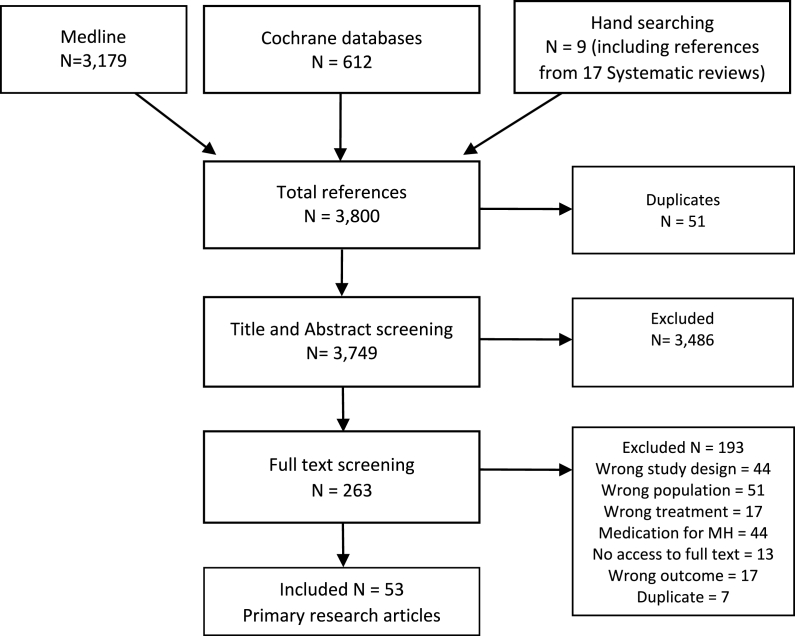
This scoping review assessed the effect of anti-inflammatory medications in mental disorders. A search in Medline and the Cochrane database focusing on randomised controlled trials and systematic reviews identified 53 primary research articles, conducted in major depression, bipolar disorder, schizophrenia and somatic symptom disorders and related disorders (SSRD). The findings suggest that there is scope to consider the use of anti-inflammatory agents in mental disorders, however, not as a one-size-fits-all solution. Treatment could be especially helpful in subgroups with evidence of baseline inflammation. Anti-inflammatory medications that seem mostly effective in bipolar disorder or major depressive disorder, such as Celecoxib, Pioglitazone and statins, may differ from the ones with indications of effectiveness in schizophrenia, such as Minocycline and Aspirin. This might suggest a different underlying mechanism for treatment success in those two main illness groups. Further studies with larger sample sizes are needed that take levels of inflammation markers into account.
这项范围综述评估了抗炎药物在精神障碍中的作用。在Medline和Cochrane数据库中进行检索,重点关注随机对照试验和系统评价,共确定了53篇主要研究文章,这些研究涉及重度抑郁症、双相情感障碍、精神分裂症以及躯体症状障碍和相关障碍(SSRD)。研究结果表明,在精神障碍中考虑使用抗炎药物是有空间的,然而,这并非一种适用于所有情况的解决方案。对于有基线炎症证据的亚组,治疗可能特别有帮助。在双相情感障碍或重度抑郁症中似乎最有效的抗炎药物,如塞来昔布、吡格列酮和他汀类药物,可能与在精神分裂症中有疗效迹象的药物不同,如米诺环素和阿司匹林。这可能表明在这两个主要疾病组中治疗成功的潜在机制不同。需要进行更大样本量的进一步研究,并考虑炎症标志物水平。