Department of Electronics and Telecommunications, Politecnico di Torino, 10129 Turin, Italy.
Dipartimento di Fisica, Università di Torino & Sezione INFN di Torino, 10125 Turin, Italy.
Sensors (Basel). 2022 Sep 21;22(19):7138. doi: 10.3390/s22197138.
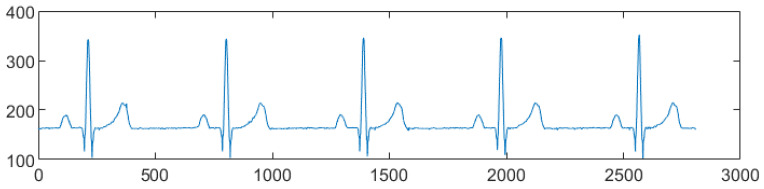
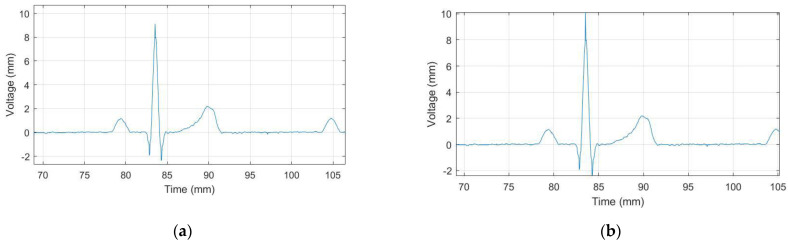
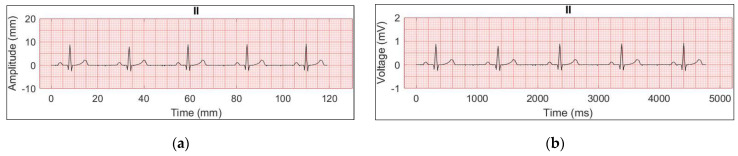
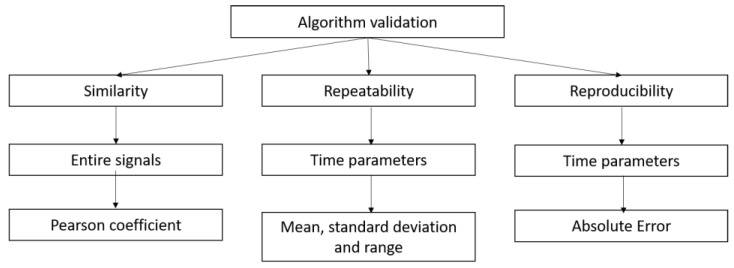
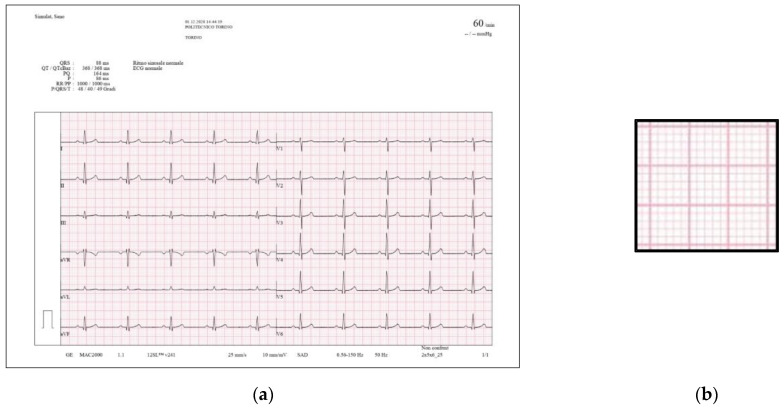
The electrocardiogram (ECG) signal describes the heart's electrical activity, allowing it to detect several health conditions, including cardiac system abnormalities and dysfunctions. Nowadays, most patient medical records are still paper-based, especially those made in past decades. The importance of collecting digitized ECGs is twofold: firstly, all medical applications can be easily implemented with an engineering approach if the ECGs are treated as signals; secondly, paper ECGs can deteriorate over time, therefore a correct evaluation of the patient's clinical evolution is not always guaranteed. The goal of this paper is the realization of an automatic conversion algorithm from paper-based ECGs (images) to digital ECG signals. The algorithm involves a digitization process tested on an image set of 16 subjects, also with pathologies. The quantitative analysis of the digitization method is carried out by evaluating the repeatability and reproducibility of the algorithm. The digitization accuracy is evaluated both on the entire signal and on six ECG time parameters (R-R peak distance, QRS complex duration, QT interval, PQ interval, P-wave duration, and heart rate). Results demonstrate the algorithm efficiency has an average Pearson correlation coefficient of 0.94 and measurement errors of the ECG time parameters are always less than 1 mm. Due to the promising experimental results, the algorithm could be embedded into a graphical interface, becoming a measurement and collection tool for cardiologists.
心电图(ECG)信号描述了心脏的电活动,可用于检测多种健康状况,包括心脏系统异常和功能障碍。如今,大多数患者的医疗记录仍然是纸质的,尤其是过去几十年的记录。采集数字化心电图有两个重要原因:首先,如果将心电图视为信号,所有医疗应用都可以很容易地通过工程方法实现;其次,纸质心电图可能随时间恶化,因此不能始终保证对患者临床演变的正确评估。本文的目标是实现一种从基于纸张的心电图(图像)到数字心电图信号的自动转换算法。该算法涉及对一组 16 名患者(也包括有病症的患者)的图像集进行的数字化处理。通过评估算法的可重复性和再现性,对数字化方法进行了定量分析。对整个信号和六个心电图时间参数(R-R 峰间距、QRS 复合波持续时间、QT 间期、PQ 间期、P 波持续时间和心率)进行了数字化精度评估。结果表明,该算法的效率具有 0.94 的平均皮尔逊相关系数,且心电图时间参数的测量误差始终小于 1mm。由于实验结果很有前景,该算法可以嵌入到图形界面中,成为心脏病学家的测量和采集工具。