Key Laboratory of National Forestry and Grassland Administration/Beijing for Bamboo & Rattan Science and Technology, International Centre for Bamboo and Rattan, No. 8 Futong Dongdajie, Wangjing, Beijing, 100102, Chaoyang District, China.
Microb Cell Fact. 2022 Oct 15;21(1):212. doi: 10.1186/s12934-022-01934-x.
Linalool is a monoterpenoid, also a vital silvichemical with commercial applications in cosmetics, flavoring ingredients, and medicines. Regulation of mevalonate (MVA) pathway metabolic flux is a common strategy to engineer Saccharomyces cerevisiae for efficient linalool production. However, metabolic regulation of the MVA pathway is complex and involves competition for central carbon metabolism, resulting in limited contents of target metabolites.
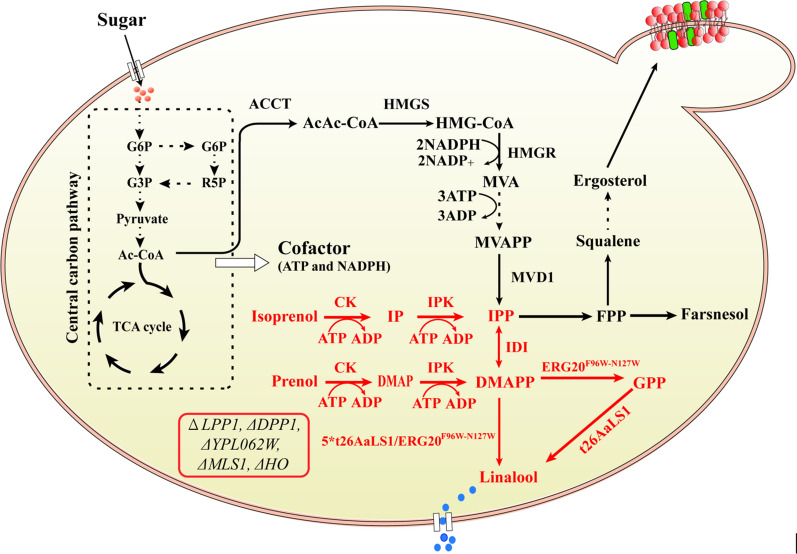
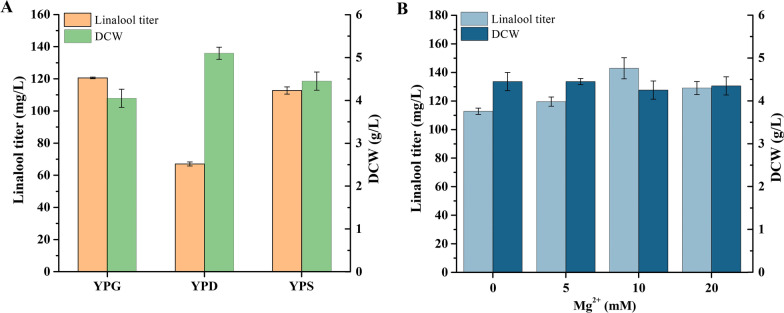
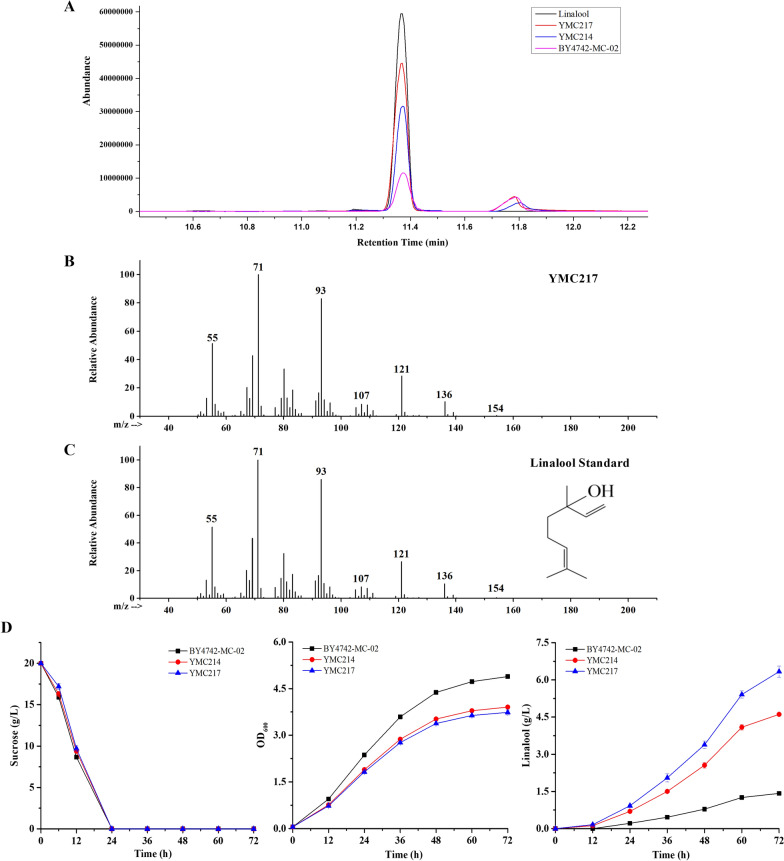
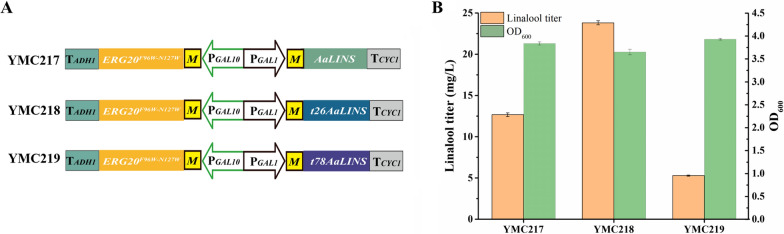
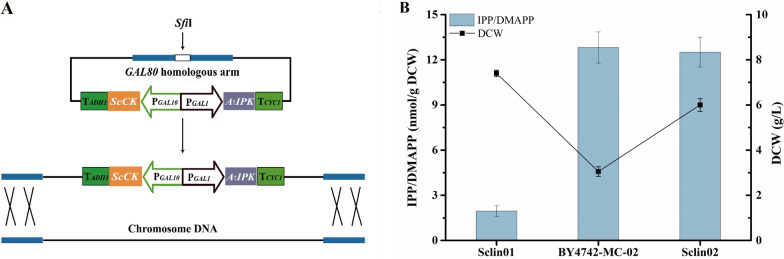
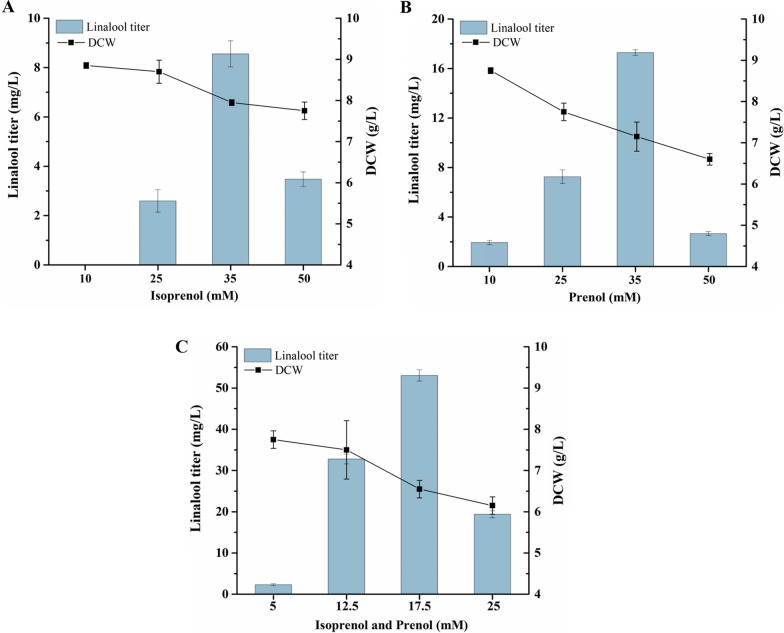
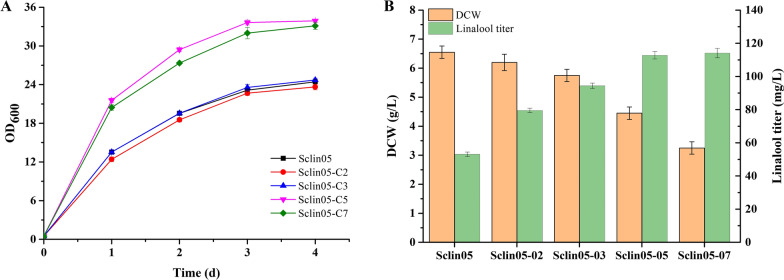
In this study, first, a truncated linalool synthase (t26AaLS1) from Actinidia arguta was selected for the production of linalool in S. cerevisiae. To simplify the complexity of the metabolic regulation of the MVA pathway and increase the flux of isopentenyl pyrophosphate (IPP) and dimethylallyl pyrophosphate (DMAPP), we introduced the two-step isopentenyl utilization pathway (IUP) into S. cerevisiae, which could produce large amounts of IPP/DMAPP. Further, the S. cerevisiae IDI1 (ecoding isopentenyl diphosphate delta-isomerase) and ERG20 (encoding farnesyl diphosphate synthase) genes were integrated into the yeast genome, combined with the strategies of copy number variation of the t26AaLS1 and ERG20 genes to increase the metabolic flux of the downstream IPP, as well as optimization of isoprenol and prenol concentrations, resulting in a 4.8-fold increase in the linalool titer. Eventually, under the optimization of carbon sources and Mg addition, a maximum linalool titer of 142.88 mg/L was obtained in the two-phase extractive shake flask fermentation.
The results show that the efficient synthesis of linalool in S. cerevisiae could be achieved through a two-step pathway, gene expression adjustment, and optimization of culture conditions. The study may provide a valuable reference for the other monoterpenoid production in S. cerevisiae.
芳樟醇是一种单萜类化合物,也是一种具有商业应用价值的重要林化物质,可用于化妆品、香料成分和药物。调节甲羟戊酸(MVA)途径的代谢通量是工程酿酒酵母高效生产芳樟醇的常用策略。然而,MVA 途径的代谢调节较为复杂,涉及到对中心碳代谢的竞争,从而导致目标代谢物的含量有限。
在本研究中,首先选择来自软枣猕猴桃的截短型芳樟醇合酶(t26AaLS1)用于酿酒酵母中芳樟醇的生产。为了简化 MVA 途径代谢调节的复杂性并增加异戊烯基焦磷酸(IPP)和二甲基烯丙基焦磷酸(DMAPP)的通量,我们将两步异戊烯基利用途径(IUP)引入酿酒酵母中,该途径可以大量生产 IPP/DMAPP。此外,我们将酿酒酵母 IDI1(编码异戊烯二磷酸 delta-异构酶)和 ERG20(编码法呢基二磷酸合酶)基因整合到酵母基因组中,结合 t26AaLS1 和 ERG20 基因的拷贝数变异策略来增加下游 IPP 的代谢通量,以及优化异戊烯醇和烯醇的浓度,使芳樟醇的产量提高了 4.8 倍。最终,在优化碳源和添加镁的条件下,在两相萃取摇瓶发酵中获得了 142.88mg/L 的最大芳樟醇产量。
结果表明,通过两步途径、基因表达调节和优化培养条件,可以在酿酒酵母中高效合成芳樟醇。该研究可能为其他单萜类化合物在酿酒酵母中的生产提供有价值的参考。