Faculty of Arts and Science, Kyushu University, 744 Motooka, 819-0395, Nishiku, Fukuoka, Japan.
J Autism Dev Disord. 2024 Jan;54(1):182-192. doi: 10.1007/s10803-022-05749-y. Epub 2022 Oct 15.
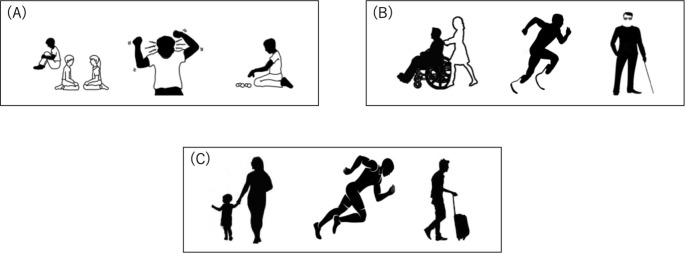
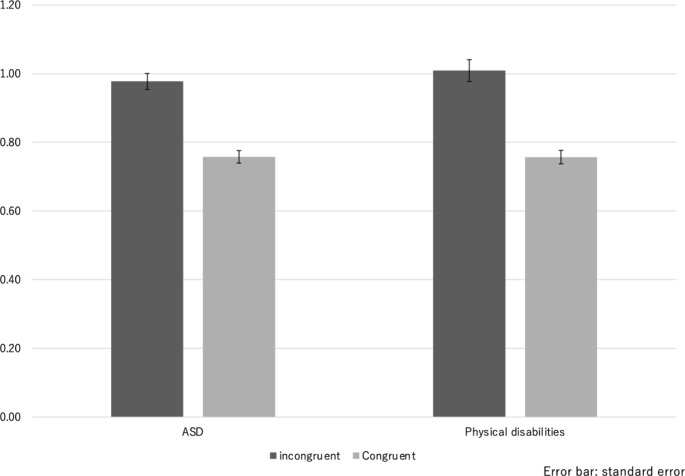
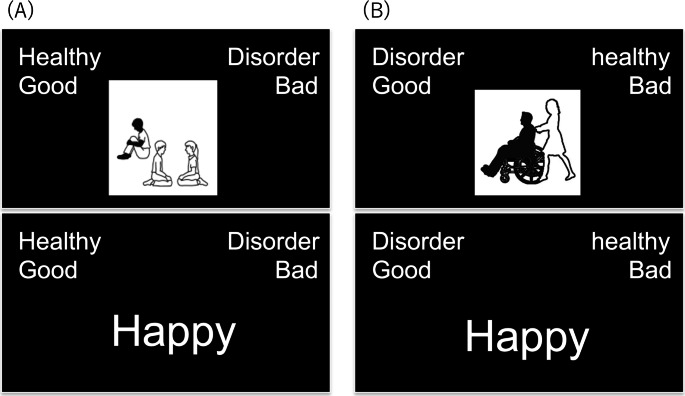
People with autism spectrum disorder (ASD) experience stigmatization rooted in negative attitudes or prejudice toward them due to social awkwardness. However, little is known about implicit attitudes toward ASD, especially differences in attitudes compared to those of more visible conditions; physical disabilities. In this study, we implemented implicit association tests (IATs) to assess implicit attitudes. Sixty-three university students participated in IATs and answered questionnaires that measured explicit attitudes, social desirability, knowledge about-and familiarity with-disorders. The results demonstrated that implicit attitude toward ASD was significantly less negative than toward physical disabilities. Regarding the discrepancy, not socially awkward behavior but appearance of people with ASD can be evaluated as 'in-group' members and lead to less negative attitude compared with physical disabilities.
自闭症谱系障碍(ASD)患者由于社交笨拙而遭受源于负面态度或偏见的污名化。然而,人们对自闭症的内隐态度知之甚少,尤其是与更明显的条件(身体残疾)相比,对自闭症态度的差异。在这项研究中,我们实施了内隐联想测试(IAT)来评估内隐态度。63 名大学生参与了 IAT 并回答了测量外显态度、社会期望、对障碍的了解和熟悉程度的问卷。结果表明,对自闭症的内隐态度明显没有对身体残疾的态度那么消极。关于这种差异,并不是社交笨拙的行为,而是自闭症患者的外表可以被评估为“内群体”成员,与身体残疾相比,这会导致不那么消极的态度。