Department of Oral and Maxillofacial Diseases P.O. Box 447, FI- 00029 University of Helsinki, Finland
Med Oral Patol Oral Cir Bucal. 2023 May 1;28(3):e238-e246. doi: 10.4317/medoral.25662.
In recent years, electric scooters (e-scooter) have emerged as an alternative mode of urban transport due to their availability and effortless use. However, e-scooter-related trauma and injuries, especially to the head, have received wide media coverage and raised public concern about their safety. We aim to determine and compare clinically relevant variables, incidence, and severity between bicycle and e-scooter-related facial fractures and potential protective measures for injury prevention.
This retrospective study comprised all patients admitted to a tertiary trauma center with bicycle or e-scooter-related facial fractures between January 2019 and October 2020. Patient- and injury-related variables, including demographics, injury mechanisms, helmet use, influence of alcohol, types of facial injuries, types of other injuries, given treatment, and hospital stay, were collected, analysed, and compared between bicycle and e-scooter injuries.
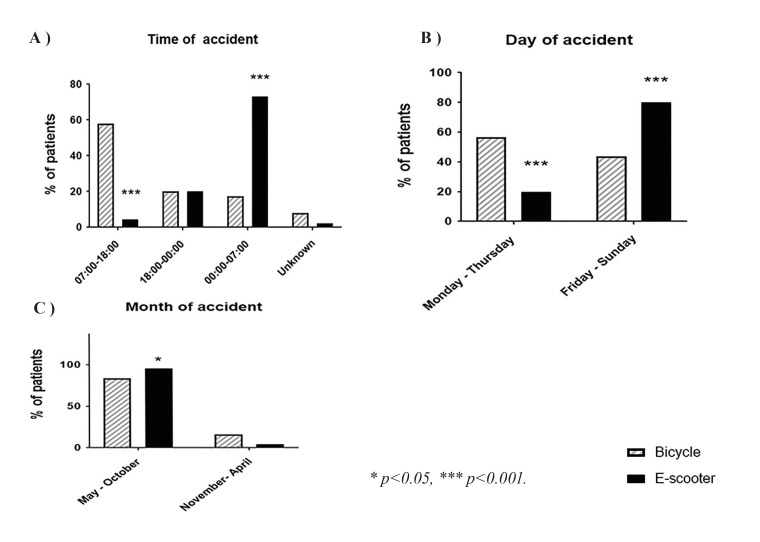
Altogether 169 patients with facial fractures, 124 bicycle-related injuries (73.4%) and 45 e-scooter-related injuries (26.6%) were included. Alcohol involvement was significantly higher in e-scooter patients (88.9%) than in bicycle patients (31.5%) (p<0.001). Driving under the influence of alcohol was associated with driving without a helmet in both groups (p<0.001). In multivariate analyses, e-scooter accidents were 18 times more likely to occur under the influence of alcohol (OR 17.85, p<0.001) and were more likely to involve collision with a stationary object (OR 3.81, p=0.028). E-scooter patients were significantly younger (OR 0.95, p<0.001) and had significantly more cranial fractures (OR 10.15, p=0.014) than bicycle patients.
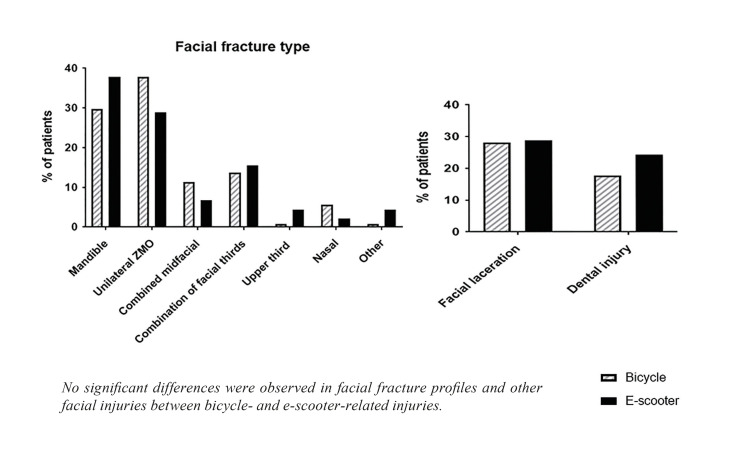
Compared with patients in bicycle accidents, facial fracture patients injured in e-scooter accidents are younger, are more likely under the influence of alcohol, and sustain more severe craniofacial skeleton fractures. Our results for both groups of patients advocate stricter adherence to helmet and road safety legislation as well as public education for injury prevention.
近年来,电动滑板车(e-scooter)因其可用性和易用性而成为城市交通的一种替代方式。然而,e-scooter 相关的创伤和伤害,特别是头部创伤和伤害,已经受到了广泛的媒体报道,并引起了公众对其安全性的关注。我们旨在确定和比较自行车和 e-scooter 相关面部骨折的临床相关变量、发生率和严重程度,以及潜在的预防伤害的保护措施。
这项回顾性研究包括 2019 年 1 月至 2020 年 10 月期间因自行车或 e-scooter 相关面部骨折而入住三级创伤中心的所有患者。收集并分析了患者和损伤相关变量,包括人口统计学、损伤机制、头盔使用、酒精影响、面部损伤类型、其他损伤类型、所给予的治疗和住院时间,并在自行车和 e-scooter 损伤之间进行了比较。
共纳入 169 例面部骨折患者,其中 124 例自行车相关损伤(73.4%)和 45 例 e-scooter 相关损伤(26.6%)。e-scooter 患者中酒精摄入的比例明显高于自行车患者(88.9% vs. 31.5%)(p<0.001)。在两组中,酒后驾车都与不戴头盔有关(p<0.001)。多变量分析显示,酒后驾车发生 e-scooter 事故的可能性是酒后驾车发生自行车事故的 18 倍(OR 17.85,p<0.001),且更有可能与静止物体发生碰撞(OR 3.81,p=0.028)。e-scooter 患者明显比自行车患者年轻(OR 0.95,p<0.001),且颅骨骨折的发生率明显更高(OR 10.15,p=0.014)。
与自行车事故患者相比,e-scooter 事故中受伤的面部骨折患者更年轻,更有可能处于酒精影响下,且更易发生严重的颅面骨骼骨折。我们对这两组患者的研究结果都主张更严格地遵守头盔和道路安全法规,并进行公众安全教育以预防伤害。