Mandorino Mauro, Figueiredo Antonio J, Condello Giancarlo, Tessitore Antonio
Department of Movement, Human and Health Sciences, University of Rome "Foro Italico", Rome, Italy.
University of Coimbra, Faculty of Sport Sciences and Physical Education, Research Unit for Sport and Physical Activity, Coimbra, Portugal.
Biol Sport. 2022 Oct;39(4):839-848. doi: 10.5114/biolsport.2022.109953. Epub 2021 Oct 25.
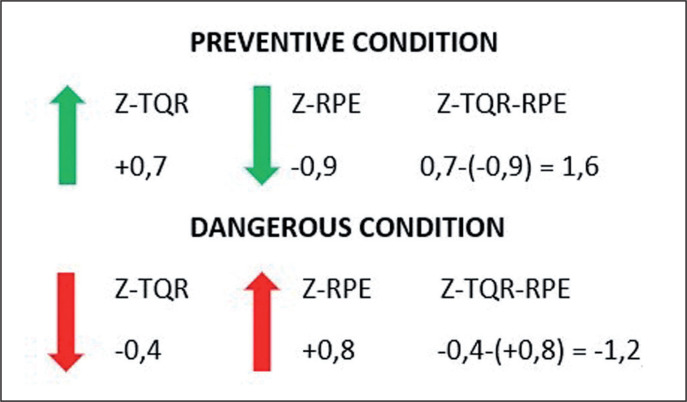
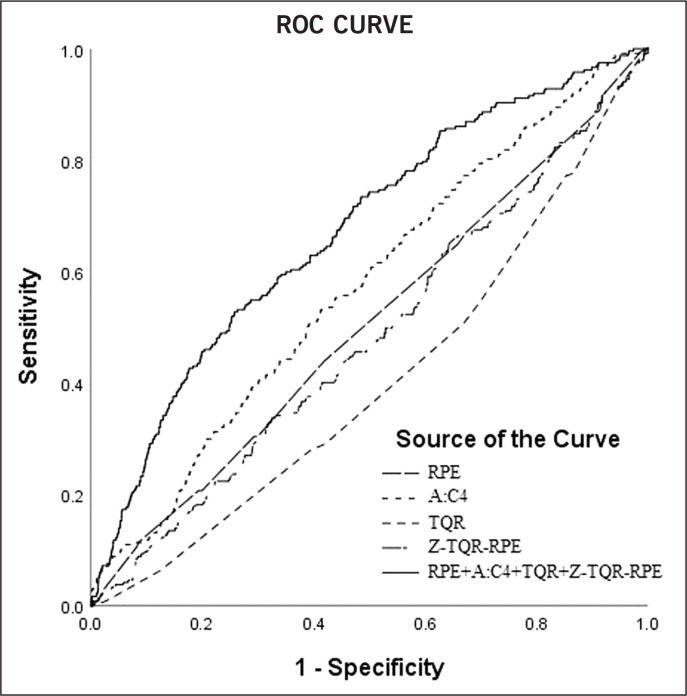
A high training load could increase the risk of injury in soccer players. However, there is still a lack of knowledge regarding the effect on young athletes, in whom a different maturity status could lead to different physiological responses to training. Therefore, the aim of this study was to investigate the association of internal load markers and recovery status with risk of illnesses and non-contact injuries in young soccer players characterised by different maturity status. Twenty-three U14 soccer players were monitored during a full season and categorised according to years from peak height velocity (PHV). Based on the estimated values, athletes were divided into three different groups: Pre-PHV, Circa-PHV and Post-PHV players. The following internal load markers were monitored: rating of perceived exertion (RPE), session rating of perceived exertion (S-RPE), weekly load (WL), cumulative loads for 2, 3, and 4 weeks (WL2, WL3, WL4), acute to chronic workload ratio for 2, 3 and 4 weeks (A:C2, A:C3, A:C4) and week-to-week percentage variation (%WL). Recovery status was quantified using the total quality recovery (TQR) scale. Z-score transformation was adopted for TQR and RPE values and the difference between the parameters was calculated (Z-TQR-RPE). The Kruskal-Wallis test was adopted to evaluate differences in TQR and RPE with respect to maturity offset. A multinomial regression analysis was performed to evaluate the association between internal load markers and risk of illness and non-contact injuries. The variables that showed a significant association were included in the receiver operating characteristic (ROC) curve analysis. The results revealed that RPE was significantly higher ( < 0.01) and TQR significantly lower ( < 0.05) in Post-PHV compared to Pre- and Circa-PHV. Moreover, RPE, A:C4, TQR and Z-TQR-RPE showed a significant ( < 0.01) association with non-contact injuries. The internal load markers included in ROC curve analysis showed poor predictive ability (AUC ≤ 0.6). A rapid increase in training load together with a decrease in recovery status may produce higher susceptibility to illnesses and non-contact injuries. The contrasting physiological responses found in relation to maturity status could explain the different injury predisposition in young soccer players.
高训练负荷可能会增加足球运动员受伤的风险。然而,对于年轻运动员所受的影响仍缺乏了解,不同的成熟状态可能导致他们对训练产生不同的生理反应。因此,本研究的目的是调查以不同成熟状态为特征的年轻足球运动员的内部负荷指标和恢复状态与疾病风险和非接触性损伤之间的关联。在整个赛季中对23名14岁以下足球运动员进行了监测,并根据距身高增长峰值(PHV)的年数进行分类。根据估计值,运动员被分为三个不同的组:PHV前、PHV前后和PHV后运动员。监测了以下内部负荷指标:主观用力程度评级(RPE)、训练课主观用力程度评级(S-RPE)、每周负荷(WL)、2周、3周和4周的累积负荷(WL2、WL3、WL4)、2周、3周和4周的急性与慢性工作量比(A:C2、A:C3、A:C4)以及周与周之间的百分比变化(%WL)。使用总质量恢复(TQR)量表对恢复状态进行量化。对TQR和RPE值采用Z分数转换,并计算参数之间的差异(Z-TQR-RPE)。采用Kruskal-Wallis检验来评估TQR和RPE在成熟偏移方面的差异。进行了多项回归分析,以评估内部负荷指标与疾病风险和非接触性损伤之间的关联。将显示出显著关联的变量纳入受试者工作特征(ROC)曲线分析。结果显示,与PHV前和PHV前后相比,PHV后运动员的RPE显著更高(<0.01),TQR显著更低(<0.05)。此外,RPE、A:C4、TQR和Z-TQR-RPE与非接触性损伤显示出显著(<0.01)关联。ROC曲线分析中纳入的内部负荷指标显示出较差的预测能力(AUC≤0.6)。训练负荷的快速增加以及恢复状态的下降可能会使运动员对疾病和非接触性损伤的易感性更高。与成熟状态相关的不同生理反应可以解释年轻足球运动员不同的受伤倾向。