Zhang Yang, Jin Fangfang, Wei Xing, Jin Qiuyu, Xie Jingri, Pan Yujia, Shen Wenjuan
Department of Internal Medicine, First Affiliated Hospital of Heilongjiang University of Chinese Medicine, Harbin, China.
Department of Internal Medicine, Heilongjiang University of Chinese Medicine, Harbin, China.
Front Pharmacol. 2022 Sep 29;13:958005. doi: 10.3389/fphar.2022.958005. eCollection 2022.
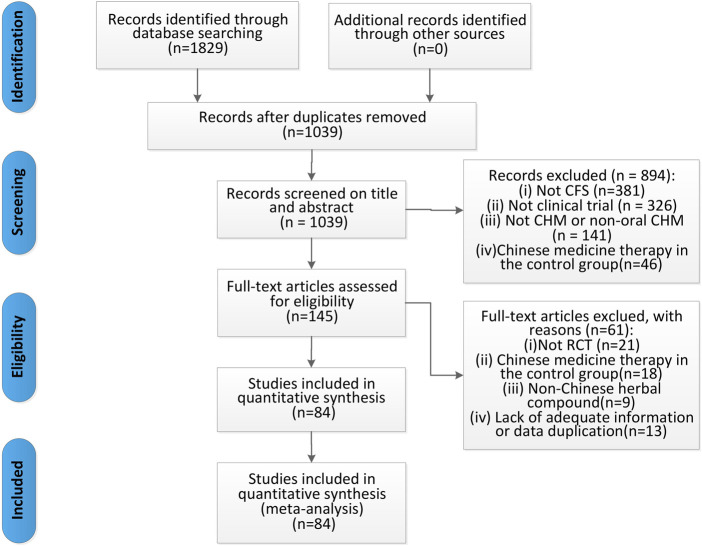
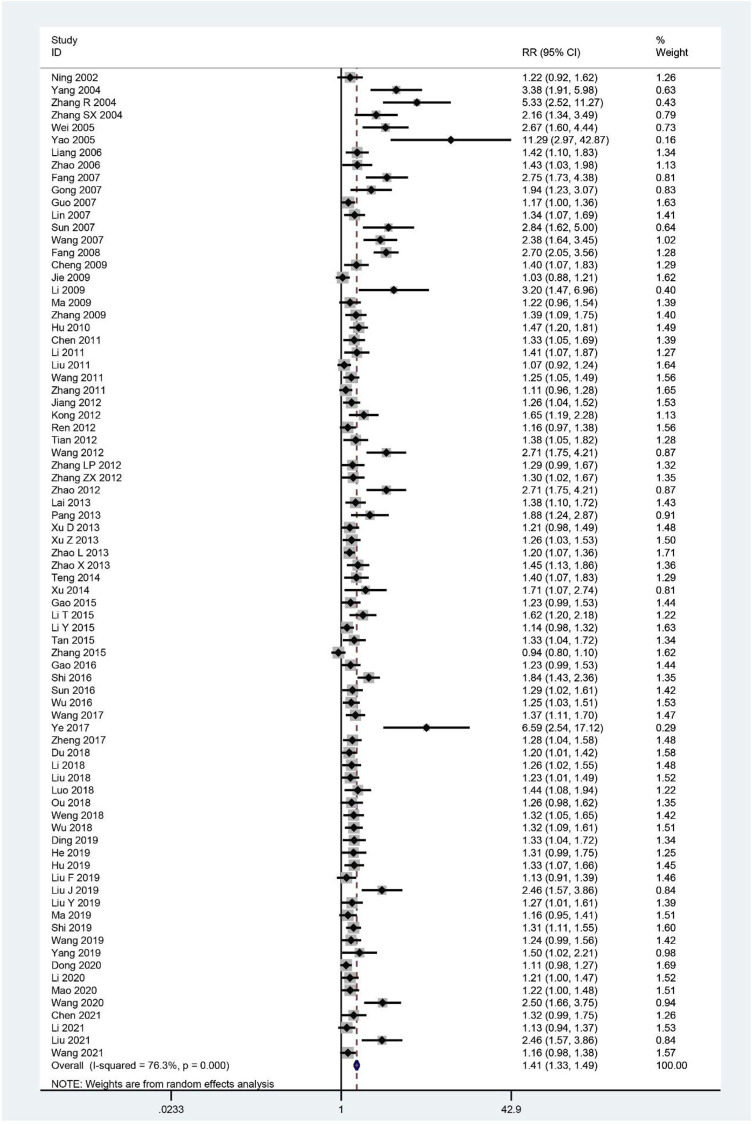
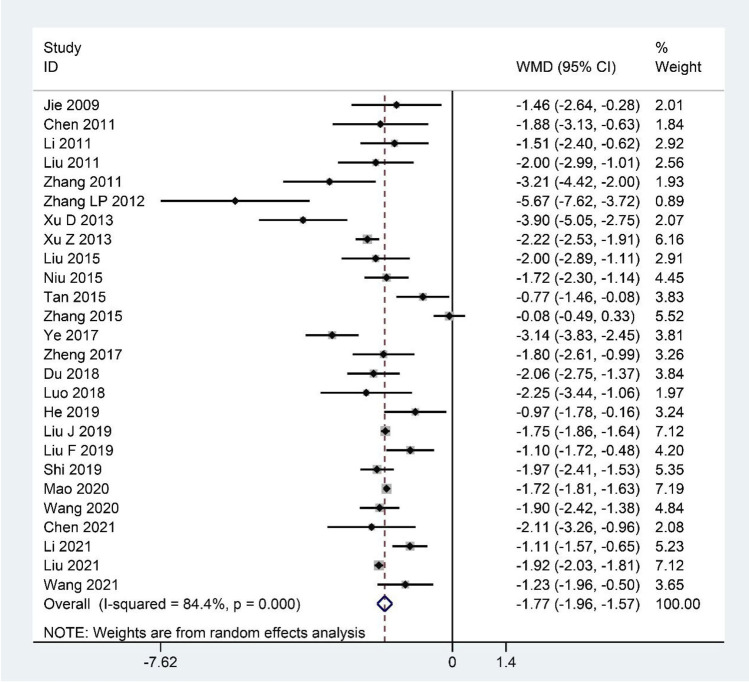
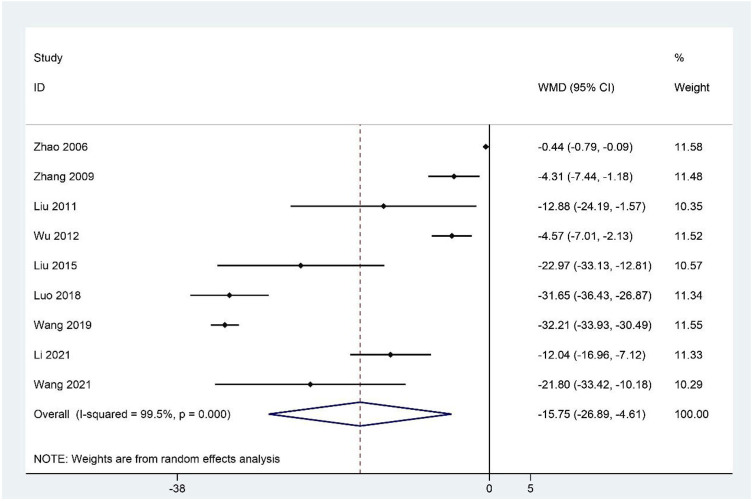
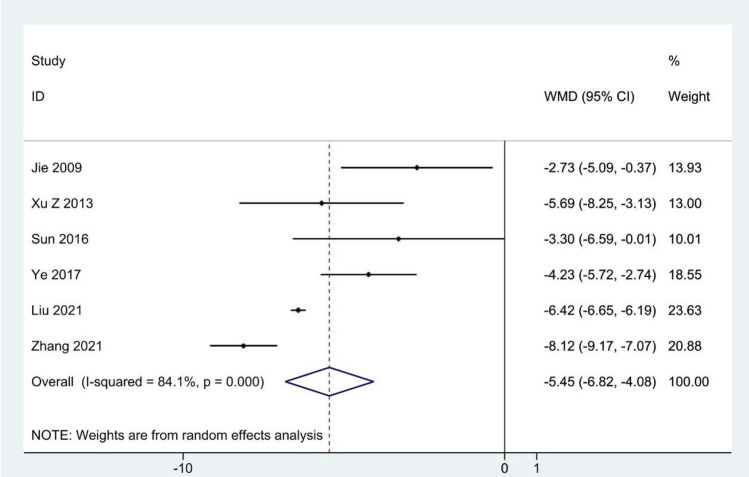
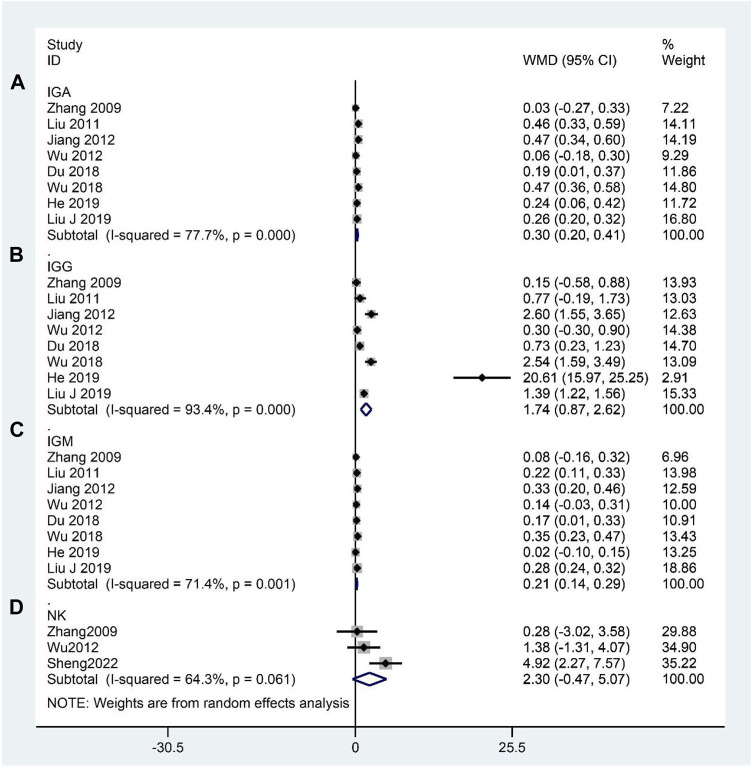
This meta-analysis aimed to assess the effectiveness and safety of Chinese herbal medicine (CHM) in treating chronic fatigue syndrome (CFS). Nine electronic databases were searched from inception to May 2022. Two reviewers screened studies, extracted the data, and assessed the risk of bias independently. The meta-analysis was performed using the Stata 12.0 software. Eighty-four RCTs that explored the efficacy of 69 kinds of Chinese herbal formulas with various dosage forms (decoction, granule, oral liquid, pill, ointment, capsule, and herbal porridge), involving 6,944 participants were identified. This meta-analysis showed that the application of CHM for CFS can decrease Fatigue Scale scores (WMD: -1.77; 95%CI: -1.96 to -1.57; < 0.001), Fatigue Assessment Instrument scores (WMD: -15.75; 95%CI: -26.89 to -4.61; 0.01), Self-Rating Scale of mental state scores (WMD: -9.72; 95%CI:-12.26 to -7.18; 0.001), Self-Rating Anxiety Scale scores (WMD: -7.07; 95%CI: -9.96 to -4.19; < 0.001), Self-Rating Depression Scale scores (WMD: -5.45; 95%CI: -6.82 to -4.08; < 0.001), and clinical symptom scores (WMD: -5.37; 95%CI: -6.13 to -4.60; < 0.001) and improve IGA (WMD: 0.30; 95%CI: 0.20-0.41; 0.001), IGG (WMD: 1.74; 95%CI: 0.87-2.62; 0.001), IGM (WMD: 0.21; 95%CI: 0.14-0.29; 0.001), and the effective rate (RR = 1.41; 95%CI: 1.33-1.49; 0.001). However, natural killer cell levels did not change significantly. The included studies did not report any serious adverse events. In addition, the methodology quality of the included RCTs was generally not high. Our study showed that CHM seems to be effective and safe in the treatment of CFS. However, given the poor quality of reports from these studies, the results should be interpreted cautiously. More international multi-centered, double-blinded, well-designed, randomized controlled trials are needed in future research. : [https://www.crd.york.ac.uk/prospero/display_record.php?ID=CRD42022319680], identifier [CRD42022319680].
这项荟萃分析旨在评估中药治疗慢性疲劳综合征(CFS)的有效性和安全性。检索了9个电子数据库,检索时间从建库至2022年5月。两名研究者独立筛选研究、提取数据并评估偏倚风险。使用Stata 12.0软件进行荟萃分析。共纳入84项随机对照试验,这些试验探讨了69种不同剂型(汤剂、颗粒剂、口服液、丸剂、膏剂、胶囊剂和药粥)的中药配方的疗效,涉及6944名参与者。该荟萃分析表明,应用中药治疗CFS可降低疲劳量表评分(加权均数差:-1.77;95%置信区间:-1.96至-1.57;P<0.001)、疲劳评估工具评分(加权均数差:-15.75;95%置信区间:-26.89至-4.61;P=0.01)、精神状态自评量表评分(加权均数差:-9.72;95%置信区间:-12.26至-7.18;P<0.001)、焦虑自评量表评分(加权均数差:-7.07;95%置信区间:-9.96至-4.19;P<0.001)、抑郁自评量表评分(加权均数差:-5.45;95%置信区间:-6.82至-4.08;P<0.001)和临床症状评分(加权均数差:-5.37;95%置信区间:-6.13至-4.60;P<0.001),并提高免疫球蛋白A(加权均数差:0.30;95%置信区间:0.20 - 0.41;P<0.001)、免疫球蛋白G(加权均数差:1.74;95%置信区间:0.87 - 2.62;P<0.001)、免疫球蛋白M(加权均数差:0.21;95%置信区间:0.14 - 0.29;P<0.001)以及有效率(相对危险度=1.41;95%置信区间:1.33 - 1.49;P<0.001)。然而,自然杀伤细胞水平无显著变化。纳入的研究未报告任何严重不良事件。此外,纳入的随机对照试验的方法学质量普遍不高。我们的研究表明,中药治疗CFS似乎有效且安全。然而,鉴于这些研究报告质量较差,对结果应谨慎解读。未来研究需要更多国际多中心、双盲、设计良好的随机对照试验。:[https://www.crd.york.ac.uk/prospero/display_record.php?ID=CRD42022319680],标识符[CRD42022319680]