Beijing Museum of Natural History, Beijing, China.
School of Ecology and Nature Conservation, Beijing Forestry University, Beijing, China.
PLoS One. 2022 Oct 20;17(10):e0276542. doi: 10.1371/journal.pone.0276542. eCollection 2022.
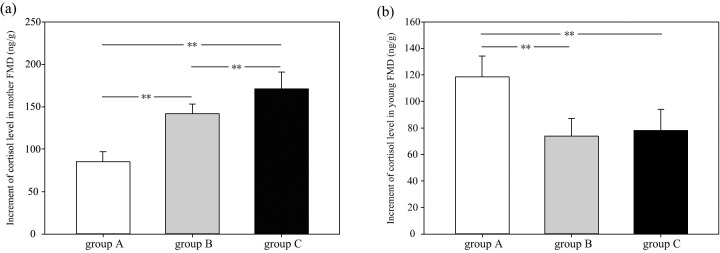
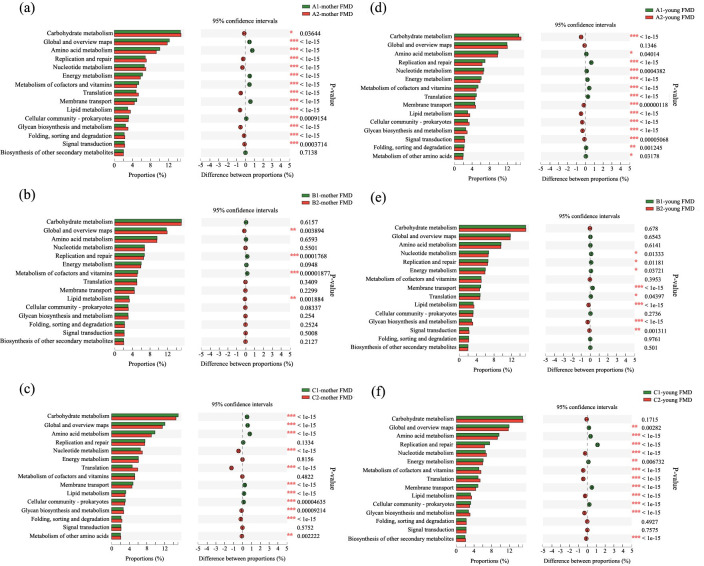
The effects of mother-infant separation (i.e., weaning) on the physiology, psychology and nutrition of mammalian infants have attracted much attention. Forest musk deer (FMD) is a first-class protected species in China and listed endangered in the IUCN Red List. The captive breeding population is not only an important source for restocking of wild resources, but also a necessary way to supply the market with legal musk. So far, there is no scientific basis for the appropriate separation time of FMD females and their infants. Therefore, we used metagenome sequencing and enzyme-linked immunosorbent assays to study changes in the fecal cortisol concentration, as well as the intestinal microbiome composition and function of females and fawns at three different separation times, i.e., after 80 days, 90 days and 100 days. The results showed that the increment of the cortisol concentration in female FMD increased with increasing lactation time. The increment of cortisol concentration in infant FMD was highest in the 80 days weaning group, but there was no significant difference between the 90 days and the 100 days separation time. Based on the annotation results of COG, KEGG and CAZy databases, the abundance of different functions annotated by the intestinal microbiome of mothers and fawns of the 90 days weaning group changed slightly after separation. Based on the above results, the separation of mother and infant FMD is recommended after 90 days, i.e., the separation time that triggered the lowest rate of weaning stress and that supported a relatively stable gastro-intestinal physiology.
母婴分离(即断奶)对哺乳动物婴儿的生理、心理和营养的影响引起了广泛关注。林麝(FMD)是中国一级保护物种,被列入 IUCN 红色名录濒危物种。圈养种群不仅是补充野生资源的重要来源,也是供应市场合法麝香的必要途径。到目前为止,还没有关于 FMD 雌兽及其幼仔适当分离时间的科学依据。因此,我们使用宏基因组测序和酶联免疫吸附测定法研究了三个不同分离时间(80 天后、90 天后和 100 天后)的雌性和幼仔粪便皮质醇浓度以及肠道微生物组组成和功能的变化。结果表明,FMD 雌兽的皮质醇浓度随着泌乳时间的增加而增加。90 天断奶组 FMD 幼仔皮质醇浓度的增加幅度最高,但与 100 天断奶组相比无显著差异。基于 COG、KEGG 和 CAZy 数据库的注释结果,90 天断奶组母亲和幼仔肠道微生物组注释的不同功能的丰度在分离后略有变化。基于上述结果,建议 FMD 母婴在 90 天后分离,即分离时间触发的断奶应激率最低,且支持相对稳定的胃肠生理。