Ubaed Hana R, Bakr Diyar Kh
Conservative Department, Hawler Medical University, Erbil 44000, Iraq.
Appl Bionics Biomech. 2022 Oct 11;2022:1716008. doi: 10.1155/2022/1716008. eCollection 2022.
Cyclic fatigue occurred in the curved canal when the instrument freely rotated leading to repeated compressive and tensile stresses. This study aims to evaluate the cyclic fatigue resistance (CFR) of new and used 2Shape and AF F-One rotary instrument systems by using an artificial stainless-steel canal.
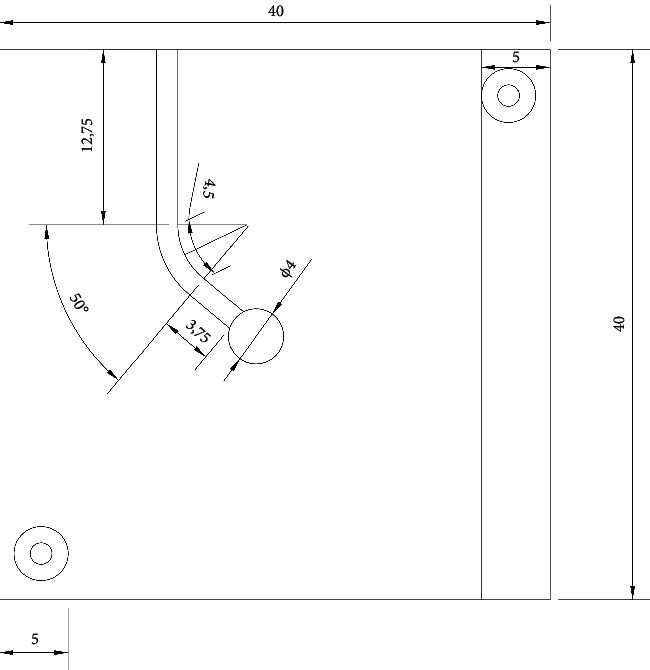
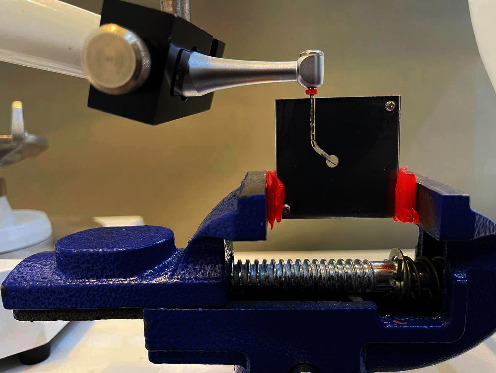
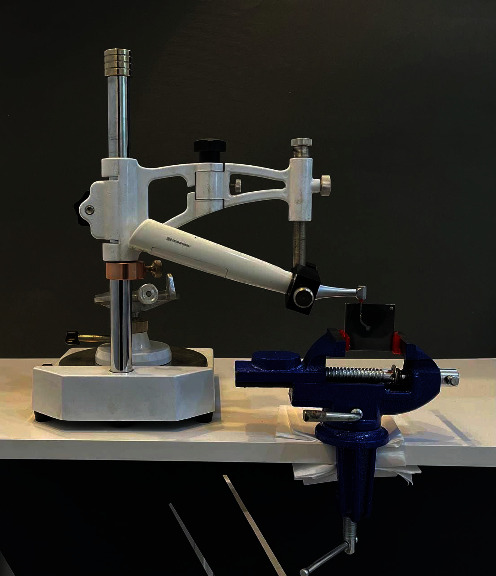
A total of 80 rotary nickel-titanium (NiTi) instruments of two systems were used, 2Shape/TS2 and AF F-ONE/F5 (40 in each group). The instruments were subdivided into group A 20 instruments (10 per system) that remain unused, group B 20 instruments (10 per system) instrumented 20 root canals (each file prepared 1 canal for 2 minutes), group C 20 instruments (10 per system) instrumented 40 canals each for 2 minutes (each file prepared 2 canals), group D of 20 instruments (10 per system) prepared 60 canals each for 2 minutes (each file prepared 3 canals). After each canal instrumentation, the instruments were cleaned and sterilized by autoclave. Then, all the instruments underwent cyclic fatigue testing in an artificial stainless steel canal with a 50° canal curvature and a radius of curvature of 5 mm. The time and number of cycles to failure (NCF) were recorded. Data were analyzed using the Welch ANOVA test for intragroup comparison and the pairwise test for multiple comparisons.
The unused instruments of the AF F-One rotary system showed statistically higher CFR than clinically used instruments ( < 0.05). 2Shape system was not affected by clinical use ( > 0.05). The mean NCF of AF F-One instruments was significantly higher than the equivalent file group of 2Shape instruments ( < 0.05).
A reduction in the CFR for AF F-One instruments after use was observed when compared to the new unused file group. The 2Shape system was not affected by clinical use. AF F-One performed better in terms of NCF.
当器械在弯曲根管内自由旋转时,会产生反复的压缩和拉伸应力,从而导致循环疲劳。本研究旨在通过使用人工不锈钢根管来评估新型和使用过的2Shape及AF F-One旋转器械系统的循环疲劳抗力(CFR)。
共使用了两个系统的80支旋转镍钛(NiTi)器械,即2Shape/TS2和AF F-ONE/F5(每组各40支)。这些器械被细分为A组,20支未使用的器械(每个系统10支);B组,20支器械(每个系统10支),用于预备20个根管(每个锉预备1个根管,时间为2分钟);C组,20支器械(每个系统10支),用于预备40个根管,每个根管预备2分钟(每个锉预备2个根管);D组,20支器械(每个系统10支),用于预备60个根管,每个根管预备2分钟(每个锉预备3个根管)。每次根管预备后,器械通过高压灭菌器进行清洁和消毒。然后,所有器械在曲率为50°、弯曲半径为5毫米的人工不锈钢根管中进行循环疲劳测试。记录失效时间和循环次数(NCF)。使用Welch方差分析进行组内比较,并使用两两检验进行多重比较。
AF F-One旋转系统未使用的器械在统计学上显示出比临床使用过的器械更高的CFR(<0.05)。2Shape系统不受临床使用的影响(>0.05)。AF F-One器械的平均NCF显著高于2Shape器械的等效锉组(<0.05)。
与新的未使用锉组相比,观察到AF F-One器械使用后的CFR有所降低。2Shape系统不受临床使用的影响。AF F-One在NCF方面表现更好。