Lee Yeon-Hee, Auh Q-Schick, Chung Eun-Jae
Department of Orofacial Pain and Oral Medicine, Kyung Hee University Dental Hospital, Kyung Hee Medical center, Kyung Hee University, Seoul, Korea.
Otorhinolaryngology-Head & Neck Surgery, SNUCM Otorhinolaryngology-Head & Neck Surgery, Seoul National University Hospital Otorhinolaryngology-Head & Neck Surgery, Seoul, Korea.
Dent Res Oral Health. 2022;5(3):63-73. doi: 10.26502/droh.0050. Epub 2022 Sep 30.
To investigate snoring and obstructive sleep apnea (OSA) in patients with temporomandibular disorder (TMD) using portable polysomnography and identify sex-based differences in clinical features and sleep-related results.
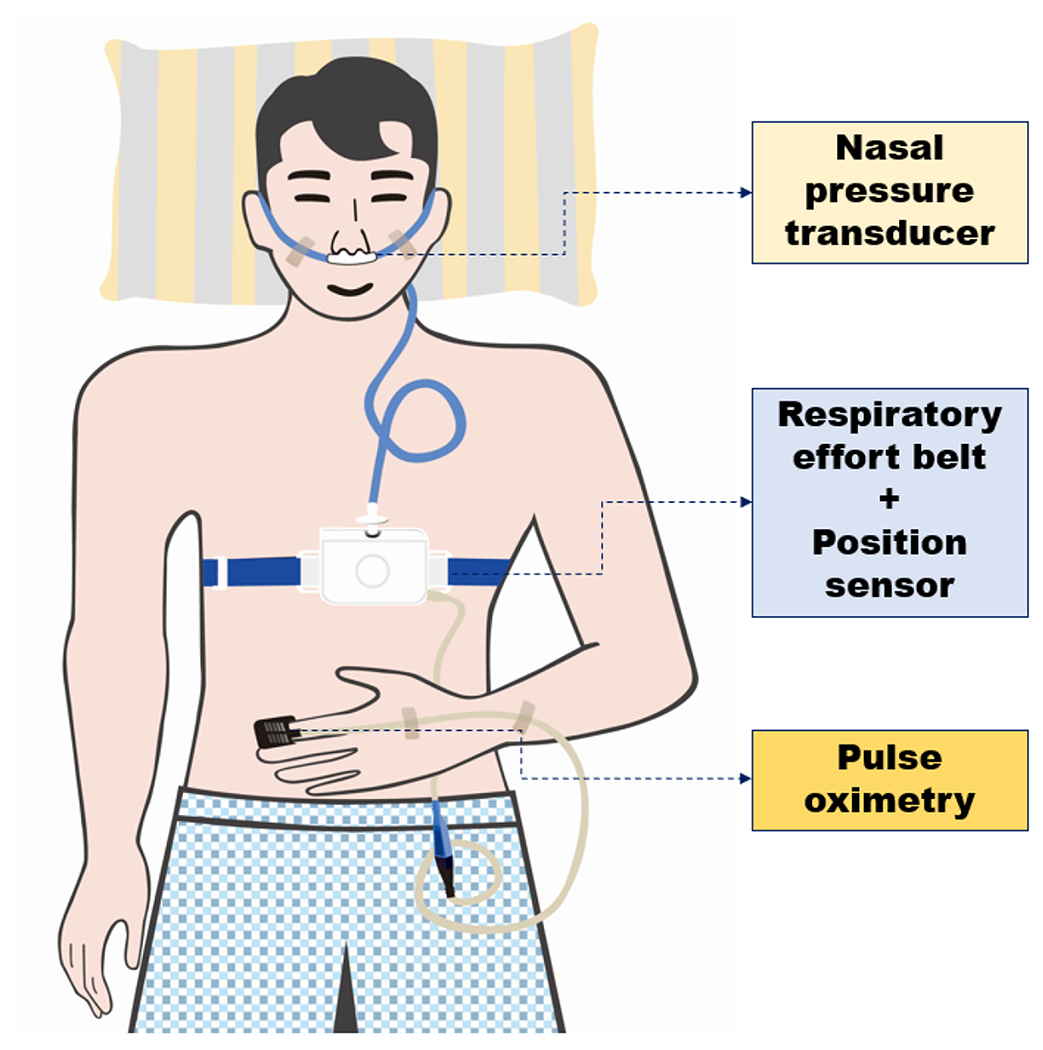
Seventy consecutive patients (44 female; mean age, 46.6918.18 years) with myofascial pain-associated TMD, diagnosed based on the criteria for TMD Axis I, were enrolled. Sleep quality and quantity were measured using portable polysomnography. Clinical characteristics were investigated using well-structured standardized reports on clinical signs and symptoms, questionnaires, and clinical examination by TMD specialists.
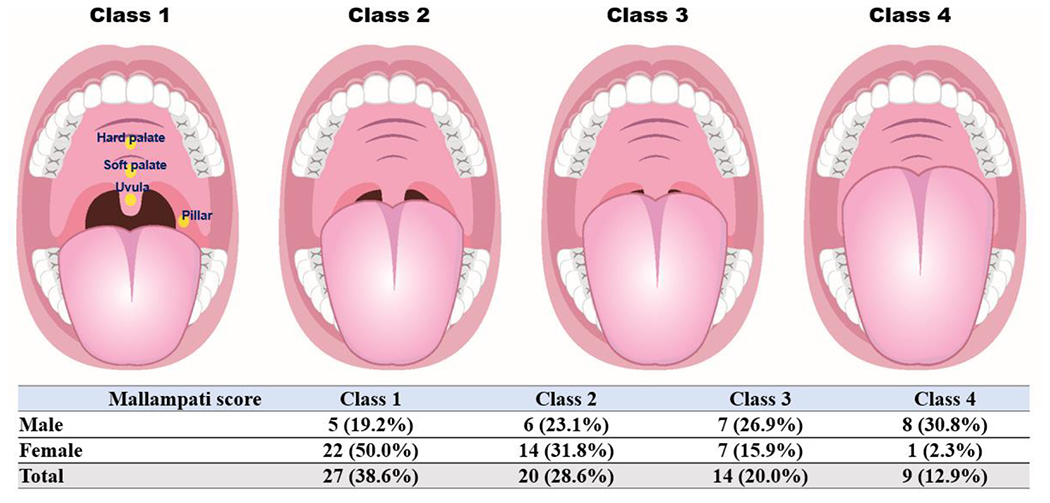
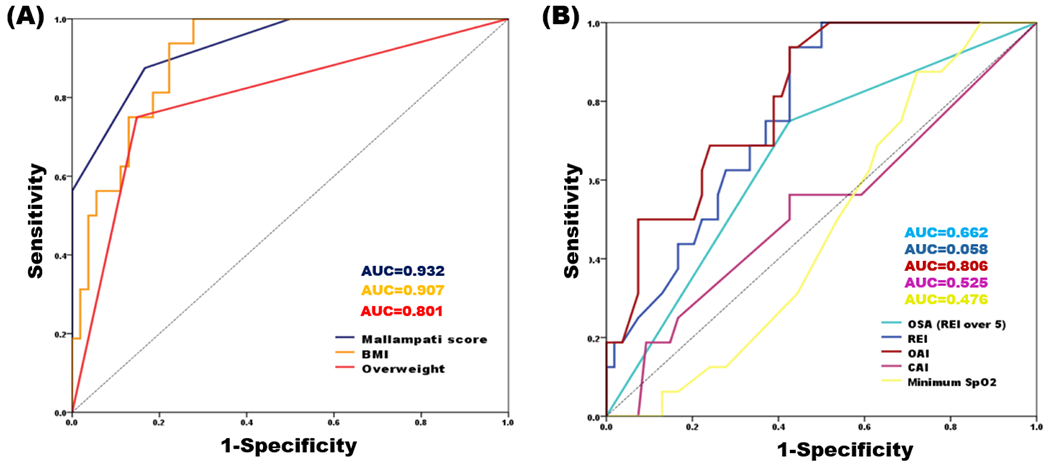
Among 70 TMD patients, 50.0% had OSA and 15.7% had snoring, with no sex-based differences. The mean Mallampati scores for OSA prediction (2.69±1.12 vs. 1.70±0.82, p<0.001), mean body mass index (BMI) (24.94±1.78 vs. 22.02±2.24, p<0.001), and ratio of overweight patients (57.7 vs. 11.4%) with BMI ≥25 were significantly higher in males than in females (all p<0.001). Conversely, the mixed sleep apnea index was significantly higher in females than in males (0.81±0.80 vs. 0.44±0.54, p=0.022). Female sex was associated with the absence of snoring (OR=0.146, p=0.022). Based on the area under curve (AUC) value for snoring prediction, Mallampati score was the strongest predictor (AUC>0.932, p<0.001), followed by BMI, overweight, and obstructive sleep apnea index (AUC>0.8, all p<0.001).
Our results support the necessity of investigating sex-based differences when examining sleep problems, including snoring and OSA, in TMD patients. Mallampati scoring could be a useful tool for physical examination prior to polysomnography. Sleep and biopsychosocial factors are important for the diagnosis and treatment of TMD.
采用便携式多导睡眠监测仪研究颞下颌关节紊乱病(TMD)患者的打鼾及阻塞性睡眠呼吸暂停(OSA)情况,并确定临床特征和睡眠相关结果的性别差异。
纳入70例连续的肌筋膜疼痛相关TMD患者(44例女性;平均年龄46.69±18.18岁),根据TMD轴I标准进行诊断。使用便携式多导睡眠监测仪测量睡眠质量和数量。通过TMD专家关于临床体征和症状的结构良好的标准化报告、问卷及临床检查来研究临床特征。
70例TMD患者中,50.0%患有OSA,15.7%有打鼾,无性别差异。男性OSA预测的平均马兰帕蒂评分(2.69±1.12 vs. 1.70±0.82,p<0.001)、平均体重指数(BMI)(24.94±1.78 vs. 22.02±2.24,p<0.001)以及BMI≥25的超重患者比例(57.7% vs. 11.4%)均显著高于女性(均p<0.001)。相反,女性的混合性睡眠呼吸暂停指数显著高于男性(0.81±0.80 vs. 0.44±0.54,p=0.022)。女性与无打鼾相关(OR=0.146,p=0.022)。基于打鼾预测的曲线下面积(AUC)值,马兰帕蒂评分是最强的预测指标(AUC>0.932,p<0.001),其次是BMI、超重和阻塞性睡眠呼吸暂停指数(AUC>0.8,均p<0.001)。
我们的结果支持在检查TMD患者的睡眠问题(包括打鼾和OSA)时研究性别差异的必要性。马兰帕蒂评分可能是多导睡眠监测前体格检查的有用工具。睡眠和生物心理社会因素对TMD的诊断和治疗很重要。