Division of Avian Immunosuppressive Diseases, State Key Laboratory of Veterinary Biotechnology, Harbin Veterinary Research Institutegrid.38587.31, Chinese Academy of Agricultural Sciences, Harbin, China.
Jiangsu Co-innovation Center for Prevention and Control of Important Animal Infectious Disease and Zoonoses, Yangzhou University, Yangzhou, China.
Microbiol Spectr. 2022 Dec 21;10(6):e0229922. doi: 10.1128/spectrum.02299-22. Epub 2022 Oct 26.
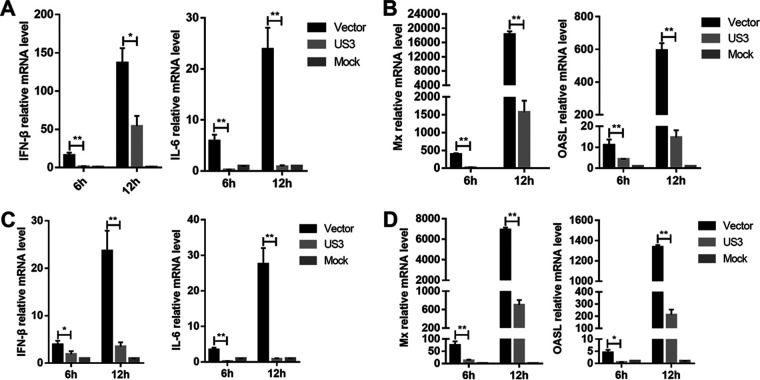
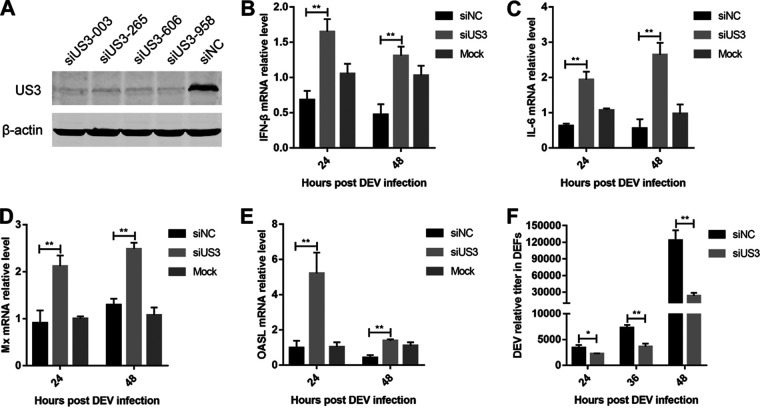
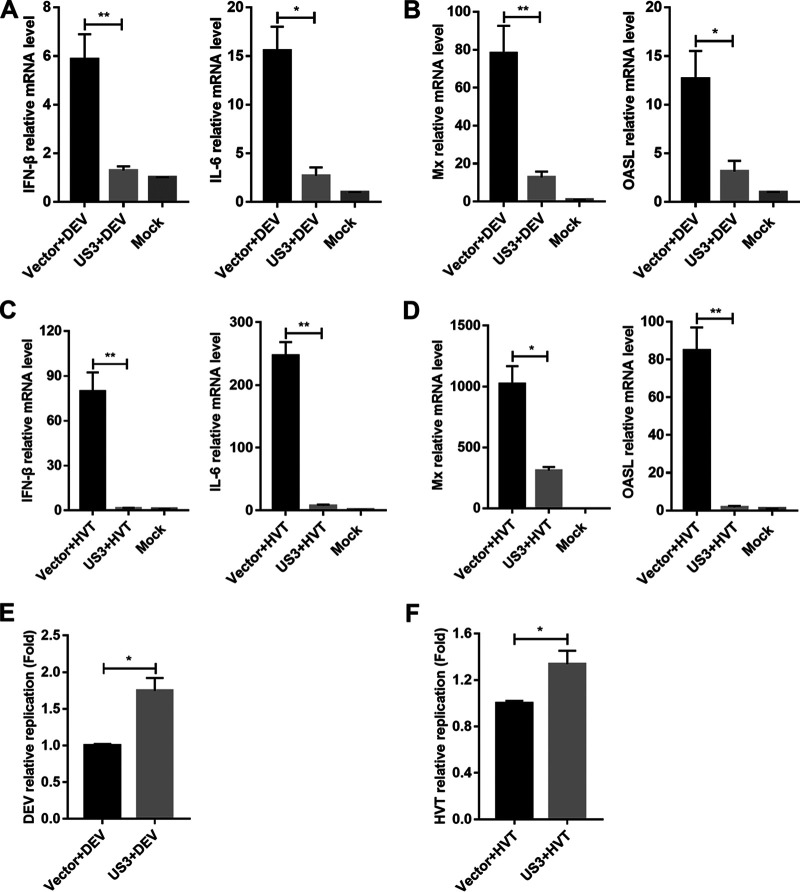
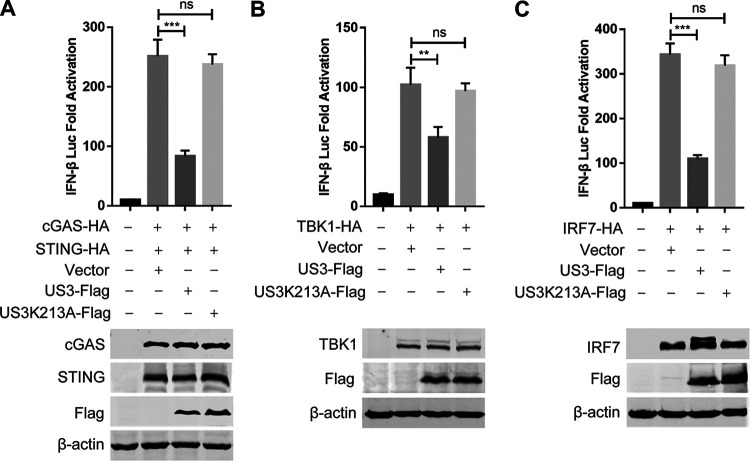
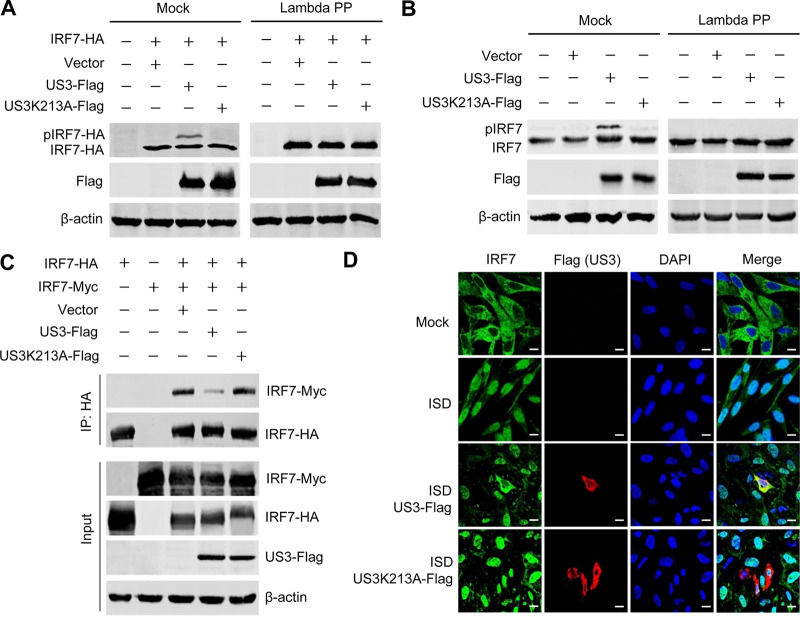
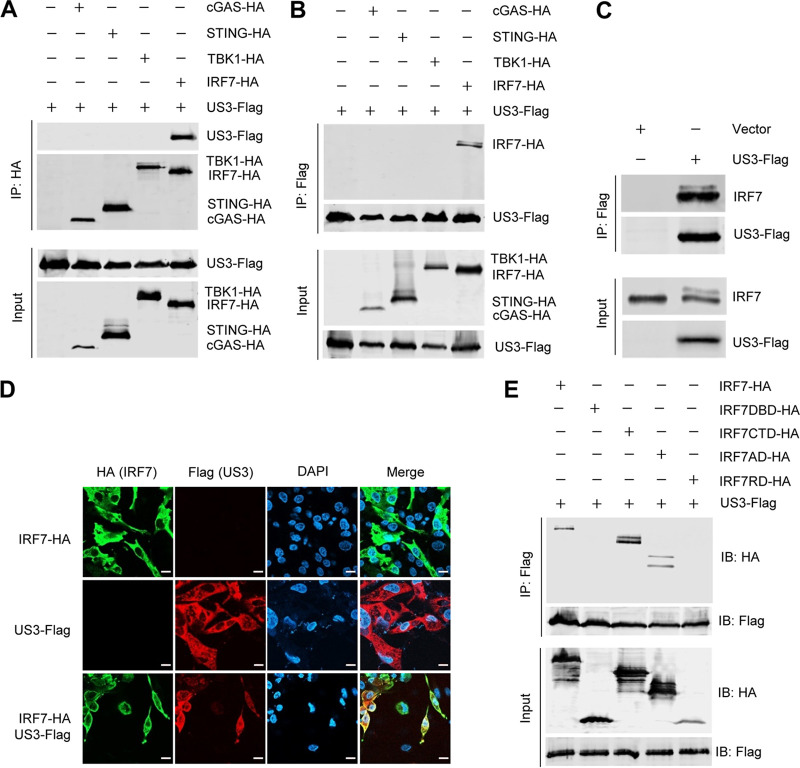
The cytosolic DNA sensing pathway mediates innate immune defense against infection by many DNA viruses; however, viruses have evolved multiple strategies to evade the host immune response. Duck enteritis virus (DEV) causes an acute and contagious disease with high mortality in waterfowl. The mechanisms employed by DEV to block the DNA sensing pathway are not well understood. Here, we sought to investigate the role of DEV US3, a serine/threonine protein kinase, in the inhibition of DNA sensing. We found that ectopic expression of DEV US3 significantly inhibited the production of IFN-β and expression of interferon-stimulated genes induced by interferon-stimulatory DNA and poly(dA-dT). US3 also inhibited viral DNA-triggered IFN-β activation and promoted DEV replication in duck embryo fibroblasts, while knockdown of US3 during DEV infection enhances the IFN-β response and suppresses viral replication. US3 inhibited the DNA-sensing signaling pathway by targeting interferon regulatory factor 7 (IRF7), and the kinase activity of US3 was indispensable for its inhibitory function. Furthermore, we found that US3 interacts with the activation domain of IRF7, phosphorylating IRF7, blocking its dimerization and nuclear translocation, and finally leading to the inhibition of IFN-β production. These findings expand our knowledge on DNA sensing in ducks and reveal a novel mechanism whereby DEV evades host antiviral immunity. Duck enteritis virus (DEV) is a duck alphaherpesvirus that causes an acute and contagious disease with high mortality, resulting in substantial economic losses in the commercial waterfowl industry. The evasion of DNA-sensing pathway-mediated antiviral innate immunity is essential for the persistent infection and replication for many DNA viruses. However, the strategies used by DEV to block the DNA-sensing pathway are not well understood. In this study, DEV US3 protein kinase was demonstrated to inhibit the DNA-sensing signaling via binding to the activation domain of interferon regulatory factor 7 (IRF7), which induced the hyperphosphorylation of IRF7 and abolished IRF7 dimerization and nuclear translocation. Our findings provide insights into how duck herpesviral kinase counteracts host antiviral innate immunity to ensure viral replication and spread.
细胞质 DNA 感应途径介导了针对许多 DNA 病毒感染的固有免疫防御;然而,病毒已经进化出多种策略来逃避宿主免疫反应。鸭肠炎病毒 (DEV) 引起水禽急性和传染性疾病,死亡率很高。DEV 阻止 DNA 感应途径的机制尚不清楚。在这里,我们试图研究 DEV US3,一种丝氨酸/苏氨酸蛋白激酶,在抑制 DNA 感应中的作用。我们发现,DEV US3 的异位表达显著抑制了干扰素刺激 DNA 和聚 (dA-dT) 诱导的 IFN-β产生和干扰素刺激基因的表达。US3 还抑制了病毒 DNA 触发的 IFN-β激活,并促进了鸭胚成纤维细胞中的 DEV 复制,而在 DEV 感染期间敲低 US3 会增强 IFN-β反应并抑制病毒复制。US3 通过靶向干扰素调节因子 7 (IRF7) 抑制 DNA 感应信号通路,并且 US3 的激酶活性对于其抑制功能是必不可少的。此外,我们发现 US3 与 IRF7 的激活结构域相互作用,磷酸化 IRF7,阻断其二聚化和核易位,最终导致 IFN-β产生的抑制。这些发现扩展了我们对鸭 DNA 感应的认识,并揭示了 DEV 逃避宿主抗病毒免疫的新机制。鸭肠炎病毒 (DEV) 是一种鸭α疱疹病毒,引起急性和传染性疾病,死亡率高,导致商业水禽产业遭受重大经济损失。逃避 DNA 感应途径介导的抗病毒先天免疫对于许多 DNA 病毒的持续感染和复制至关重要。然而,DEV 阻止 DNA 感应途径的策略尚不清楚。在这项研究中,证明 DEV US3 蛋白激酶通过与干扰素调节因子 7 (IRF7) 的激活结构域结合来抑制 DNA 感应信号,从而诱导 IRF7 的过度磷酸化并消除 IRF7 二聚化和核易位。我们的研究结果深入了解了鸭疱疹病毒激酶如何对抗宿主抗病毒先天免疫以确保病毒复制和传播。