Nuraini Nuning, Sukandar Kamal Khairudin, Tahu Maria Yulita Trida, Giri-Rachman Ernawati Arifin, Barlian Anggraini, Suhardi Sri Harjati, Pasaribu Udjianna Sekteria, Yuliar Sonny, Mudhakir Diky, Ariesyady Herto Dwi, Rosleine Dian, Sofyan Iyan, Martokusumo Widjaja
Department of Mathematics, Faculty of Mathematics and Natural Sciences, Institut Teknologi Bandung, Bandung 40132, Indonesia.
School of Life Science and Technology, Institut Teknologi Bandung, Bandung 40132, Indonesia.
Trop Med Infect Dis. 2022 Oct 9;7(10):289. doi: 10.3390/tropicalmed7100289.
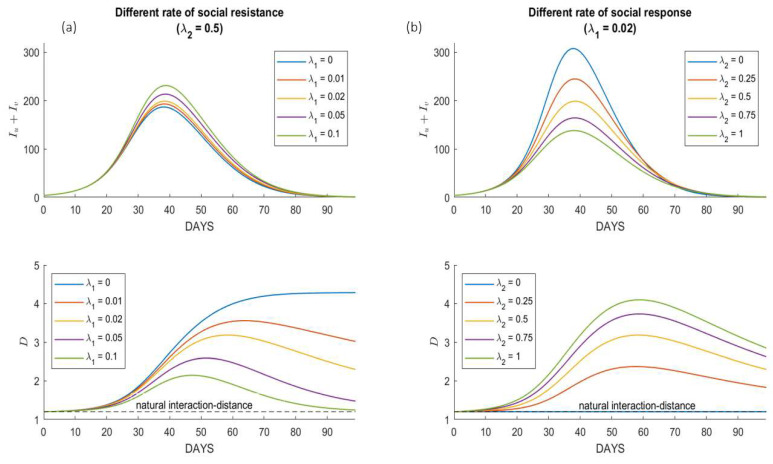
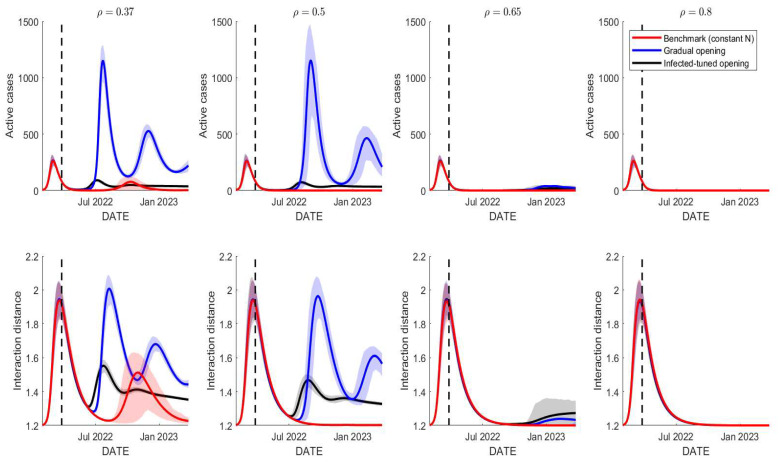
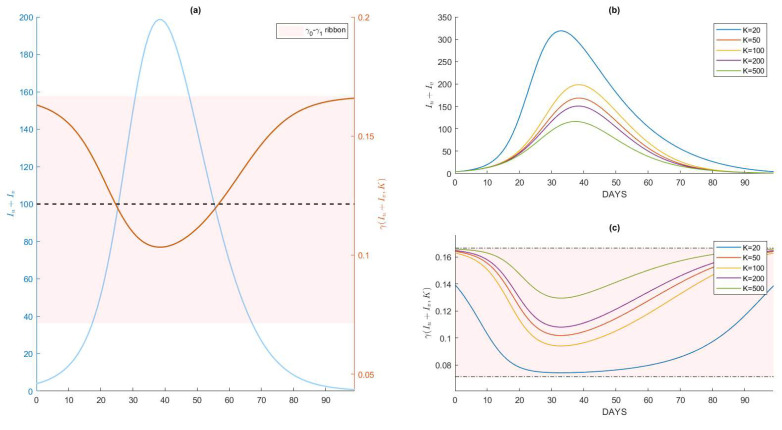
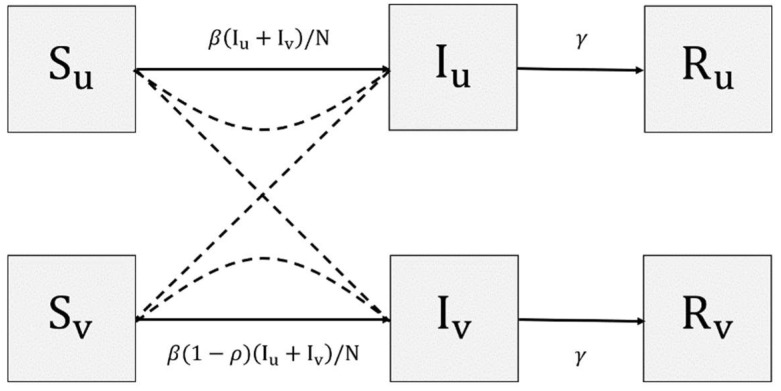
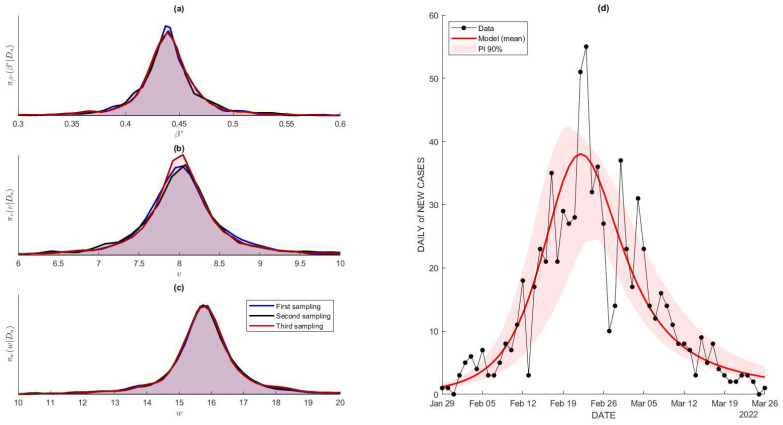
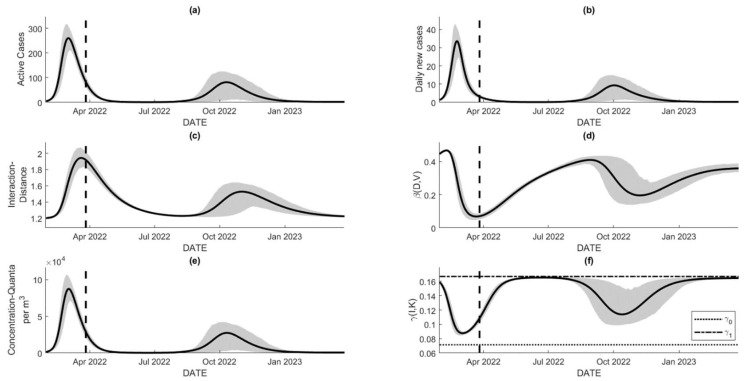
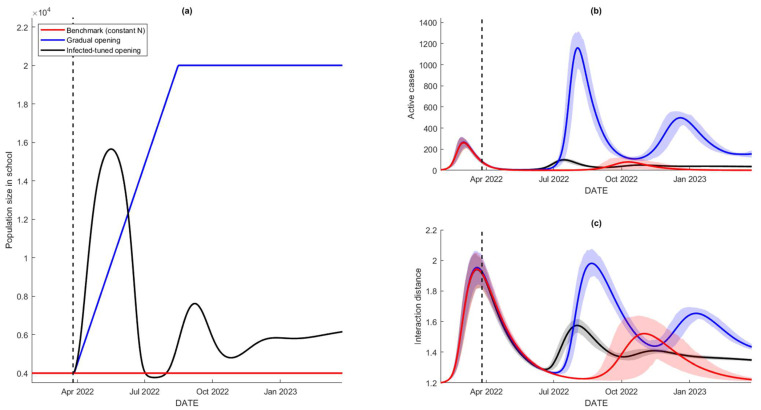
When it comes to understanding the spread of COVID-19, recent studies have shown that pathogens can be transmitted in two ways: direct contact and airborne pathogens. While the former is strongly related to the distancing behavior of people in society, the latter are associated with the length of the period in which the airborne pathogens remain active. Considering those facts, we constructed a compartmental model with a time-dependent transmission rate that incorporates the two sources of infection. This paper provides an analytical and numerical study of the model that validates trivial insights related to disease spread in a responsive society. As a case study, we applied the model to the COVID-19 spread data from a university environment, namely, the Institut Teknologi Bandung, Indonesia, during its early reopening stage, with a constant number of students. The results show a significant fit between the rendered model and the recorded cases of infections. The extrapolated trajectories indicate the resurgence of cases as students' interaction distance approaches its natural level. The assessment of several strategies is undertaken in this study in order to assist with the school reopening process.
在理解新冠病毒的传播方面,近期研究表明病原体可通过两种方式传播:直接接触和空气传播病原体。虽然前者与社会中人们的社交距离行为密切相关,但后者与空气传播病原体保持活跃的时长有关。考虑到这些事实,我们构建了一个具有随时间变化传播率的 compartmental 模型,该模型纳入了两种感染源。本文对该模型进行了分析和数值研究,验证了与响应性社会中疾病传播相关的一些基本见解。作为一个案例研究,我们将该模型应用于印度尼西亚万隆理工学院在重新开放初期学生数量恒定的大学环境中的新冠病毒传播数据。结果显示,所构建的模型与记录的感染病例之间具有显著的拟合度。外推轨迹表明,随着学生互动距离接近其自然水平,病例会再度出现。本研究对多种策略进行了评估,以协助学校重新开放的过程。