Centro de Investigación de Estudios Avanzados del Maule (CIEAM), 3480112, Talca, Chile.
Vicerrectoria de Investigación y Postgrado, Universidad Católica del Maule, 3480112, Talca, Chile.
Sci Rep. 2021 May 13;11(1):10170. doi: 10.1038/s41598-021-89492-x.
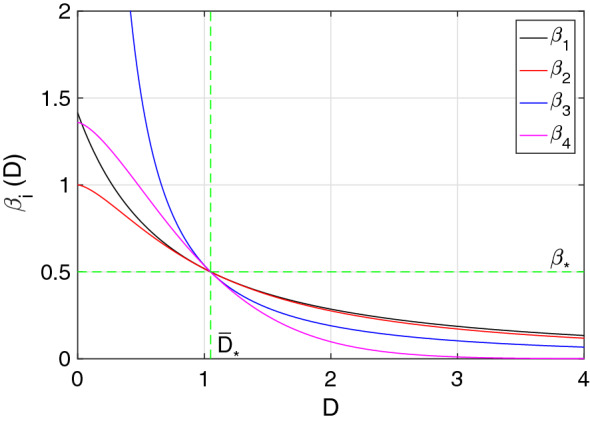
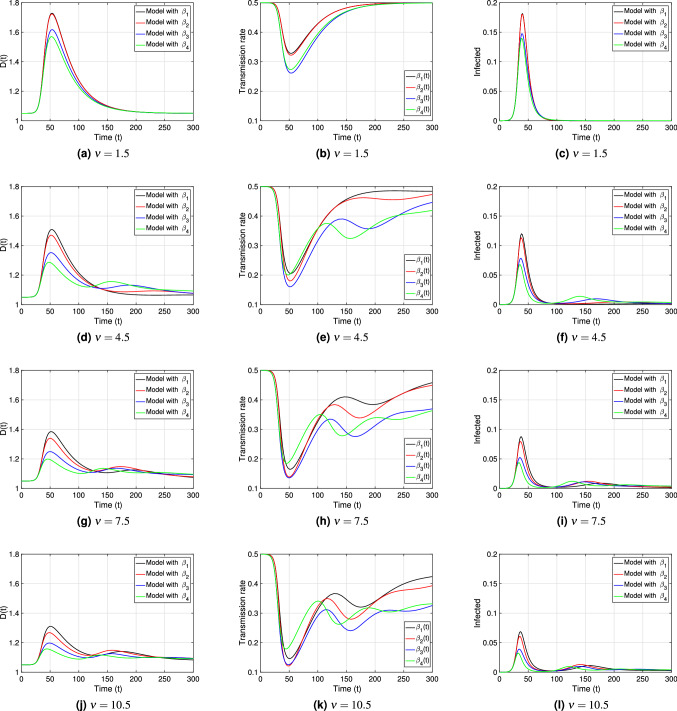
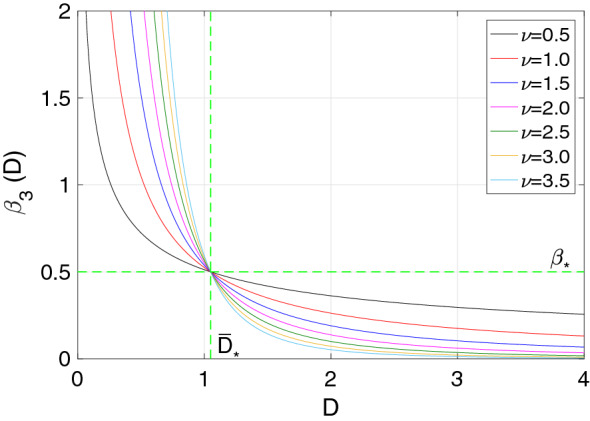
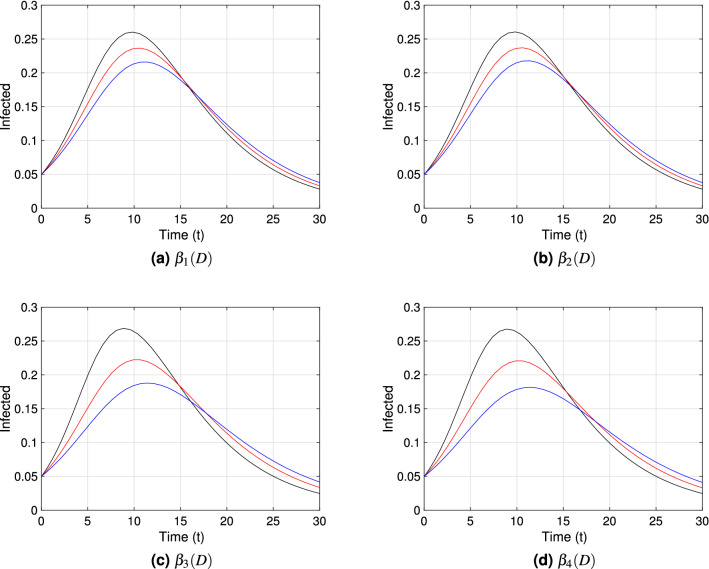
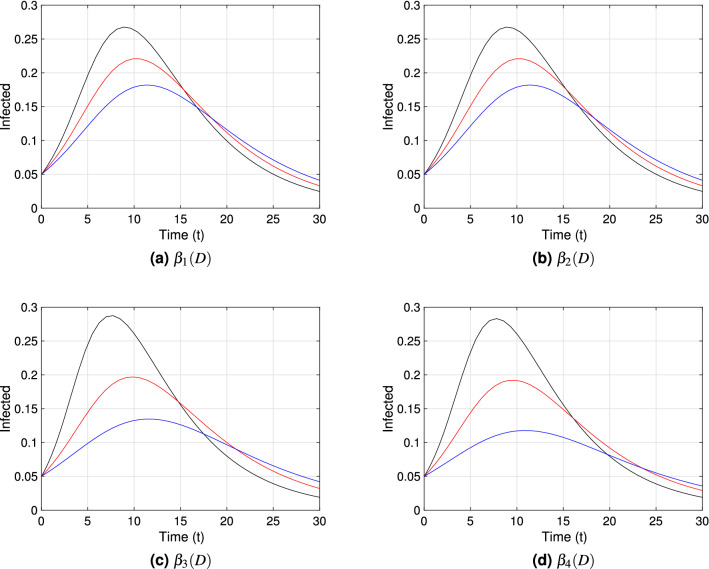
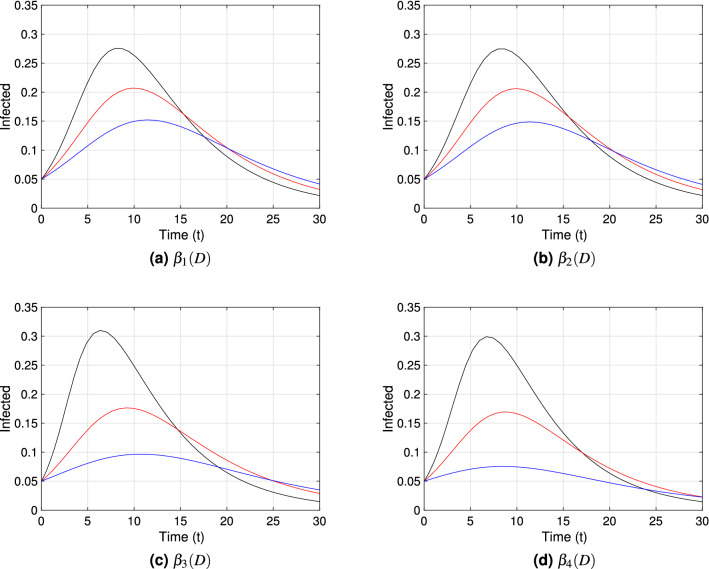
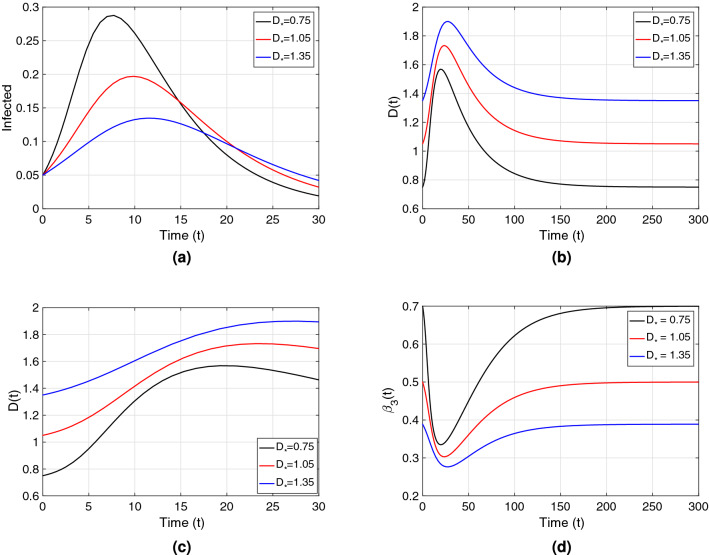
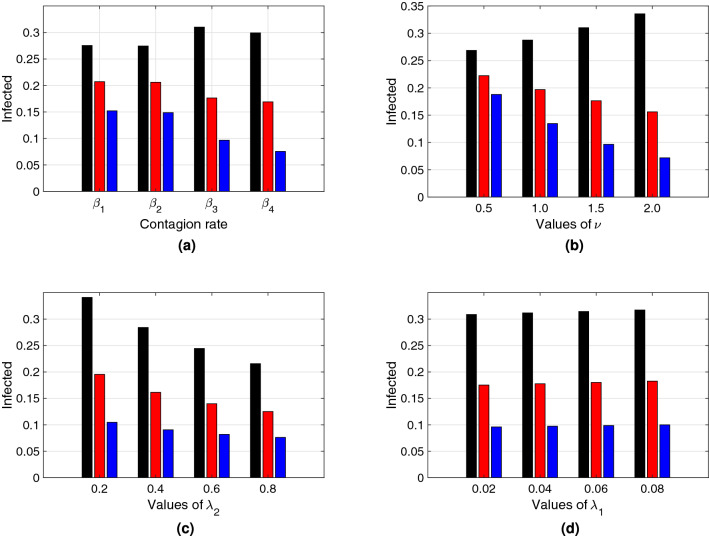
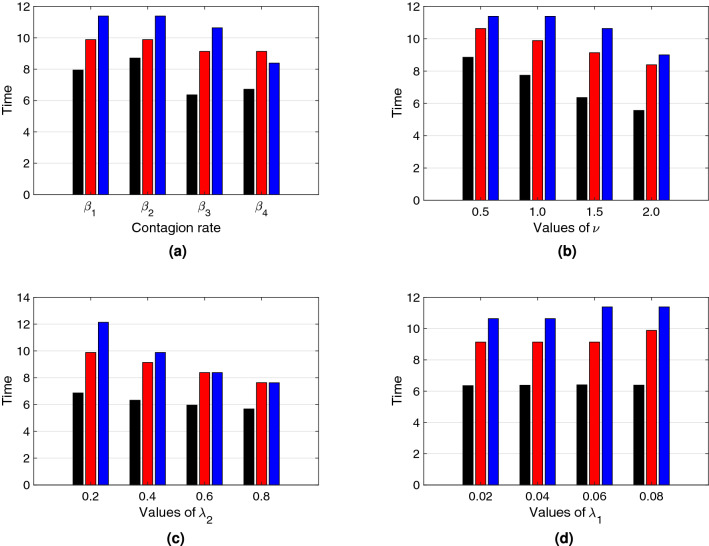
Modeling human behavior within mathematical models of infectious diseases is a key component to understand and control disease spread. We present a mathematical compartmental model of Susceptible-Infectious-Removed to compare the infected curves given by four different functional forms describing the transmission rate. These depend on the distance that individuals keep on average to others in their daily lives. We assume that this distance varies according to the balance between two opposite thrives: the self-protecting reaction of individuals upon the presence of disease to increase social distancing and their necessity to return to a culturally dependent natural social distance that occurs in the absence of disease. We present simulations to compare results for different society types on point prevalence, the peak size of a first epidemic outbreak and the time of occurrence of that peak, for four different transmission rate functional forms and parameters of interest related to distancing behavior, such as: the reaction velocity of a society to change social distance during an epidemic. We observe the vulnerability to disease spread of close contact societies, and also show that certain social distancing behavior may provoke a small peak of a first epidemic outbreak, but at the expense of it occurring early after the epidemic onset, observing differences in this regard between society types. We also discuss the appearance of temporal oscillations of the four different transmission rates, their differences, and how this oscillatory behavior is impacted through social distancing; breaking the unimodality of the actives-curve produced by the classical SIR-model.
在传染病的数学模型中对人类行为进行建模是理解和控制疾病传播的关键组成部分。我们提出了一个易感-感染-消除的数学房室模型,以比较四种不同的传播率函数形式给出的感染曲线。这些取决于个人在日常生活中与他人保持的平均距离。我们假设,这种距离的变化取决于两种相反的优势之间的平衡:个人在疾病存在时自我保护反应以增加社交距离,以及他们在没有疾病时返回文化相关的自然社交距离的必要性。我们提出了模拟结果,以比较不同社会类型在点流行率、首次疫情爆发高峰大小和爆发时间方面的差异,对于四种不同的传播率函数形式和与距离行为相关的感兴趣参数,例如:社会在疫情期间改变社交距离的反应速度。我们观察到了密切接触社会对疾病传播的脆弱性,还表明某些社会距离行为可能会引发首次疫情爆发的小高峰,但代价是它在疫情爆发后早期发生,观察到不同社会类型在这方面的差异。我们还讨论了四种不同传播率的时间振荡的出现、它们的差异,以及社交距离如何影响这种振荡行为;打破了经典 SIR 模型产生的活跃曲线的单峰性。