Guidetti Matteo, Arlotti Mattia, Bocci Tommaso, Bianchi Anna Maria, Parazzini Marta, Ferrucci Roberta, Priori Alberto
Aldo Ravelli Research Center for Neurotechnology and Experimental Neurotherapeutics, Department of Health Sciences, University of Milan, Via Antonio di Rudinì 8, 20142 Milan, Italy.
Department of Electronics, Information and Bioengineering, Politecnico di Milano, Piazza Leonardo da Vinci 32, 20133 Milan, Italy.
Biomedicines. 2022 Sep 20;10(10):2333. doi: 10.3390/biomedicines10102333.
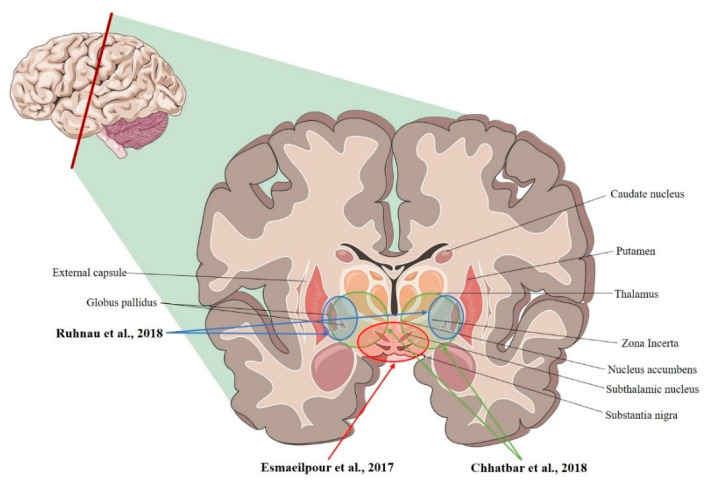
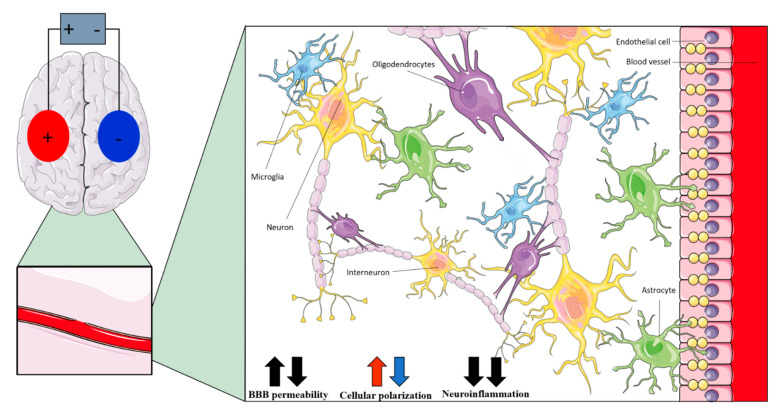
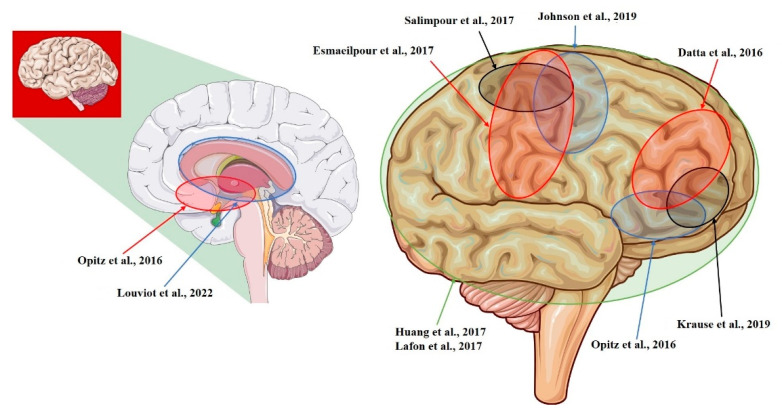
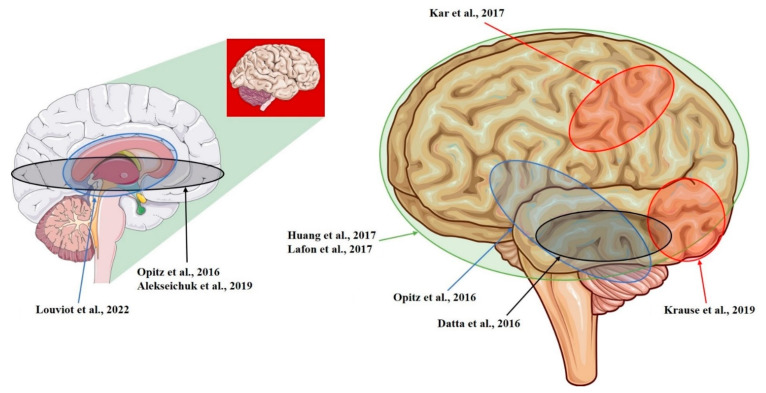
Transcranial electrical stimulation (tES) techniques, such as direct current stimulation (tDCS) and transcranial alternating current stimulation (tACS), cause neurophysiological and behavioral modifications as responses to the electric field are induced in the brain. Estimations of such electric fields are based mainly on computational studies, and in vivo measurements have been used to expand the current knowledge. Here, we review the current tDCS- and tACS-induced electric fields estimations as they are recorded in humans and non-human primates using intracerebral electrodes. Direct currents and alternating currents were applied with heterogeneous protocols, and the recording procedures were characterized by a tentative methodology. However, for the clinical stimulation protocols, an injected current seems to reach the brain, even at deep structures. The stimulation parameters (e.g., intensity, frequency and phase), the electrodes' positions and personal anatomy determine whether the intensities might be high enough to affect both neuronal and non-neuronal cell activity, also deep brain structures.
经颅电刺激(tES)技术,如直流电刺激(tDCS)和经颅交流电刺激(tACS),会引起神经生理和行为改变,因为大脑中会感应到对电场的反应。此类电场的估计主要基于计算研究,而体内测量已被用于拓展当前的知识。在此,我们回顾了目前使用脑内电极在人类和非人灵长类动物中记录的tDCS和tACS诱发电场的估计情况。采用了异质性方案施加直流电和交流电,记录程序的特点是方法具有试探性。然而,对于临床刺激方案,即使在深部结构,注入的电流似乎也能到达大脑。刺激参数(如强度、频率和相位)、电极位置和个体解剖结构决定了强度是否可能高到足以影响神经元和非神经元细胞活动,以及深部脑结构。