Ruffini Giulio, Fox Michael D, Ripolles Oscar, Miranda Pedro Cavaleiro, Pascual-Leone Alvaro
Starlab Barcelona, C. Teodor Roviralta 45, 08022 Barcelona, Spain; Neuroelectrics Barcelona, C. Teodor Roviralta 45, 08022 Barcelona, Spain.
Massachusetts General Hospital, Brigham and Women's Hospital, Harvard Medical School, Boston, MA, USA; Berenson-Allen Center for Noninvasive Brain Stimulation, Beth Israel Deaconess Medical Center, Harvard Medical School, Boston, MA, USA.
Neuroimage. 2014 Apr 1;89:216-25. doi: 10.1016/j.neuroimage.2013.12.002. Epub 2013 Dec 15.
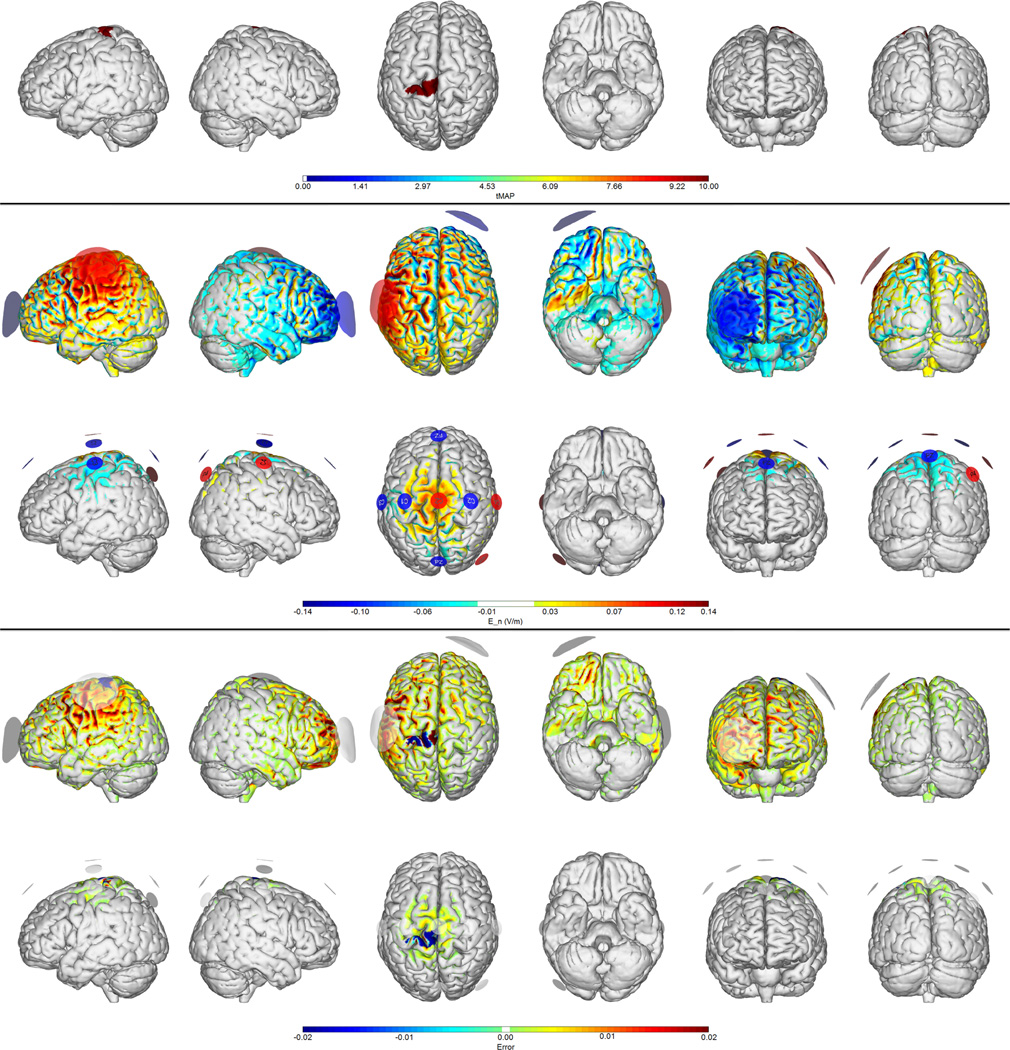
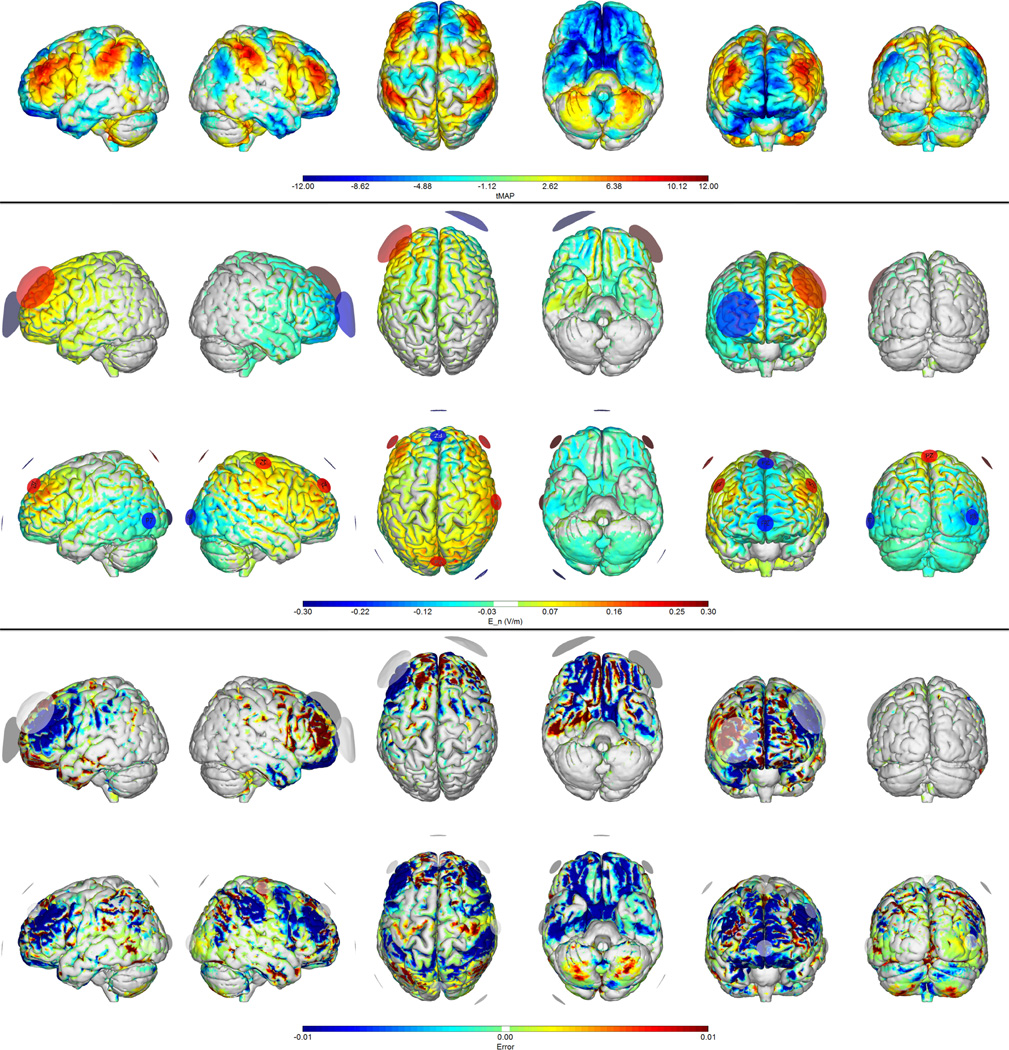
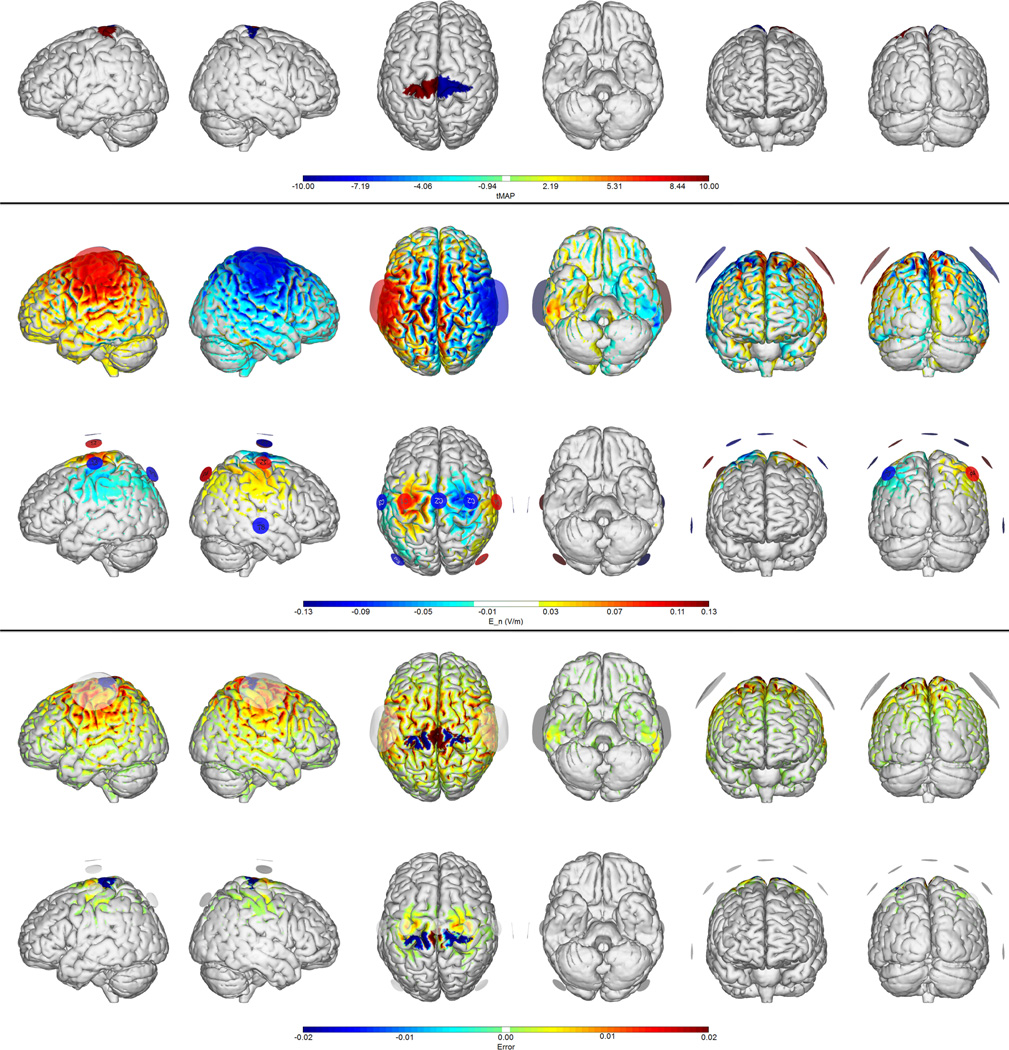
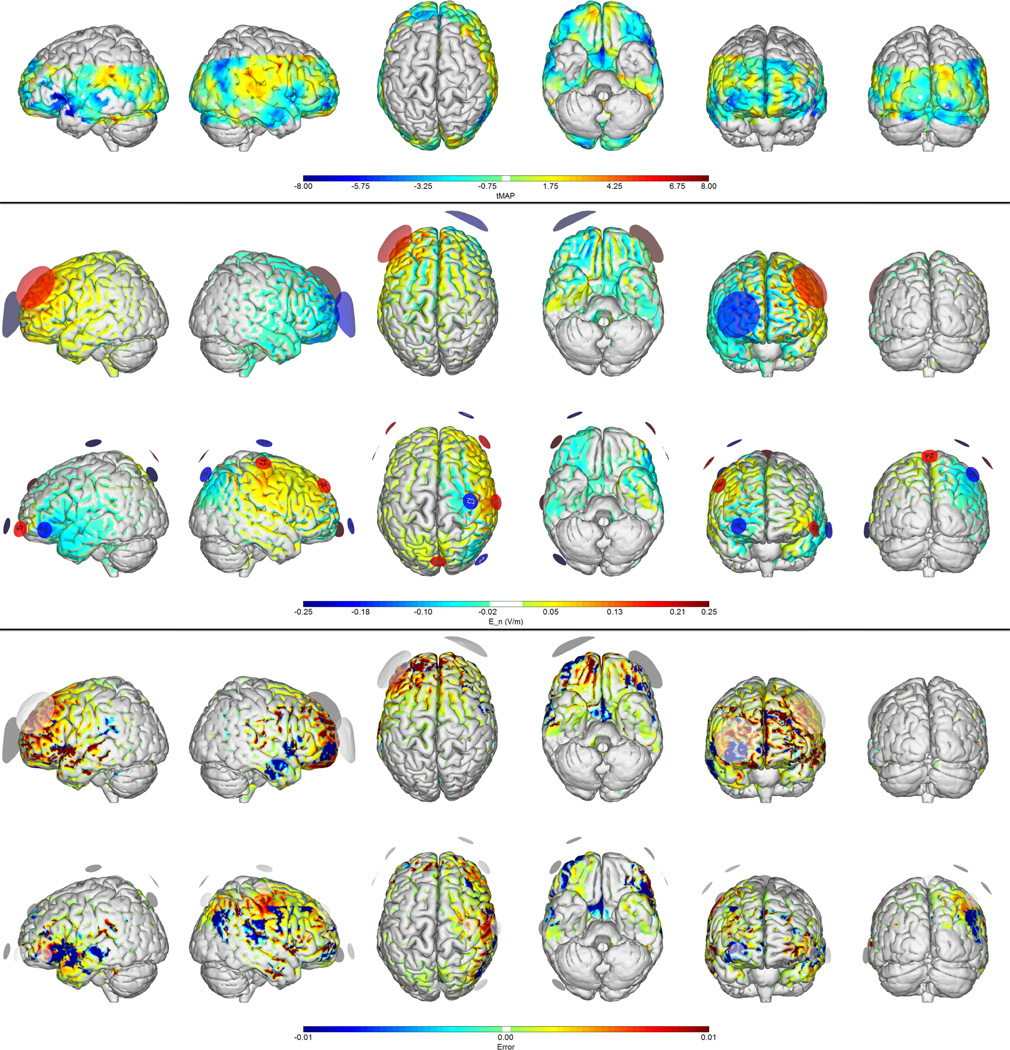
Recently, multifocal transcranial current stimulation (tCS) devices using several relatively small electrodes have been used to achieve more focal stimulation of specific cortical targets. However, it is becoming increasingly recognized that many behavioral manifestations of neurological and psychiatric disease are not solely the result of abnormality in one isolated brain region but represent alterations in brain networks. In this paper we describe a method for optimizing the configuration of multifocal tCS for stimulation of brain networks, represented by spatially extended cortical targets. We show how, based on fMRI, PET, EEG or other data specifying a target map on the cortical surface for excitatory, inhibitory or neutral stimulation and a constraint on the maximal number of electrodes, a solution can be produced with the optimal currents and locations of the electrodes. The method described here relies on a fast calculation of multifocal tCS electric fields (including components normal and tangential to the cortical boundaries) using a five layer finite element model of a realistic head. Based on the hypothesis that the effects of current stimulation are to first order due to the interaction of electric fields with populations of elongated cortical neurons, it is argued that the optimization problem for tCS stimulation can be defined in terms of the component of the electric field normal to the cortical surface. Solutions are found using constrained least squares to optimize current intensities, while electrode number and their locations are selected using a genetic algorithm. For direct current tCS (tDCS) applications, we provide some examples of this technique using an available tCS system providing 8 small Ag/AgCl stimulation electrodes. We demonstrate the approach both for localized and spatially extended targets defined using rs-fcMRI and PET data, with clinical applications in stroke and depression. Finally, we extend these ideas to more general stimulation protocols, such as alternating current tCS (tACS).
最近,使用多个相对较小电极的多焦点经颅电流刺激(tCS)设备已被用于实现对特定皮质靶点的更聚焦刺激。然而,人们越来越认识到,神经和精神疾病的许多行为表现并非仅仅是一个孤立脑区异常的结果,而是代表了脑网络的改变。在本文中,我们描述了一种优化多焦点tCS配置以刺激脑网络的方法,该脑网络由空间扩展的皮质靶点表示。我们展示了如何基于功能磁共振成像(fMRI)、正电子发射断层扫描(PET)、脑电图(EEG)或其他数据,为兴奋性、抑制性或中性刺激在皮质表面指定一个靶点图,并对电极的最大数量加以限制,从而得出具有最佳电流和电极位置的解决方案。这里描述的方法依赖于使用逼真头部的五层有限元模型快速计算多焦点tCS电场(包括垂直和平行于皮质边界的分量)。基于电流刺激的效应在一阶近似下是由于电场与伸长的皮质神经元群体相互作用的假设,有人认为tCS刺激的优化问题可以根据垂直于皮质表面的电场分量来定义。使用约束最小二乘法找到优化电流强度的解决方案,同时使用遗传算法选择电极数量及其位置。对于直流电tCS(tDCS)应用,我们使用一个提供8个小型银/氯化银刺激电极的可用tCS系统给出了该技术的一些示例。我们展示了该方法用于使用静息态功能连接磁共振成像(rs-fcMRI)和PET数据定义的局部和空间扩展靶点,以及在中风和抑郁症中的临床应用。最后,我们将这些想法扩展到更一般的刺激方案,如交流电tCS(tACS)。