Zeng Eric Z, Chen Isabelle, Chen Xingchi, Yuan Xuegang
Department of Chemical and Biomedical Engineering, FAMU-FSU College of Engineering, Florida State University, Tallahassee, FL 32310, USA.
Los Altos High School, Los Altos, CA 94022, USA.
Biomedicines. 2022 Oct 5;10(10):2485. doi: 10.3390/biomedicines10102485.
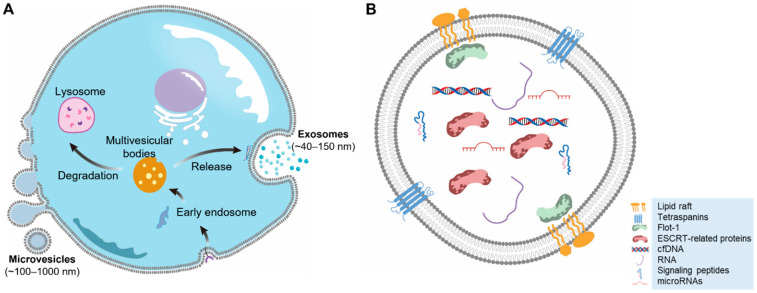
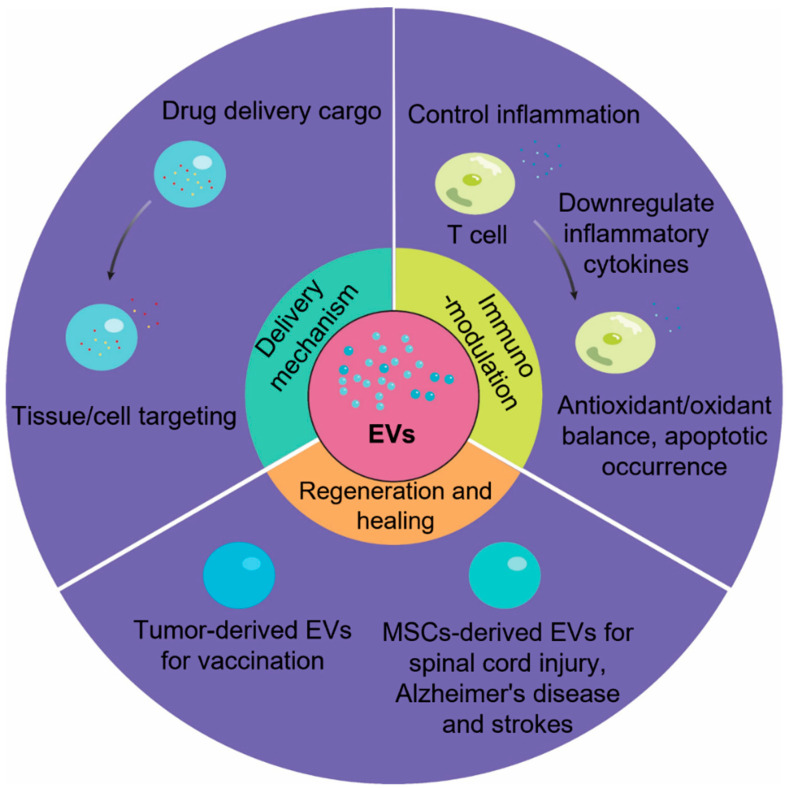
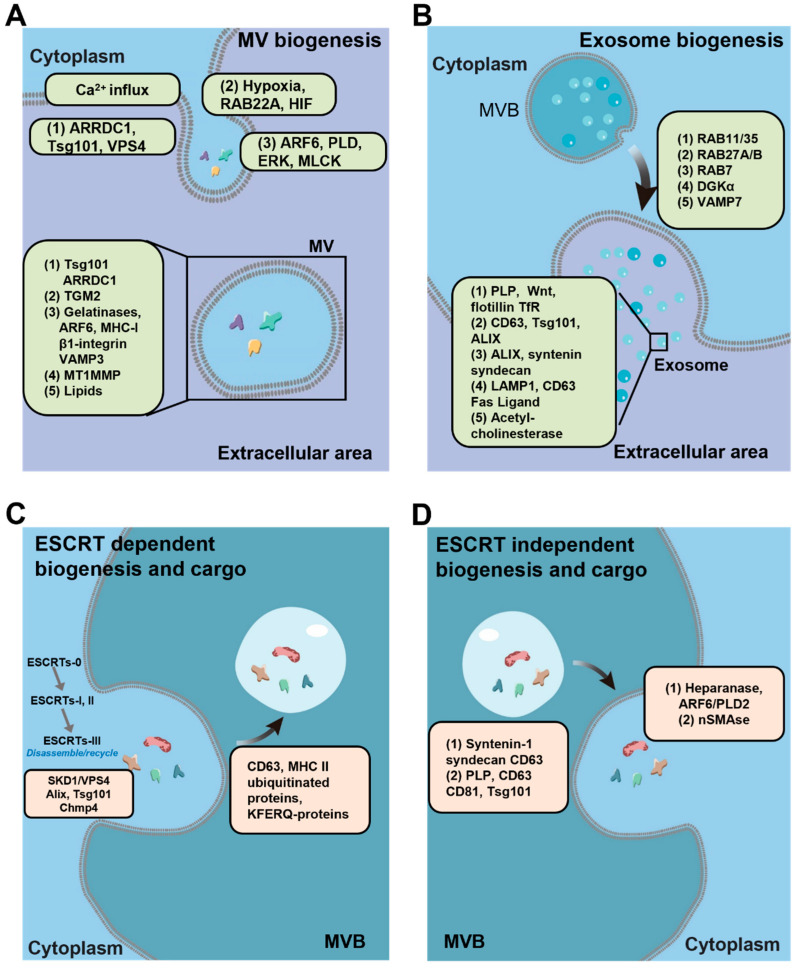
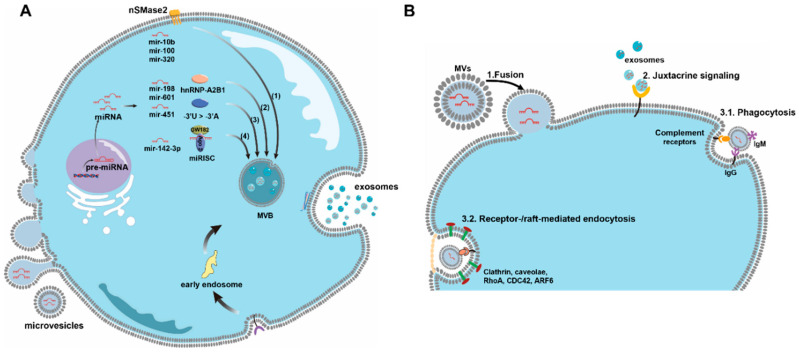
Extracellular vesicles (EVs) are membrane-bound vesicles (50-1000 nm) that can be secreted by all cell types. Microvesicles and exosomes are the major subsets of EVs that exhibit the cell-cell communications and pathological functions of human tissues, and their therapeutic potentials. To further understand and engineer EVs for cell-free therapy, current developments in EV biogenesis and secretion pathways are discussed to illustrate the remaining gaps in EV biology. Specifically, microRNAs (miRs), as a major EV cargo that exert promising therapeutic results, are discussed in the context of biological origins, sorting and packing, and preclinical applications in disease progression and treatments. Moreover, advanced detection and engineering strategies for exosomal miRs are also reviewed. This article provides sufficient information and knowledge for the future design of EVs with specific miRs or protein cargos in tissue repair and regeneration.
细胞外囊泡(EVs)是由所有细胞类型分泌的膜结合囊泡(50 - 1000纳米)。微囊泡和外泌体是EVs的主要亚群,它们展现了人体组织的细胞间通讯和病理功能及其治疗潜力。为了进一步理解和改造用于无细胞治疗的EVs,本文讨论了EV生物发生和分泌途径的当前进展,以阐明EV生物学中尚存的差距。具体而言,作为具有良好治疗效果的主要EV货物的微小RNA(miRs),将在其生物学起源、分选和包装以及疾病进展和治疗的临床前应用背景下进行讨论。此外,还综述了外泌体miRs的先进检测和工程策略。本文为未来设计具有特定miRs或蛋白质货物的EVs用于组织修复和再生提供了充分的信息和知识。