Aziz Muhammad Abdul, Ullah Zahid, Adnan Muhammad, Sõukand Renata, Pieroni Andrea
Department of Environmental Sciences, Informatics and Statistics, Ca' Foscari University of Venice, Via Torino 155, 30172 Venezia, Veneto, Italy.
University of Gastronomic Sciences, Piazza Vittorio Emanuele II 9, 12042 Pollenzo, Bra, Italy.
Biology (Basel). 2022 Oct 21;11(10):1543. doi: 10.3390/biology11101543.
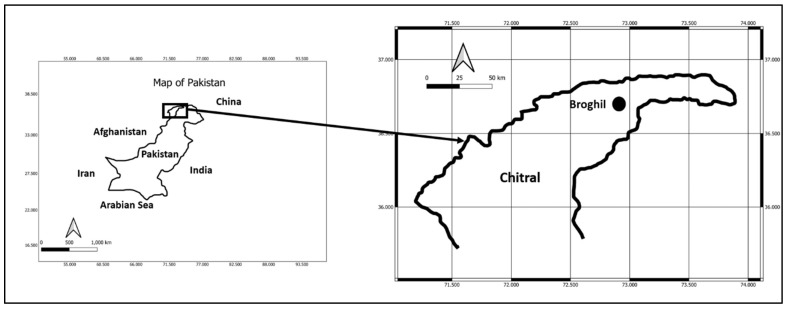
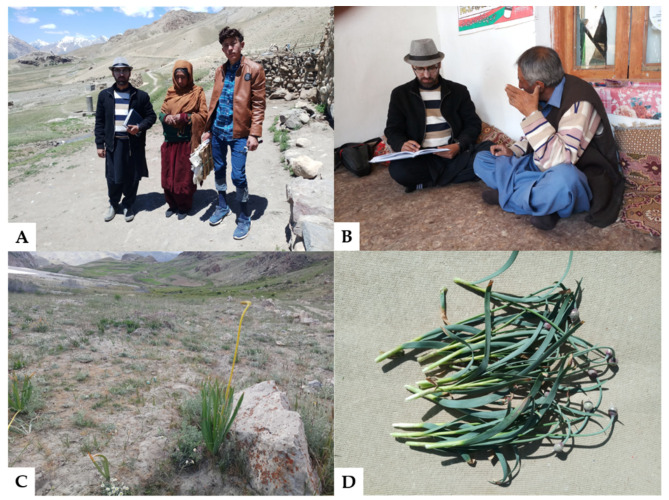
The study recorded the food uses of wild food plants (WFPs) among the Sarikoli diaspora and the dominant Wakhi in Broghil Valley, North Pakistan, to understand their food adaptation, mainly by looking through the lens of food ethnobotanies. A total of 30 participants took part in the study, which included 15 elderly individuals from each ethnic group. Data were gathered through semi-structured interviews. We recorded 29 WFPs, mostly used as cooked vegetables and snacks. The food uses, as well as the local plant nomenclatures, linked to WFPs of the two studied groups were completely homogenized, which could be attributed to the cultural assimilation of the Sarikoli people to Wakhi culture. We found that although traditional knowledge on WFPs has been homogenized, social change in nearby regions is also threatening the traditional knowledge of the two communities, as evidenced by the smaller number of plants reported compared to that of all other field ethnobotanical studies conducted in nearby regions. Moreover, the growth of legal restrictions and sanctions on accessing natural resources are posing serious challenges to cultural resilience in the valley, and the restrictions on cross-border movement in particular are creating challenges for those who have cross-border kinship relationships between the two groups. We suggest specific measures, such as the promotion of food tourism and educational activities, to protect traditional knowledge and bicultural heritage from further erosion in the region.
该研究记录了巴基斯坦北部布罗吉尔山谷中撒里库利侨民和占主导地位的瓦罕人对野生可食用植物的食物用途,主要通过食物民族植物学的视角来了解他们的食物适应性。共有30名参与者参与了这项研究,其中包括来自每个族群的15名老年人。数据通过半结构化访谈收集。我们记录了29种野生可食用植物,大多用作烹饪蔬菜和小吃。与两个研究群体的野生可食用植物相关的食物用途以及当地植物命名完全同质化,这可能归因于撒里库利人对瓦罕文化的文化同化。我们发现,尽管关于野生可食用植物的传统知识已经同质化,但附近地区的社会变革也在威胁着这两个社区的传统知识,与在附近地区进行的所有其他实地民族植物学研究相比,报告的植物数量较少就证明了这一点。此外,获取自然资源的法律限制和制裁的增加对该山谷的文化复原力构成了严峻挑战,特别是跨境流动限制给两个群体之间有跨境亲属关系的人带来了挑战。我们建议采取具体措施,如促进美食旅游和教育活动,以保护该地区的传统知识和双文化遗产免受进一步侵蚀。