Dai Chongshan, Tian Erjie, Hao Zhihui, Tang Shusheng, Wang Zhanhui, Sharma Gaurav, Jiang Haiyang, Shen Jianzhong
Department of Veterinary Pharmacology and Toxicology, College of Veterinary Medicine, China Agricultural University, Beijing 100193, China.
Key Biology Laboratory of Chinese Veterinary Medicine, Ministry of Agriculture and Rural Affairs, Beijing 100193, China.
Antioxidants (Basel). 2022 Oct 14;11(10):2031. doi: 10.3390/antiox11102031.
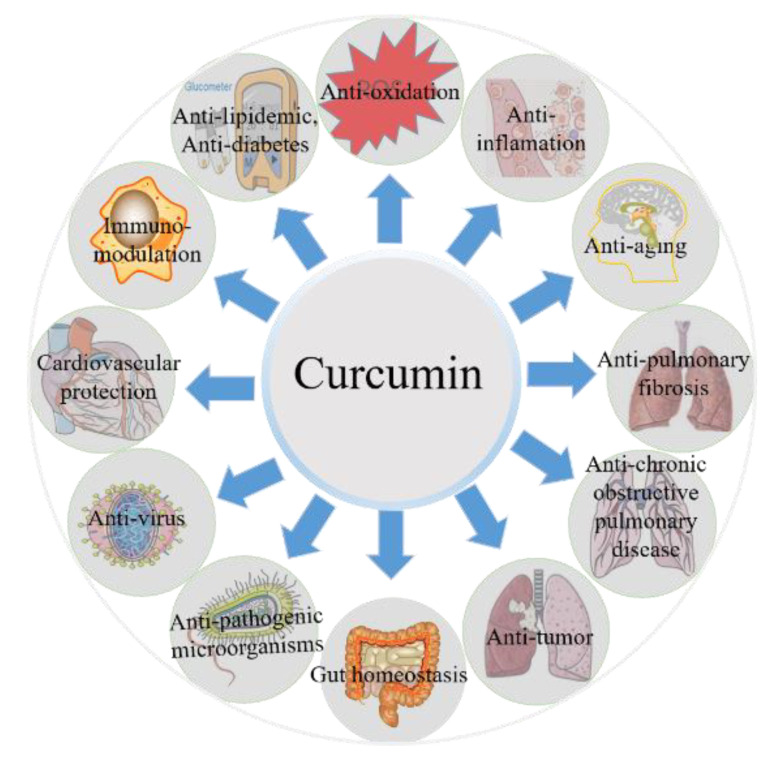
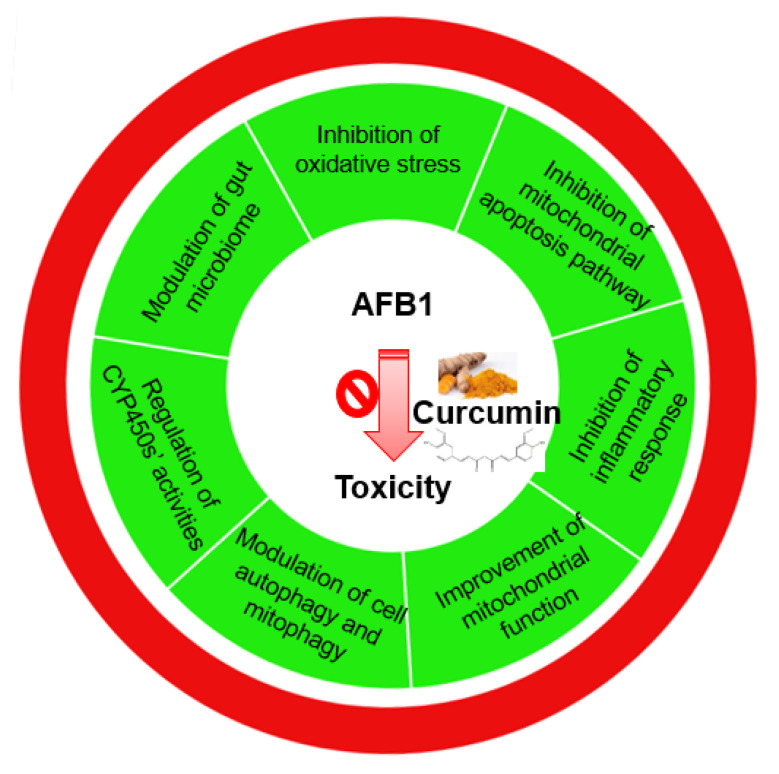
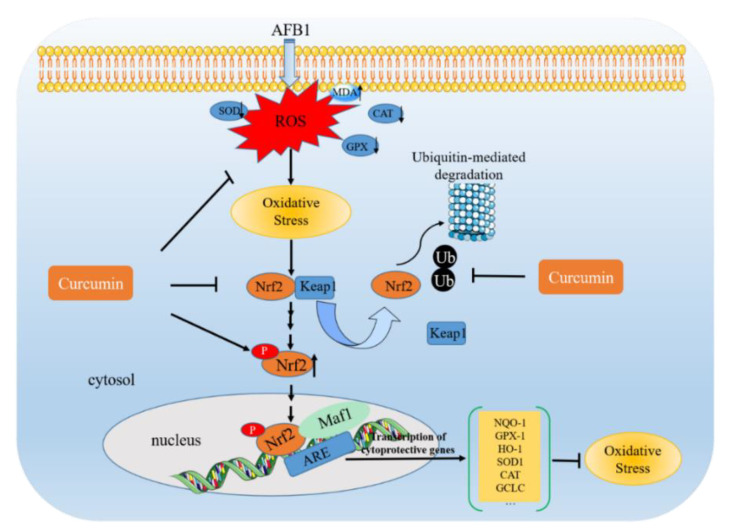
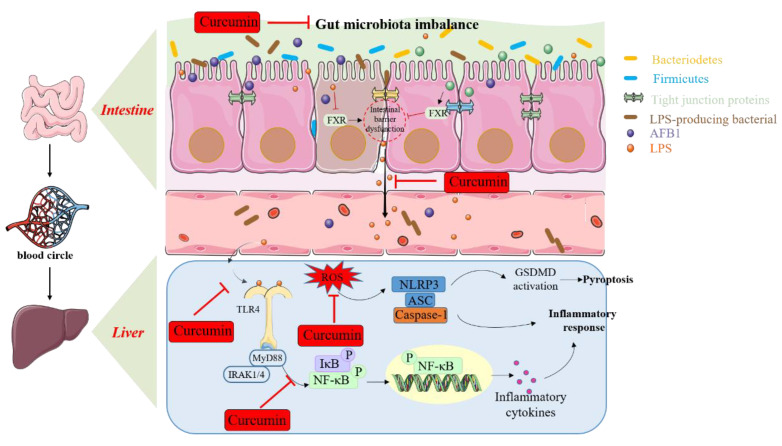
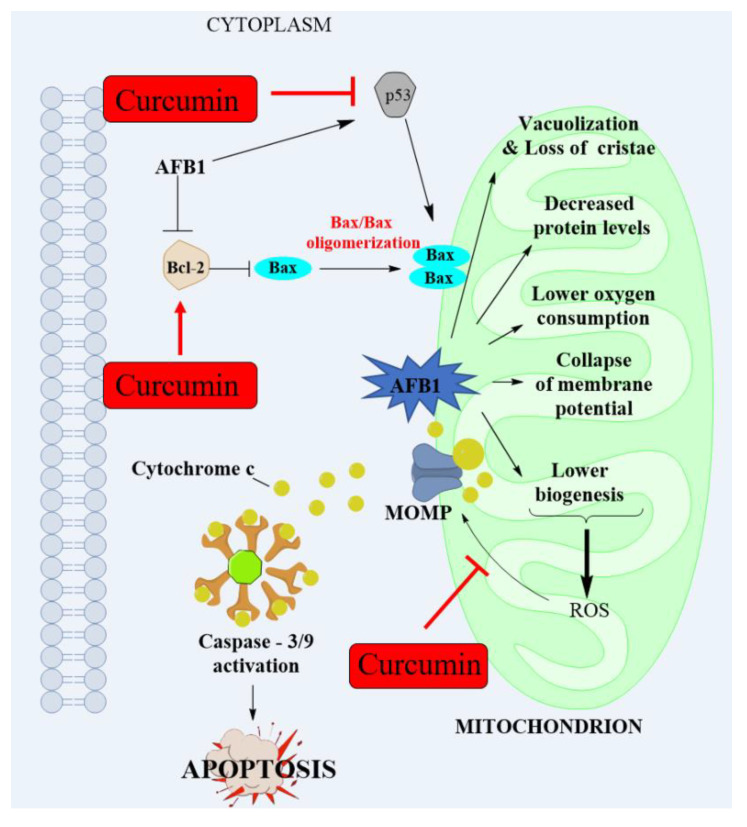
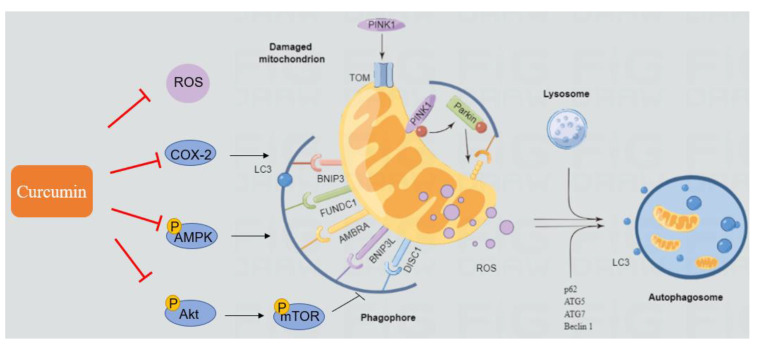
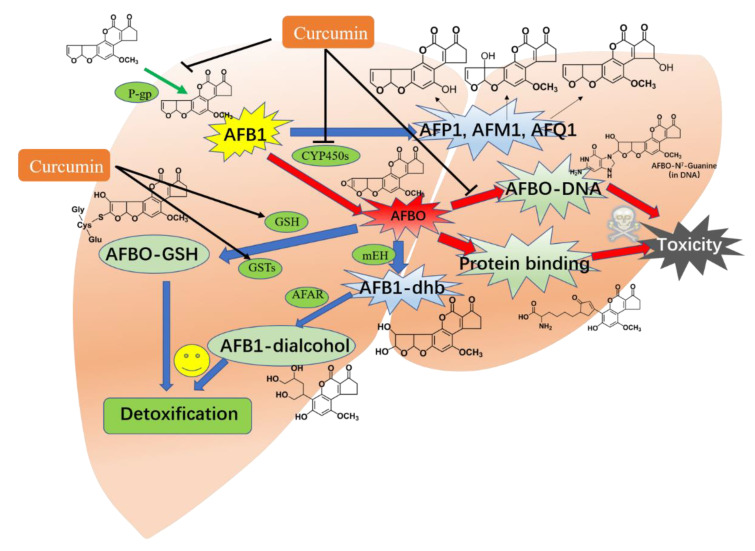
One of the most significant classes of mycotoxins, aflatoxins (AFTs), can cause a variety of detrimental outcomes, including cancer, hepatitis, aberrant mutations, and reproductive issues. Among the 21 identified AFTs, aflatoxin B1 (AFB1) is the most harmful to humans and animals. The mechanisms of AFB1-induced toxicity are connected to the generation of excess reactive oxygen species (ROS), upregulation of CYP450 activities, oxidative stress, lipid peroxidation, apoptosis, mitochondrial dysfunction, autophagy, necrosis, and inflammatory response. Several signaling pathways, including p53, PI3K/Akt/mTOR, Nrf2/ARE, NF-κB, NLRP3, MAPKs, and Wnt/β-catenin have been shown to contribute to AFB1-mediated toxic effects in mammalian cells. Curcumin, a natural product with multiple therapeutic activities (e.g., anti-inflammatory, antioxidant, anticancer, and immunoregulation activities), could revise AFB1-induced harmful effects by targeting these pathways. Therefore, the potential therapeutic use of curcumin against AFB1-related side effects and the underlying molecular mechanisms are summarized. This review, in our opinion, advances significant knowledge, sparks larger discussions, and drives additional improvements in the hazardous examination of AFTs and detoxifying the application of curcumin.
黄曲霉毒素(AFTs)是最重要的一类霉菌毒素之一,可导致多种有害后果,包括癌症、肝炎、异常突变和生殖问题。在已鉴定出的21种AFTs中,黄曲霉毒素B1(AFB1)对人类和动物危害最大。AFB1诱导毒性的机制与过量活性氧(ROS)的产生、CYP450活性上调、氧化应激、脂质过氧化、细胞凋亡、线粒体功能障碍、自噬、坏死和炎症反应有关。包括p53、PI3K/Akt/mTOR、Nrf2/ARE、NF-κB、NLRP3、MAPKs和Wnt/β-连环蛋白在内的几种信号通路已被证明与AFB1介导的哺乳动物细胞毒性作用有关。姜黄素是一种具有多种治疗活性(如抗炎、抗氧化、抗癌和免疫调节活性)的天然产物,可通过靶向这些通路来改善AFB1诱导的有害作用。因此,本文总结了姜黄素对AFB1相关副作用的潜在治疗用途及其潜在分子机制。我们认为,这篇综述推进了重要知识,引发了更广泛的讨论,并推动了AFTs危害检测及姜黄素解毒应用方面的进一步改进。