Institute of Geriatric Cardiovascular Disease, Chengdu Medical College, Chengdu 610083, China.
State Key Laboratory of Genetic Engineering, Department of Biochemistry and Biophysics, School of Life Sciences, Fudan University, Shanghai 200437, China.
Int J Mol Sci. 2022 Oct 12;23(20):12123. doi: 10.3390/ijms232012123.
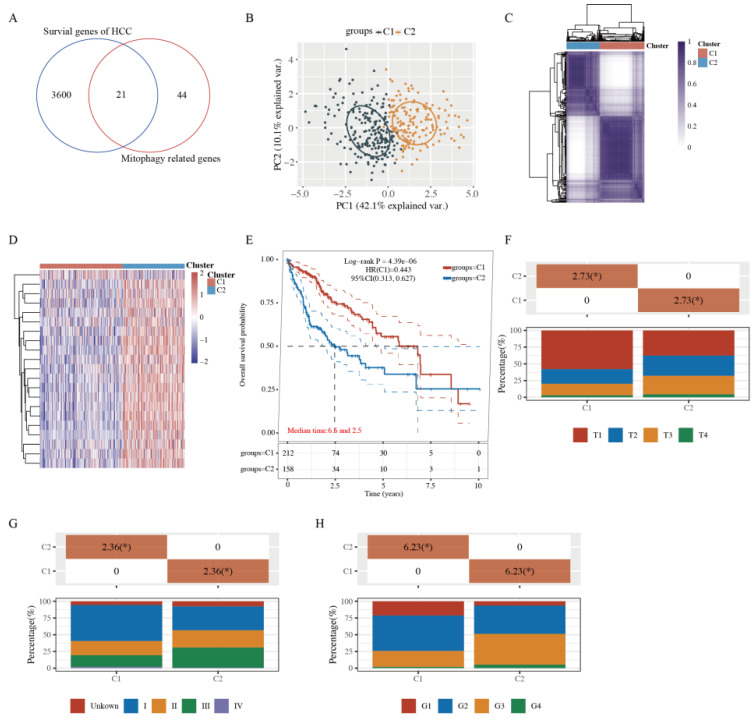
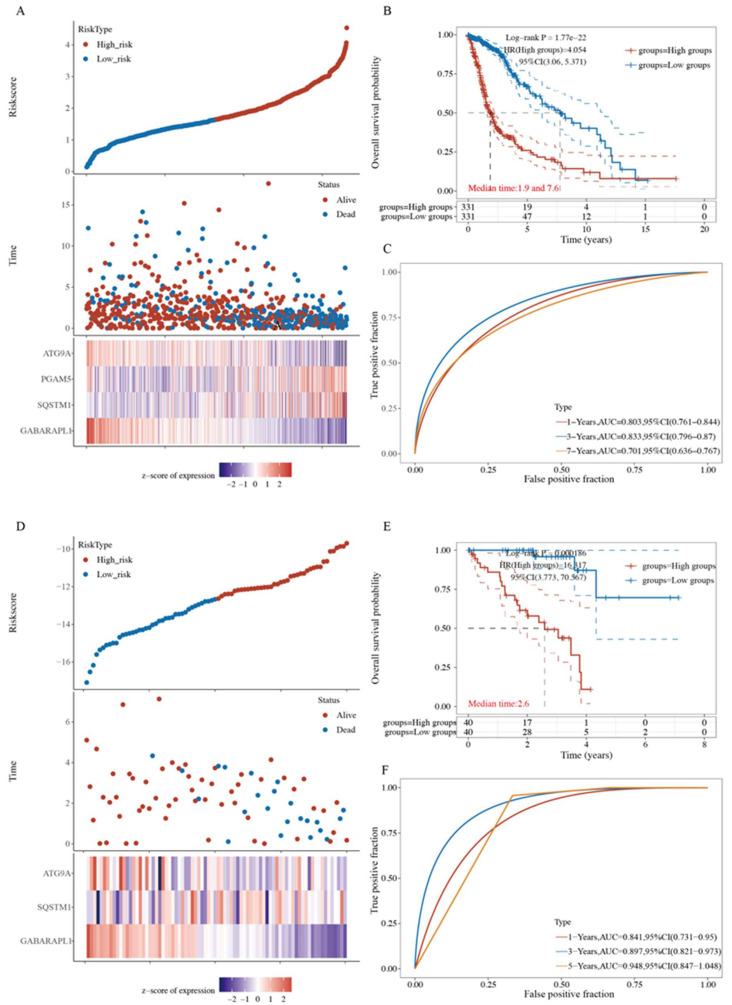
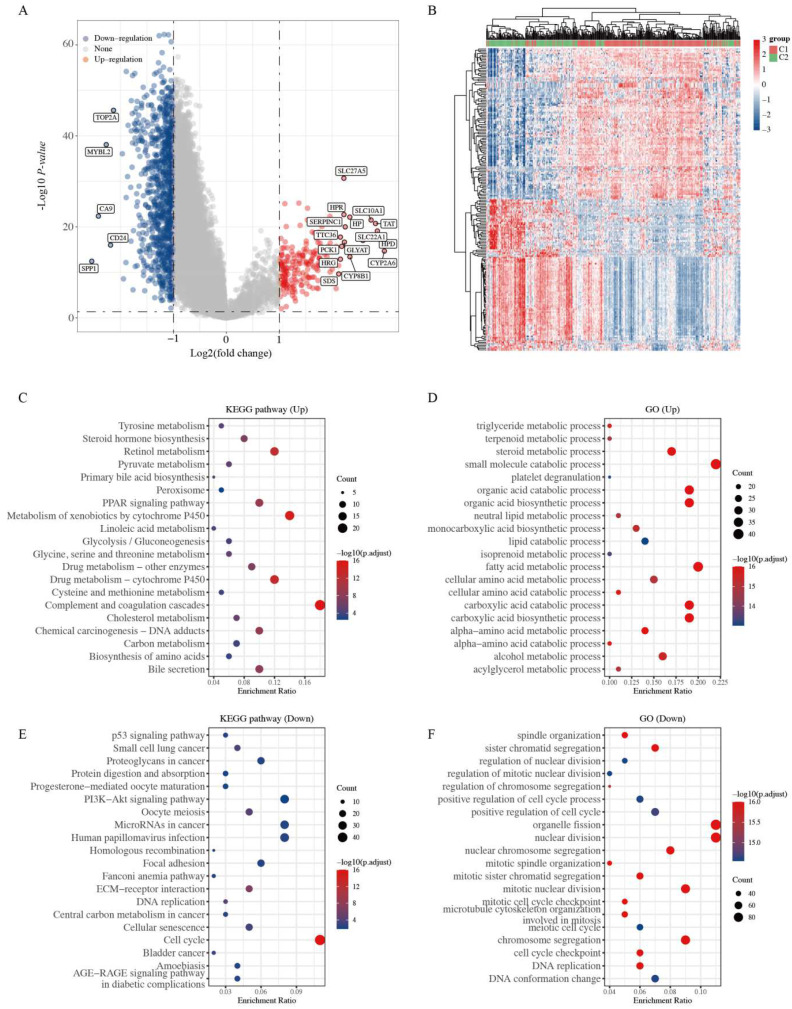
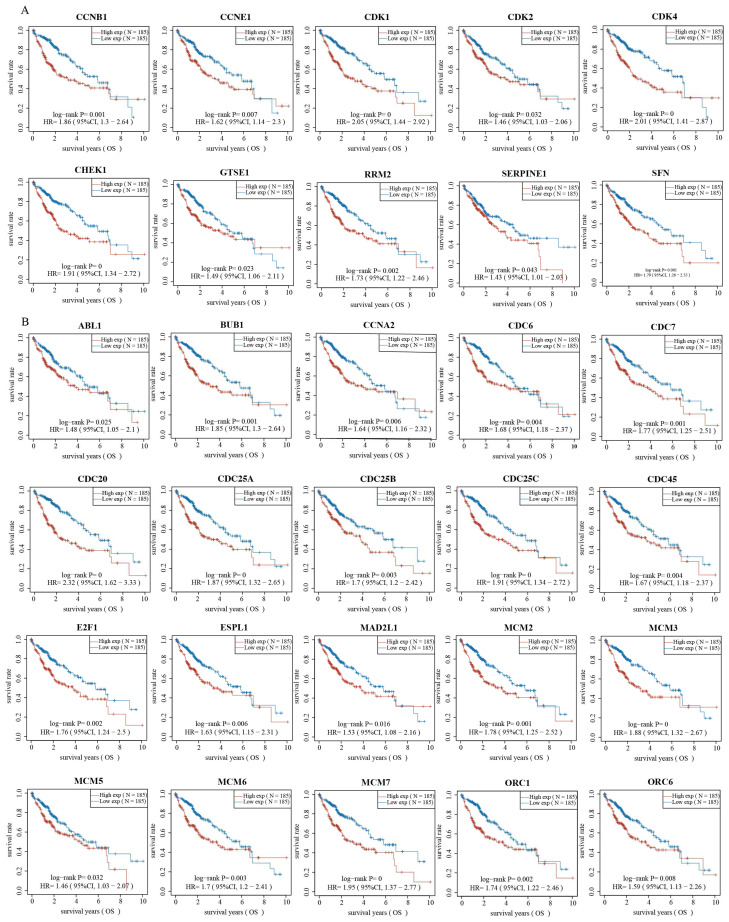
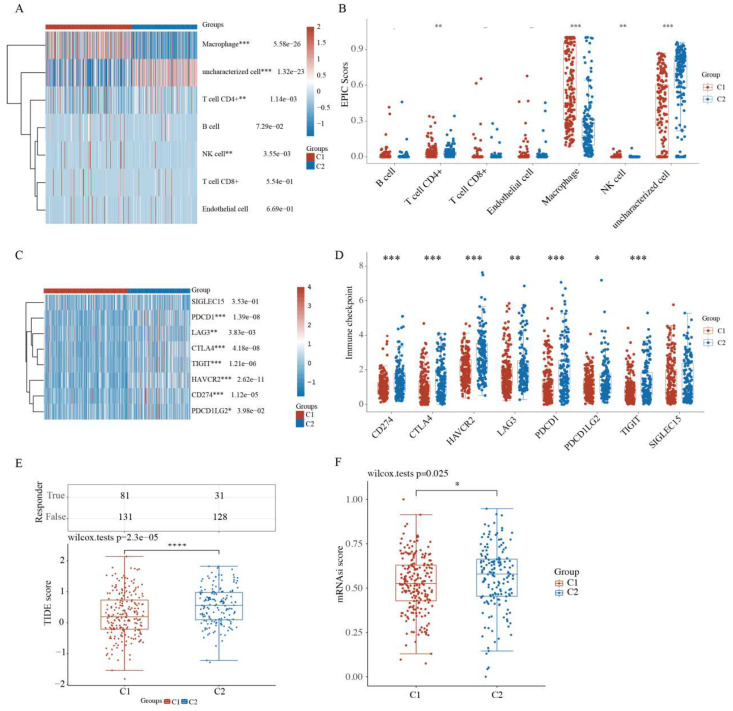
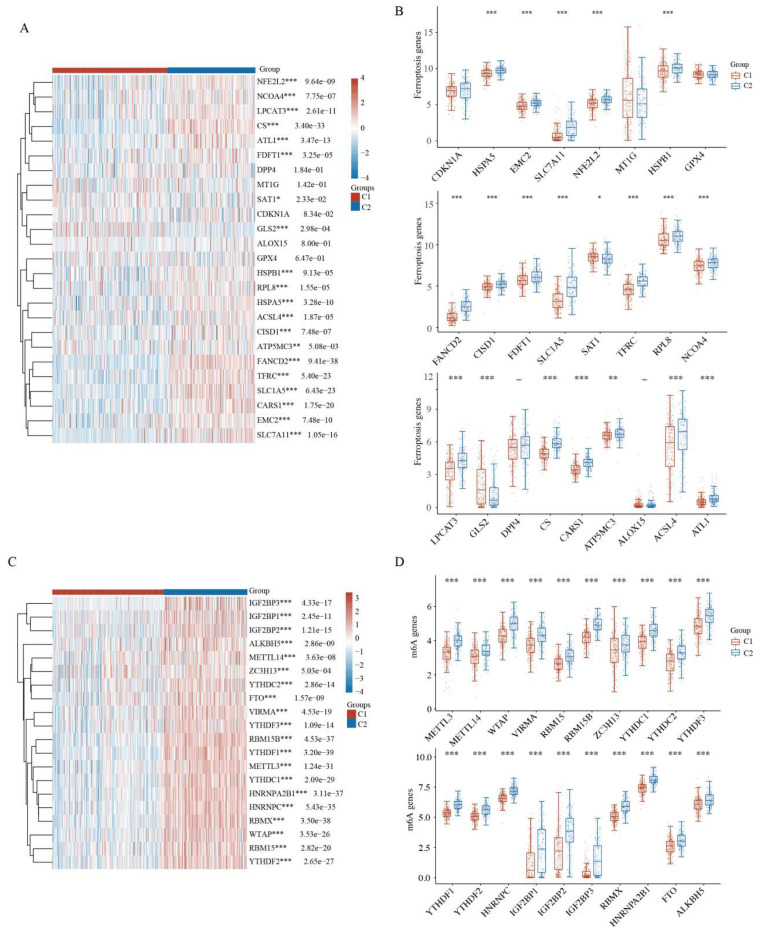
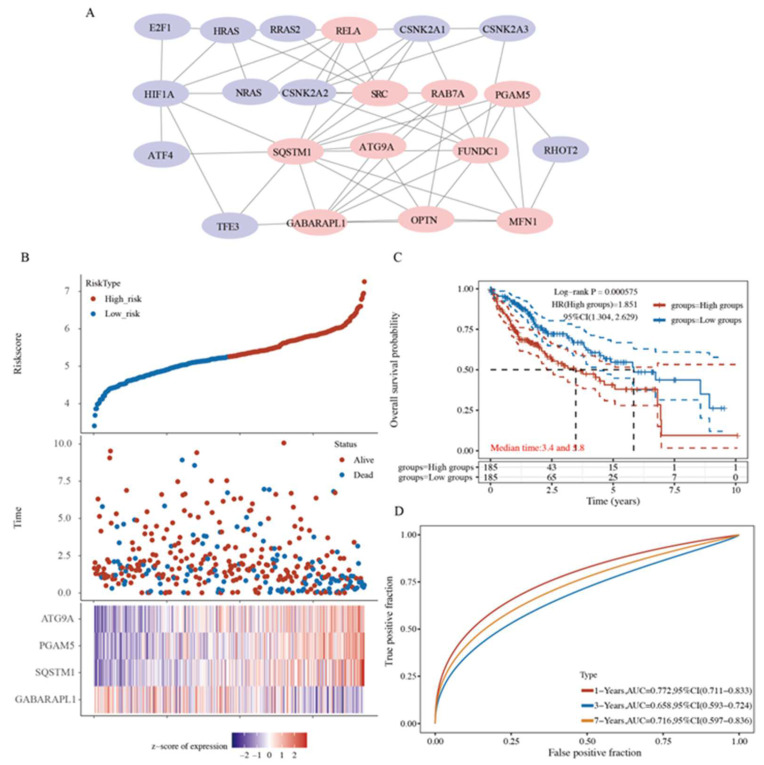
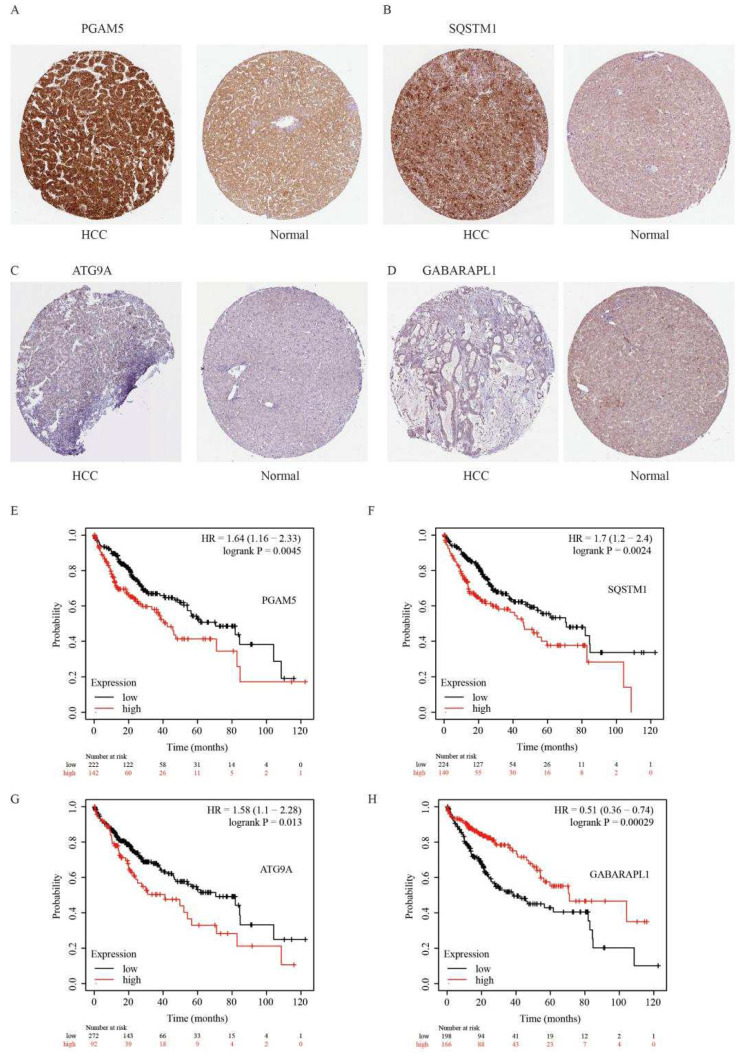
Globally, hepatocellular carcinoma (HCC) is the sixth most common cancer. In this study, the correlation between mitophagy and HCC prognosis was evaluated using data from The Cancer Genome Atlas (TCGA). Clinical and transcriptomic data of HCC patients were downloaded from TCGA dataset, and mitophagy-related gene (MRG) datasets were obtained from the Molecular Signature Database. Then, a consensus clustering analysis was performed to classify the patients into two clusters. Furthermore, tumor prognosis, clinicopathological features, functional analysis, immune infiltration, immune checkpoint (IC)-related gene expression level, tumor stem cells, ferroptosis status, and N6-methyladenosine analysis were compared between the two clusters. Finally, a mitophagy-related signature was developed. Two clusters (C1 and C2) were identified using the consensus clustering analysis based on the MRG signature. Patients with the C1 subtype exhibited upregulated pathways with better liver function, downregulated cancer-related pathways, lower cancer stem cell scores, lower Tumor Immune Dysfunction and Exclusion scores (TIDE), different ferroptosis status, and better prognosis compared with the patients with the C2 subtype. The C2 subtype was characterized by the increased grade of HCC, as well as the increased number of immune-related pathways and mA-related genes. Higher immune scores were also observed for the C2 subtype. A signature containing four MRGs ( and ) which can accurately predict the prognosis of HCC patients was then identified. This four-gene signature exhibited a predictive effect in five other cancer types, namely glioma, uveal melanoma, acute myeloid leukemia, adrenocortical carcinoma, and mesothelioma. The mitophagy-associated subtypes of HCC were closely related to the immune microenvironment, immune checkpoint-related gene expression, cancer stem cells, ferroptosis status, mA, prognosis, and HCC progression. The established MRG signature could predict prognosis in patients with HCC.
全球范围内,肝细胞癌(HCC)是第六大常见癌症。本研究通过分析癌症基因组图谱(TCGA)的数据,评估了噬线粒体与 HCC 预后的相关性。从 TCGA 数据库下载 HCC 患者的临床和转录组数据,并从分子特征数据库(Molecular Signature Database)获取噬线粒体相关基因(MRG)数据集。然后,通过共识聚类分析将患者分为两个亚群。进一步比较两个亚群的肿瘤预后、临床病理特征、功能分析、免疫浸润、免疫检查点(IC)相关基因表达水平、肿瘤干细胞、铁死亡状态和 N6-甲基腺苷分析。最后,构建了一个噬线粒体相关的特征。基于 MRG 特征的共识聚类分析确定了两个亚群(C1 和 C2)。C1 亚型患者表现出上调的途径,肝功能更好,下调的癌症相关途径,较低的癌症干细胞评分,较低的肿瘤免疫功能障碍和排除评分(TIDE),不同的铁死亡状态和更好的预后,与 C2 亚型患者相比。C2 亚型的特点是 HCC 分级增加,以及更多的免疫相关途径和 mA 相关基因增加。C2 亚型的免疫评分也更高。然后确定了一个包含四个 MRG(和)的特征,该特征可以准确预测 HCC 患者的预后。该四基因特征在其他五种癌症类型(即脑胶质瘤、葡萄膜黑色素瘤、急性髓系白血病、肾上腺皮质癌和间皮瘤)中也具有预测作用。HCC 的噬线粒体相关亚型与免疫微环境、免疫检查点相关基因表达、肿瘤干细胞、铁死亡状态、mA、预后和 HCC 进展密切相关。所建立的 MRG 特征可预测 HCC 患者的预后。