Institute for Molecular Biology in Medicine and Gene Therapy, Department of Molecular Biology and Genomics, Health Sciences University Center, University of Guadalajara, Guadalajara 44340, Jalisco, Mexico.
Tecnologico de Monterrey, Escuela de Medicina, Monterrey 64849, Nuevo Leon, Mexico.
Nutrients. 2022 Oct 11;14(20):4225. doi: 10.3390/nu14204225.
Metabolic Associated Fatty Liver Disease (MAFLD) encompasses a spectrum of diseases from simple steatosis to nonalcoholic steatohepatitis (NASH). Here, we investigated the hepatoprotective role of aqueous extract on hepatic miRNAs, genes and protein expression, as well as histological and biochemical parameters in an experimental model of NASH.
Male C57BL/6J mice were fed with a high fat diet (HFD, 60% lipids, 42 gr/L sugar in water) for 16 weeks. Moringa extract was administered via gavage during the final 8 weeks. Insulin Tolerance Test (ITT) and HOMA-IR were calculated. Serum levels of insulin, resistin, leptin and PAI-1 and hepatic expression of , , , and SIRT1, AMPKα and SREBP1c protein were evaluated. Alpha-SMA immunohistochemistry and hematoxylin-eosin, Masson's trichrome and sirius red staining were made. Hepatic transcriptome was analyzed using microarrays.
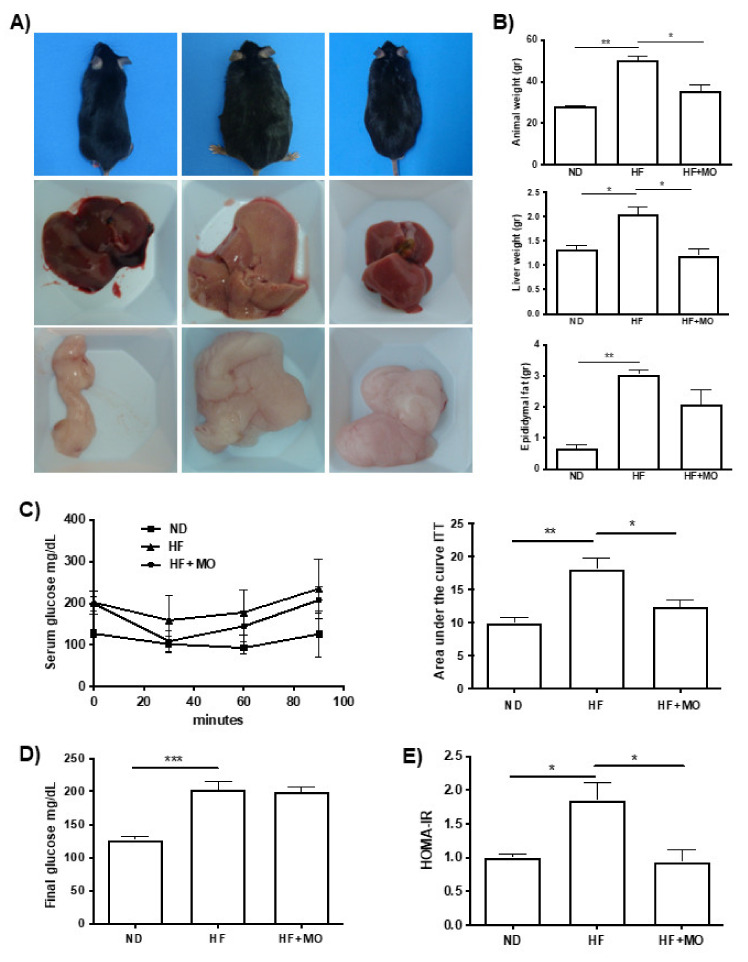
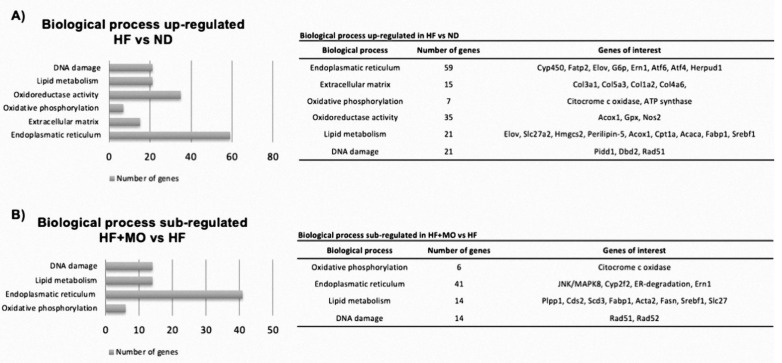
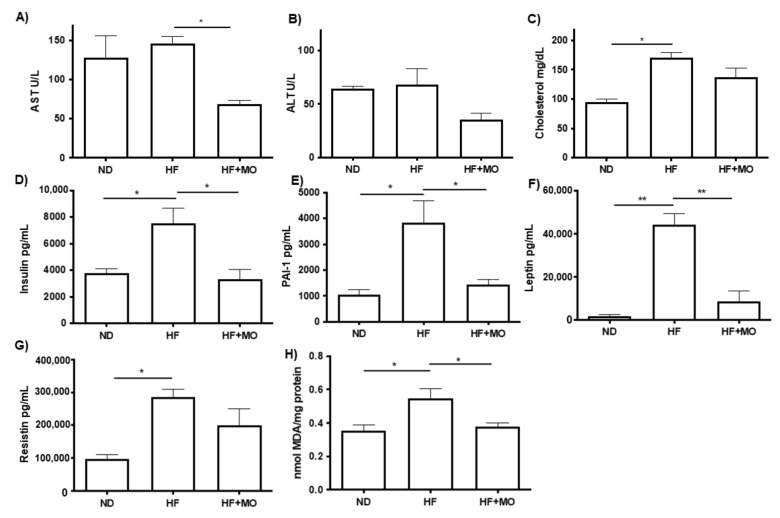
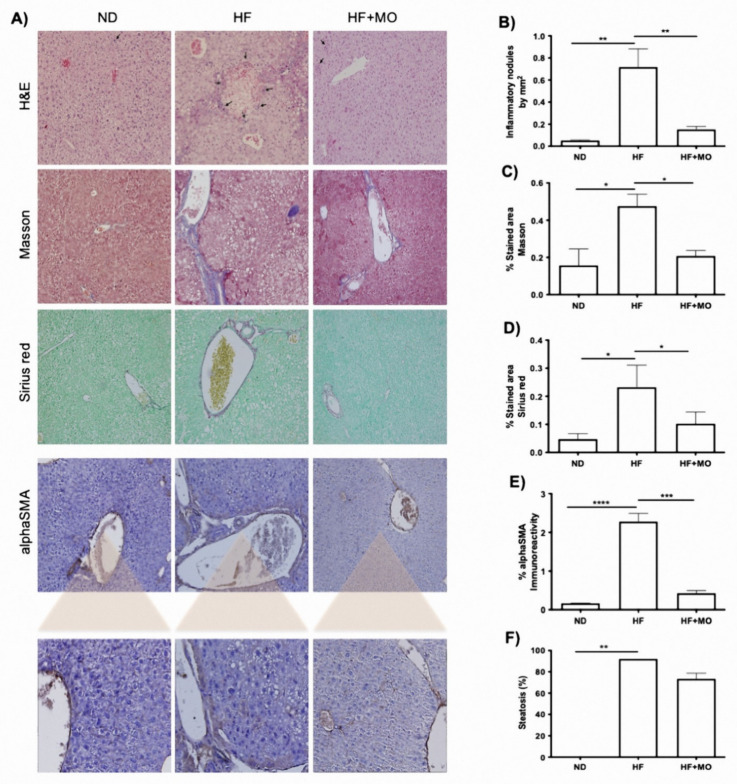
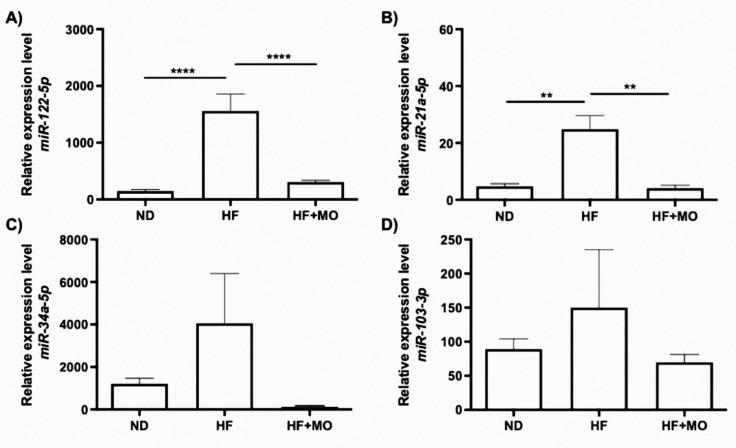
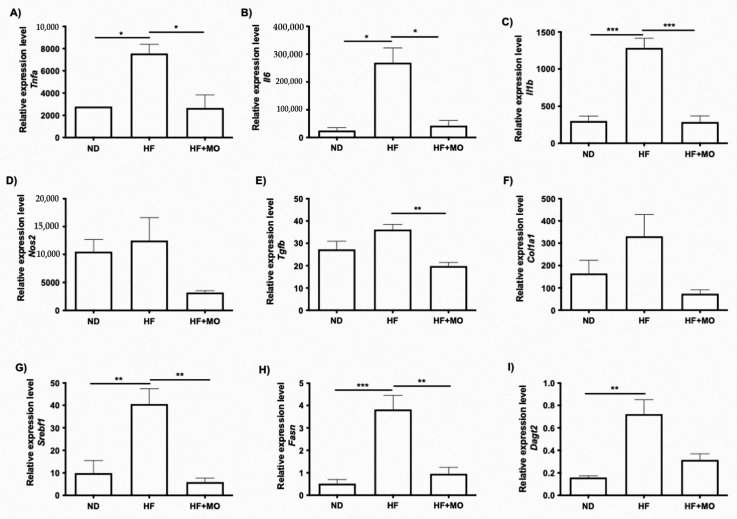
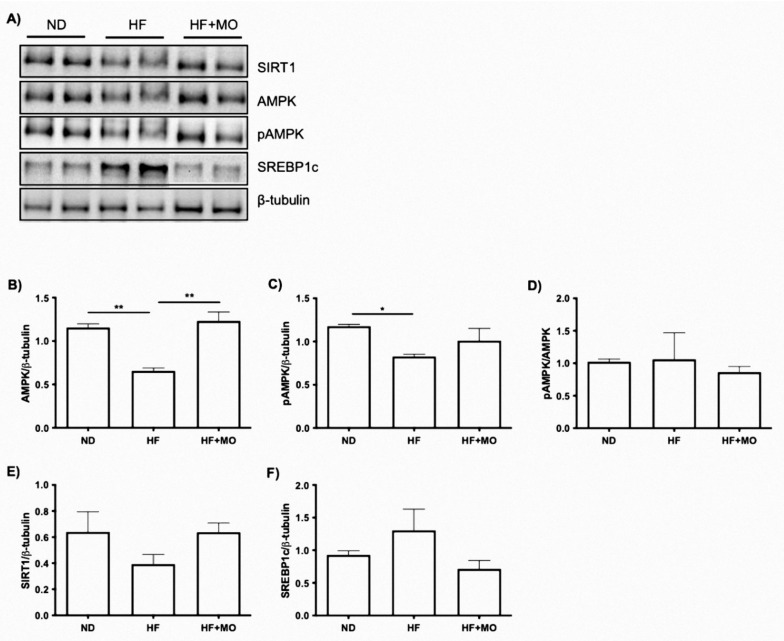
Animals treated with Moringa extract improved ITT and decreased SREBP1c hepatic protein, while SIRT1 increased. Hepatic expression of , and , was downregulated. Hepatic histologic analysis showed in Moringa group (HF + MO) a significant decrease in inflammatory nodules, macro steatosis, fibrosis, collagen and αSMA reactivity. Analysis of hepatic transcriptome showed down expression of mRNAs implicated in DNA response to damage, endoplasmic reticulum stress, lipid biosynthesis and insulin resistance. Moringa reduced insulin resistance, de novo lipogenesis, hepatic inflammation and ER stress.
Moringa prevented progression of liver damage in a model of NASH and improved biochemical, histological and hepatic expression of genes and miRNAs implicated in MAFLD/NASH development.
代谢相关脂肪性肝病(MAFLD)涵盖了从单纯性脂肪变性到非酒精性脂肪性肝炎(NASH)的一系列疾病。在这里,我们研究了水提取物在 NASH 实验模型中对肝 miRNA、基因和蛋白质表达以及组织学和生化参数的保护作用。
雄性 C57BL/6J 小鼠用高脂肪饮食(HFD,60%脂肪,水中 42 克/升糖)喂养 16 周。在最后 8 周通过灌胃给予辣木叶提取物。计算胰岛素耐量试验(ITT)和 HOMA-IR。评估血清胰岛素、抵抗素、瘦素和 PAI-1 水平以及肝组织中 、 、 、SIRT1、AMPKα 和 SREBP1c 蛋白的表达。进行α-SMA 免疫组化和苏木精-伊红、马松三色和天狼星红染色。使用微阵列分析肝转录组。
用辣木叶提取物治疗的动物改善了 ITT 并降低了 SREBP1c 肝蛋白,同时 SIRT1 增加。肝组织中 、 、 和 表达下调。辣木叶组(HF + MO)肝组织学分析显示炎症性结节、大脂肪变性、纤维化、胶原和αSMA 反应性显著减少。肝转录组分析显示,与 DNA 损伤反应、内质网应激、脂质生物合成和胰岛素抵抗相关的 mRNAs 表达下调。辣木叶减少了胰岛素抵抗、从头脂肪生成、肝炎症和内质网应激。
辣木叶预防了 NASH 模型中肝损伤的进展,并改善了与 MAFLD/NASH 发展相关的生化、组织学和肝基因和 miRNA 的表达。