Schneider Francis, Clère-Jehl Raphaël, Scavello Francesco, Lavigne Thierry, Corti Angelo, Angelone Tommaso, Haïkel Youssef, Lavalle Philippe
Médecine Intensive-Réanimation, Hôpital de Hautepierre, Hôpitaux Universitaires de Strasbourg, Faculté de Médecine, FMTS at Unistra, 67085 Strasbourg, France.
Biomaterials and Bioengeneering, UMR_S1121, FMTS at Unistra, 67085 Strasbourg, France.
Pharmaceutics. 2022 Oct 12;14(10):2178. doi: 10.3390/pharmaceutics14102178.
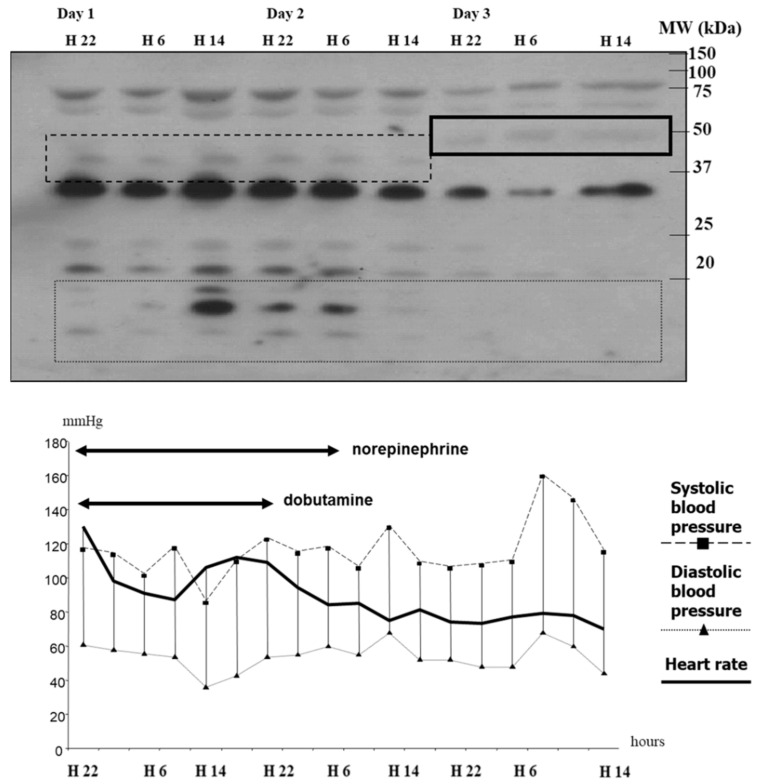
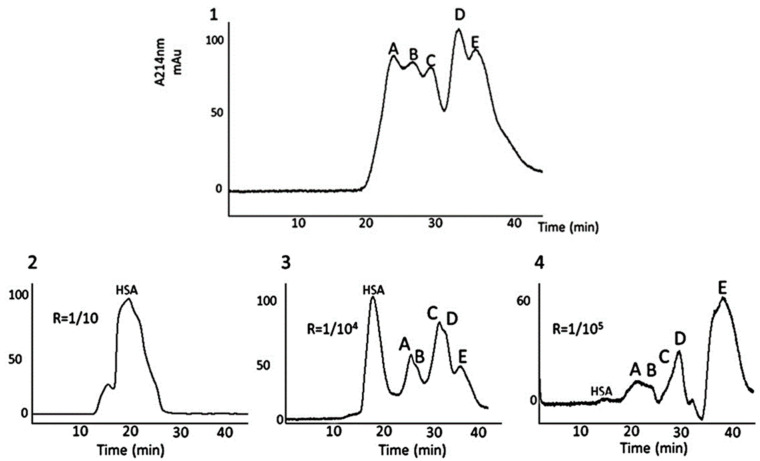
Life-threatening diseases challenge immunity with a release of chromogranins. This report focuses on Chromogranin A (CGA) and some of its derived peptides in critically ill patients, with attention paid to their potential to become biomarkers of severity and actors of defense. First, we studied whether circulating CGA may be a biomarker of outcome in non-selected critically ill patients: CGA concentrations were reliably associated with short-term death, systemic inflammation, and multiple organ failure. Additionally, when studying Vasostatin-I, the major N-terminal fragment of CGA, we noted its reliable prognostic value as early as admission if associated with age and lactate. In trauma patients, CGA concentrations heralded the occurrence of care-related infections. This was associated with an in vitro inhibitor impact of Chromofungin on both NF-kappa B- and API-transcriptional activities. Secondly, in life-threatening disease-induced oxidative stress, the multimerization of Vasostatin-I occurs with the loss of its anti-microbial properties ex vivo. In vivo, a 4%-concentration of non-oxidized albumin infusion reversed multimerization with a decrease in care-related infections. Finally, in vitro Catestatin impacted the polymorphonuclear cells-Ca++-dependent, calmodulin-regulated iPLA2 pathway by releasing immunity-related proteins. Furthermore, human Cateslytin, the active domain of Catestatin, helped destroy S. aureus: this prompted the creation of synthetic D-stereoisomer of CGA-derived peptides against superbugs for the protection of implanted devices. In conclusion, CGA consideration in the critically ill is only starting, but it offers interesting perspectives for improved outcomes.
危及生命的疾病通过分泌嗜铬粒蛋白来挑战免疫系统。本报告聚焦于危重症患者体内的嗜铬粒蛋白A(CGA)及其一些衍生肽,关注它们成为病情严重程度生物标志物和防御因子的潜力。首先,我们研究了在未经过筛选的危重症患者中,循环CGA是否可能是预后的生物标志物:CGA浓度与短期死亡、全身炎症和多器官功能衰竭可靠相关。此外,在研究CGA的主要N端片段血管抑素-I时,我们注意到如果与年龄和乳酸相关,其在入院时就具有可靠的预后价值。在创伤患者中,CGA浓度预示着与护理相关感染的发生。这与嗜铬菌素对NF-κB和API转录活性的体外抑制作用有关。其次,在危及生命的疾病诱导的氧化应激中,血管抑素-I会发生多聚化,其体外抗菌特性丧失。在体内,输注4%浓度的非氧化白蛋白可逆转多聚化,并减少与护理相关的感染。最后,在体外,卡替他汀通过释放免疫相关蛋白影响多形核细胞依赖钙离子、钙调蛋白调节的iPLA2途径。此外,人卡替斯汀(卡替他汀的活性结构域)有助于破坏金黄色葡萄球菌:这促使人们开发针对超级细菌的CGA衍生肽的合成D-立体异构体,以保护植入装置。总之,对危重症患者中CGA的研究才刚刚开始,但它为改善预后提供了有趣的前景。