Li Tingting, Wang Desheng, Yang Zhihao
Department of Marketing, School of Management, Shandong University, Jinan, China.
Front Psychol. 2022 Oct 10;13:971107. doi: 10.3389/fpsyg.2022.971107. eCollection 2022.
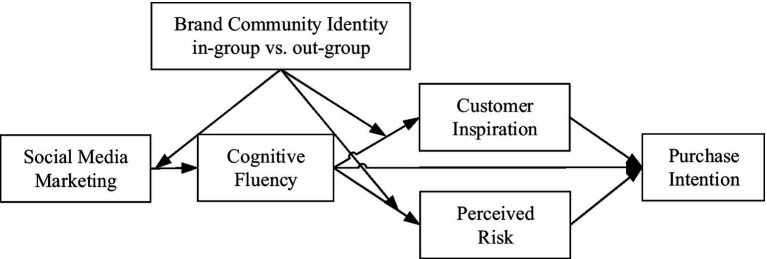
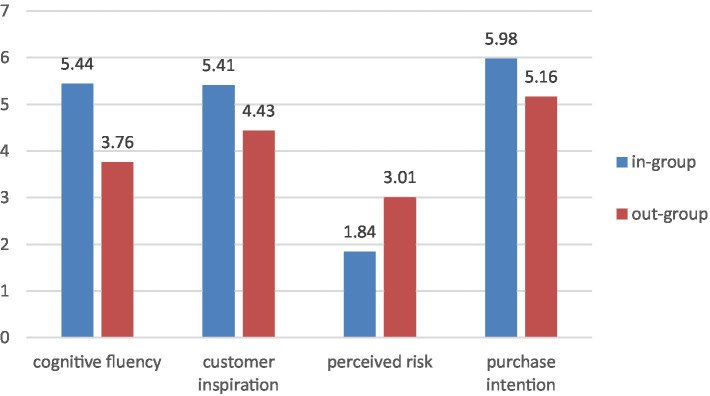
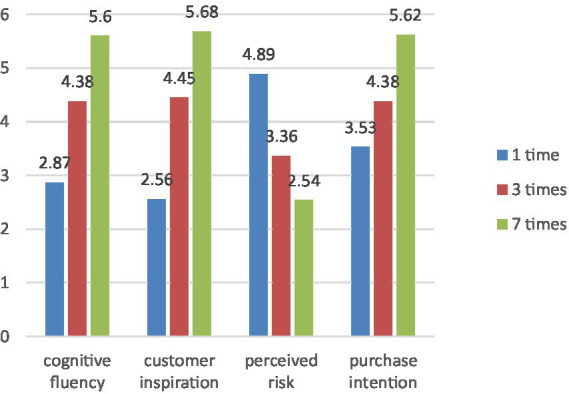
As an alternative protein product to animal meat, plant-based meat is considered to play an essential role in improving animal welfare and protecting the environment. However, why do a few consumers choose plant-based meat but others do not? Despite the increasing research on plant-based meat marketing, little is known about the psychological mechanism by which plant-based meat marketing affects consumers' purchasing decisions. We utilize dual-system theory to understand how social media marketing of plant-based meat influences cognitive fluency, customer inspiration, perceived risk, and purchase intention. Four studies (i.e., Studies 1, 2, 3, and 4) show that social media marketing can increase young people's purchase intention of plant-based meat more than traditional marketing. In Studies 1 and 2, increased intensity of social media marketing can enhance young people's cognitive fluency and further promote purchase intention. Study 3 explores how cognitive fluency relates to purchase intention through two psychological mechanisms. We suggest that a higher level of cognitive fluency increases customer inspiration and improves purchase intention. However, a lower level of cognitive fluency reduces purchase intention by increasing perceived risk. Study 4 manipulated members' in-group or out-group status to show a boundary condition for the effect of brand community identity on purchase intention. These studies provide insight into how brand marketers can use social media to promote consumer inspiration and advertising engagement, how managers can offer fluency-increasing mechanisms to ensure a low level of perceived risk, and how enterprise practitioners may want to consider brand community publicity to attract out-group members.
作为动物肉的替代蛋白质产品,植物肉被认为在改善动物福利和保护环境方面发挥着重要作用。然而,为什么一些消费者选择植物肉而另一些人不选择呢?尽管对植物肉营销的研究越来越多,但对于植物肉营销影响消费者购买决策的心理机制却知之甚少。我们利用双系统理论来理解植物肉的社交媒体营销如何影响认知流畅性、顾客灵感、感知风险和购买意愿。四项研究(即研究1、2、3和4)表明,社交媒体营销比传统营销更能提高年轻人购买植物肉的意愿。在研究1和2中,社交媒体营销强度的增加可以提高年轻人的认知流畅性,并进一步促进购买意愿。研究3探讨了认知流畅性如何通过两种心理机制与购买意愿相关联。我们认为,较高水平的认知流畅性会增加顾客灵感并提高购买意愿。然而,较低水平的认知流畅性会通过增加感知风险来降低购买意愿。研究4操纵成员的内群体或外群体身份,以展示品牌社区认同对购买意愿影响的边界条件。这些研究为品牌营销人员如何利用社交媒体促进消费者灵感和广告参与度、管理者如何提供提高流畅性的机制以确保低水平的感知风险,以及企业从业者如何考虑品牌社区宣传以吸引外群体成员提供了见解。